UK scientists have launched microscopic worms to the ISS in a mini laboratory experiment to study space’s effects on biology, aiming to develop solutions that protect astronaut health during future long-duration Moon and deep-space missions.
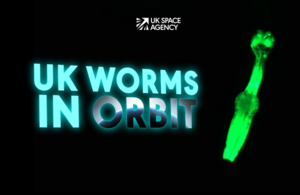
In a pioneering step toward future Moon missions, the United Kingdom has launched a crew of microscopic worms into orbit aboard the International Space Station (ISS), aiming to study how living organisms respond to the harsh conditions of space.
The experiment, backed by the UK Space Agency, is designed as a miniature orbital laboratory to examine the biological impact of long-duration space travel—one of the biggest challenges facing future human exploration beyond Earth.
Led by the University of Exeter and engineered by the University of Leicester, the project involves dozens of Caenorhabditis elegans (C. elegans) worms, each about 1 millimetre in length. These organisms, widely used in scientific research due to their genetic similarities to humans, will help scientists analyse how cells and biological systems behave in space.
The payload was launched aboard NASA’s Northrop Grumman CRS-24 mission from the Kennedy Space Center and is headed to the ISS, where it will initially be housed inside the station before being mounted externally using a robotic arm. Once deployed, the experiment will expose the worms to microgravity, radiation, and the vacuum of space for an extended period.
Researchers will monitor the organisms remotely from Earth, using imaging systems to track physiological and cellular changes in real time. The compact experimental unit, often described as a “mini space lab,” contains multiple chambers that maintain life-support conditions such as temperature, air, food, and water. (Innovation News Network)
Scientists say the mission directly addresses critical health risks faced by astronauts during long-duration spaceflight. Microgravity is known to cause muscle and bone loss, fluid shifts, and vision problems, while prolonged exposure to radiation increases the risk of genetic damage and cancer. (GOV.UK)
UK Space Minister Liz Lloyd underscored the significance of the project, stating that although the experiment involves tiny organisms, it could play a major role in shaping the future of human spaceflight. She described the mission as an example of how innovative, small-scale science can tackle some of the biggest challenges in space exploration. (GOV.UK)
The initiative comes at a time of renewed global focus on lunar exploration, particularly following NASA’s Artemis programme, which aims to return astronauts to the Moon and establish a sustained human presence there. Researchers believe insights from the worm study could help develop strategies to keep astronauts healthy during extended missions to the Moon and eventually Mars.
Beyond its scientific objectives, the mission also demonstrates a shift toward cost-effective and miniaturised space research. By enabling complex biological experiments in compact, self-contained systems, the project could pave the way for more frequent and scalable studies in orbit.
As data begins to stream back from the ISS, scientists hope the findings will provide a deeper understanding of how life adapts to space—bringing humanity a step closer to long-term habitation beyond Earth.