The survey data leaves little room for ambiguity. 93 percent of IT leaders report that their organisation either already has a formal digital sovereignty strategy (43%) or is actively building one (50%). Fewer than 2% regard it as a low priority, and not a single respondent dismissed it entirely
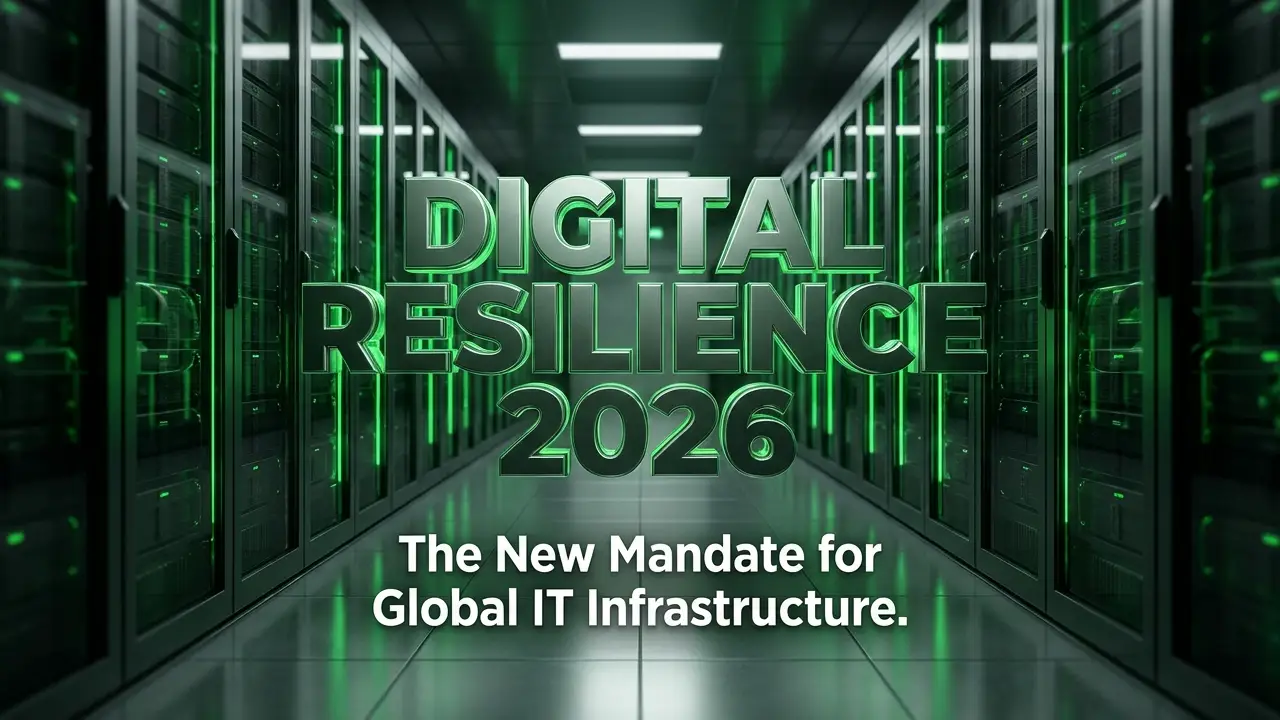
Geopolitical turbulence and rapid technological change are forcing global enterprises to rethink what resilience really means. SUSE's newly released Navigating Digital Resilience 2026 survey of IT leaders worldwide reveals a striking consensus: digital sovereignty, open-source technology and artificial intelligence are no longer aspirational goals — they are baseline requirements for survival in a volatile operating environment.
The survey data leaves little room for ambiguity. Ninety-three percent of IT leaders report that their organisation either already has a formal digital sovereignty strategy (43%) or is actively building one (50%). Fewer than 2% regard it as a low priority, and not a single respondent dismissed it entirely.
Sovereignty expertise now ranks among the top three vendor-selection criteria, alongside regulatory compliance and technical independence. More than half of buyers (51%) are formally embedding digital sovereignty as a mandatory requirement in procurement processes. Yet a readiness gap persists: one in four organisations acknowledges the priority but admits it has not adequately resourced it, citing a shortage of internal expertise, high migration risk and unclear return on investment as the primary obstacles.

Open-source software is widely regarded as the engine of enterprise resilience. Ninety-four percent of respondents describe open-source technologies as very or extremely important to their resilience strategy, with 41% choosing the highest rating. For decision-makers, open source represents genuine flexibility and long-term control — freedom from vendor lock-in and the ability to pivot quickly when conditions change.
Exactly half of all respondents have already experienced a security breach. Nearly a quarter (23%) classified their incident as major, while 28% described it as minor. The report surfaces a striking paradox: organisations that have suffered a major breach express significantly higher confidence in their ability to withstand future disruptions than those that have not yet been hit. Successfully recovering from a real attack, it appears, builds institutional resilience far more effectively than the mere anticipation of one.
The threat landscape itself is evolving. Ransomware has grown markedly more sophisticated, with AI-driven attacks now targeting supply chain data at speeds and precision that earlier, cruder campaigns could not match. The strategic mindset in enterprise security is shifting accordingly — away from 'How do we stay up?' and towards 'How do we keep operating while we are under attack?'

Artificial intelligence dominates investment intentions. When asked how they would deploy an unexpected 20% budget increase, 70% of IT leaders ranked AI implementation as their top priority, ahead of data security (54%) and digital resilience (46%). Yet AI is also amplifying the urgency around resilience: leaders are growing concerned about the 'drift' of AI-powered fraud detection tools that are beginning to overlook novel attack patterns once caught by simpler legacy filters.

Regional approaches differ considerably. India leads in operational momentum — 58% already operate under a formal strategy, and 90% are willing to expand AI budgets. Japan takes a structured, risk-averse path, with 49% formalised and 60% having developed a detailed roadmap. Germany is the most criteria-driven market, with 69% of IT leaders prioritising sovereignty expertise in vendor evaluation and routinely mandating it in RFPs. The United States shows strong engagement, relying heavily on AI infrastructure and global cloud hyperscalers while remaining optimistic about the country's digital future. France is aware but still maturing: 65% are developing strategies, yet only 25% have a finalised plan in place.
The SUSE survey points to a clear industry reality: future resilience depends on mastering control over infrastructure while retaining the agility to adapt to constant change. The momentum is real — nearly every enterprise now treats digital sovereignty as essential. The defining challenge of 2026, however, will be closing the gap between recognising that urgency and achieving genuine operational readiness.