The MHA clarified that the Manipur government already holds delegated powers to detect and deport illegal immigrants. However, MP Bimol Akoijam slammed the state’s inaction, while the Centre remains silent on demands for an NRC.
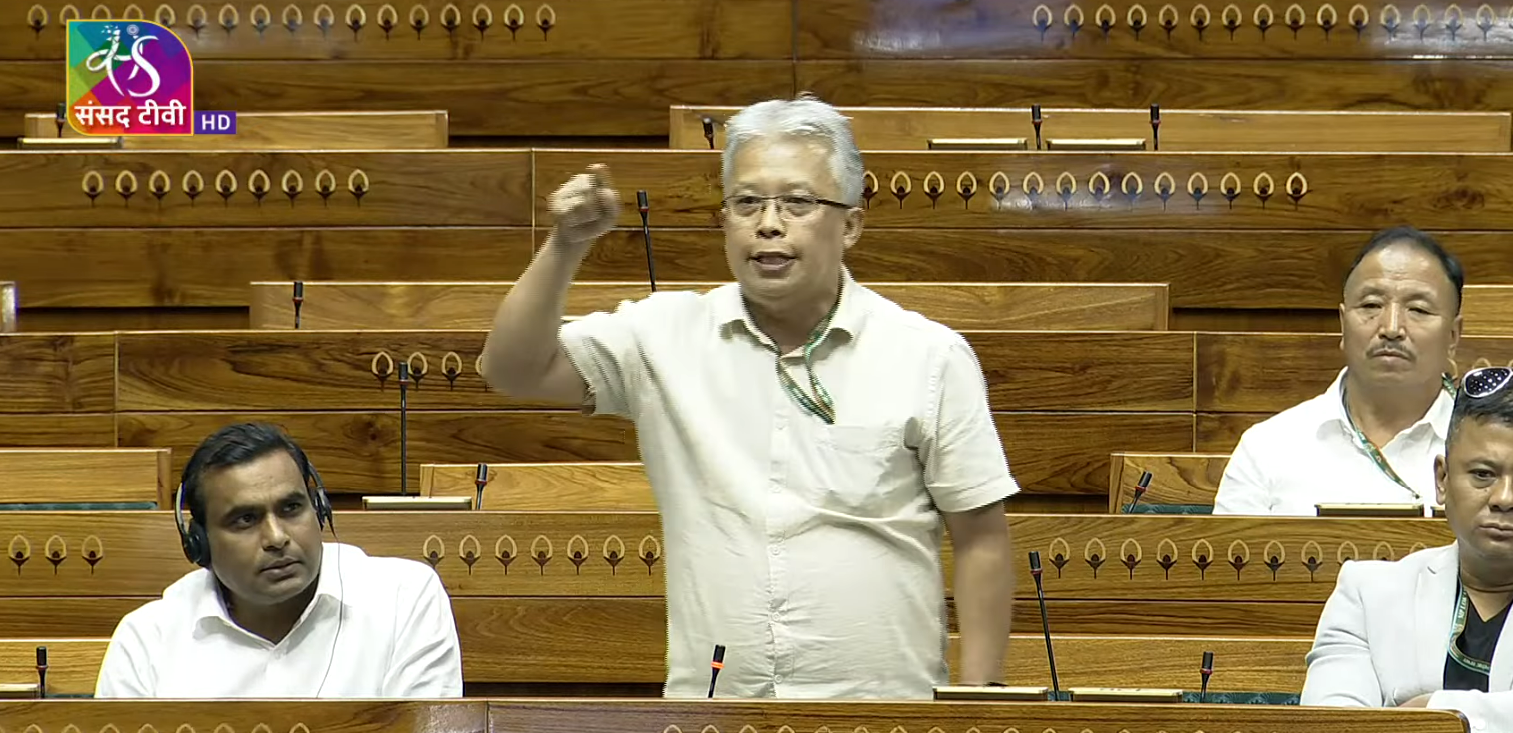
In a calculated move that effectively insulates the Centre from the volatile demographics of the Northeast, the Ministry of Home Affairs (MHA) has strategically parried responsibility for the Manipur immigration crisis back to the state executive. This jurisdictional "passing of the baton" emerged following a high-stakes exchange between Dr. Angomcha Bimol Akoijam, Member of Parliament (Inner Manipur), and the Union Government. While Dr. Bimol has demanded an immediate National Register of Citizens (NRC) and the deferment of the decennial census to prevent the legitimation of "faulty data," the MHA’s response shifts the onus of detection and deportation entirely onto the Manipur State Government.
This standoff reveals a deepening fracture in the State-Centre synergy. The MP characterizes the ongoing crisis as an existential threat fueled by porous borders and the drug trade, demanding structural reforms before any electoral delimitation occurs. Conversely, the MHA asserts that the legal machinery for deportation is already in the hands of the state, leaving the MP’s broader demands for census postponement and a nationwide verification exercise in a state of administrative silence.
The MHA’s stance, detailed in a communication dated April 13, 2026 (D.O. No. 14051/42/2026-F.VI), relies on a dry, legalistic framework that effectively decentralizes the burden of border enforcement. Minister of State for Home Affairs Bandi Sanjay Kumar clarified that under the Immigration and Foreigners Act, 2025, the Union has already equipped state authorities with the "legal teeth" necessary to handle illegal migration.
The Ministry explicitly cited Notification No.S.O.3998E dated 01.09.2025, issued under Section 28 of the Act, which delegates the Central Government’s powers to all State Governments and Union Territory administrations. According to the MHA, the Manipur State Government is empowered—and has been repeatedly advised—to execute the following:
The MHA’s assertion that state governments are already "taking necessary action in the matter as per extant guidelines" serves as a clinical rejection of the need for further central intervention, transitioning the conflict from a policy debate to a question of executive will in Imphal.
The response from the MHA prompted a stinging rebuttal from Dr. Bimol Akoijam on April 15, 2026, where he dismantled what he termed the "executive irresponsibility" of the state leadership. The MP’s critique was not merely administrative but psychological, targeting the sincerity of state leaders who "shout" about the "core issue" of illegal immigrants while failing to utilize the very powers the MHA claims they possess.
So, the power to detect and deport illegal immigrants has been delegated to the State Government, including Manipur Govt. And for all these while, those in power in Manipur have been shouting "illegal immigrants", "illegal immigrants", "core issue" ... without taking concrete action such as instituting a Foreigners Tribunal?
Dr. Angomcha Bimol Akoijam
Dr. Bimol was blunt in his assessment, using the Meeteilon nuances of fagigi mawong (joking manner) and angangmachagi (childish) to describe the conduct of those in power. He accused the state executive of "treating public life like a joke" and pointed to the glaring absence of a Foreigners Tribunal as proof of their inaction.
"Let’s look at the action—take action based on EXECUTIVE power and institute necessary measures, including the constitution of a Foreigners Tribunal, to detect and deport illegal immigrants!"
The MP’s argument highlights a paradox: if the state government truly views illegal immigration as an existential threat, why has it failed to establish the quasi-judicial infrastructure needed to legally delineate citizens from non-citizens in a "lawful, fair, and time-bound manner"?
While the MHA was quick to detail deportation procedures, its silence on the structural reforms requested by the MP is telling. In political correspondence, what is omitted is often as significant as what is stated. The Ministry completely ignored the core of Dr. Bimol’s March 30 petition: the demand for a "reliable citizen database" to prevent the permanent skewing of Manipur’s political representation.
The MHA’s strategic omissions include:
The "So What?" Factor: By framing the issue solely as a matter of "deportation power," the MHA avoids the MP’s most explosive charge: that the upcoming census and delimitation will be built on a foundation of "faulty data." Without the NRIC update—a mandate the government is technically required to follow under its own 2003 law—the MP argues that the democratic process in Manipur risks legitimizing "alien subjects."
The exchange was precipitated by Dr. Bimol’s notice under Rule 377 in the Lok Sabha on March 30, 2026. Recognizing the procedural limitations of the House, the MP sent a comprehensive follow-up to Home Minister Amit Shah, linking illegal immigration to a broader nexus of national security threats.
The MP’s letter raised the stakes by connecting migration to the "Golden Triangle" and the "menace of illicit drug business," specifically citing the "massive presence of illicit plantation of poppy." He argued that the "porous international boundary" and the instability in Myanmar have turned Manipur into a theatre for "alien subjects" to be absorbed into the local population by "vested interest groups" for sectarian agendas.
To illustrate the complexity of the "alien subjects" narrative, Dr. Bimol pointed to a report in The Wire where a Churachandpur-based educationist remarked: "Of course, there are people from Burma in Churachandpur... they are our own brothers and sisters. We close doors on them just because far away a surveyor (McMohan) made an imaginary line without consulting us?"
Against this local sentiment, Dr. Bimol cited the 19.01.2007 Gauhati High Court judgment which branded population figures in nine hill sub-divisions as "highly suspect." He reinforced this with research from Ankush Agarwal and Vikash Kumar (EPW, 2020), which argued that "conventional demographic factors" cannot explain the abnormal growth rates, pointing instead to a desperate "competition for seats in the state legislative assembly."
Dr. Bimol has laid out a clear, if politically difficult, roadmap for restoring normalcy. He argues that justice for the "suffering people of the state" requires four non-negotiable conditions:
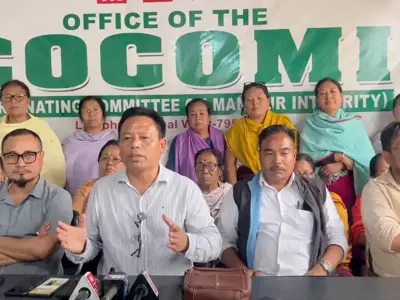
A conglomerate of 14 Civil Society Organizations (CSOs) of Kangleipak had earlier issued a final ultimatum to the Registrar General of India (RGI), threatening to move the High Court of Manipur if their grievances regarding the upcoming census are not addressed within three weeks.
The CSOs, led by convenor Shanta Nahakpam, are demanding that the National Register of Citizens (NRC) be updated before any census operations commence. They argue that conducting a census amidst the current demographic instability could permanently marginalize indigenous populations. The group specifically pointed to the thousands of Internally Displaced Persons (IDPs) living in relief camps, questioning how "house listing" can be accurately conducted when thousands of homes have been destroyed since May 2023.
The representation submitted to the RGI cites potential violations of Articles 19, 21, and 70 of the Constitution, asserting that an inaccurate census would undermine fair political representation and the right to life. Citing historical precedents in Assam (1981) and Jammu & Kashmir (1991), the CSOs argue that census activities should be deferred in conflict zones.
The current deadlock persists: the MP demands a structural overhaul based on existing citizenship laws, while the MHA insists the tools for a solution are already in the hands of the state. Until this gap is bridged, a shadow of illegitimacy hangs over the upcoming census and the very integrity of the democratic process in Manipur.