The Union Government introduced three transformative bills during a special parliamentary session to implement 33% women's reservation and initiate a major delimitation exercise, triggering fierce debate over federalism and the North-South demographic divide
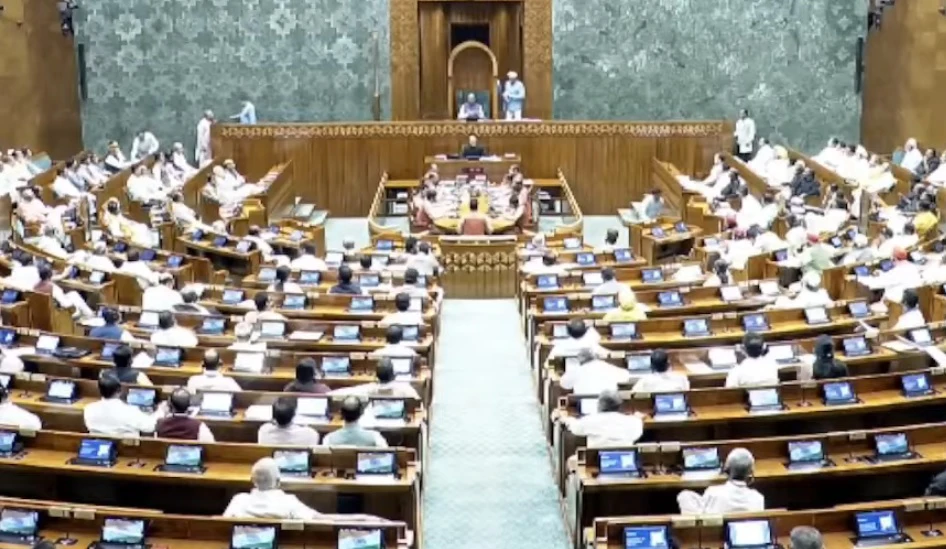
NEW DELHI – In an unprecedented legislative move during a special parliamentary session spanning April 16 to 18, 2026, the Union Government introduced three transformative bills poised to redraw India's political map. While the headline focus of the legislation is the immediate implementation of 33% women's reservation, the bills also initiate a massive delimitation exercise that has sparked intense debate over the nation's federal structure and the historic North-South demographic divide.
The legislative package comprises The Constitution (131st Amendment) Bill, 2026, The Delimitation Bill, 2026, and The Union Territories Laws (Amendment) Bill, 2026.
The bills seek to expand the maximum strength of the Lok Sabha from 550 to 850 members, allocating up to 815 seats to states and 35 to Union Territories. They also lift the decades-old freeze on constituency readjustments — which had locked seat allocations to 1971 census figures to protect states with successful family planning — and allow Parliament to determine the baseline census for a new delimitation. The government intends to use the 2011 Census to expedite the process.
Rather than waiting for a post-2026 census, the 33% women's reservation will be operationalised using the 2011 data, resulting in 273 reserved seats out of a projected 816-member Lok Sabha. The newly established Delimitation Commission will wield powers equivalent to a civil court, with its decisions final and immune from judicial review.
The ruling NDA government framed the bills as a monumental step for gender justice and practical democratic governance. Law Minister Arjun Ram Meghwal, who introduced the bills, emphasised that the legislation prevents any state from losing out by mandating a 50% pro-rata increase in seats for all states. He argued that waiting for the delayed 2021/2027 census would unjustly stall women's representation, and confirmed the 33% quota would apply both vertically and horizontally, including across SC and ST categories.
BJP MP Tejasvi Surya vehemently rejected opposition claims of a "demographic penalty" against Southern states, pointing out that the South's relative weightage in the Lok Sabha — currently at 23.9% — would remain entirely undisturbed under the proportionate increase formula. He noted that Tamil Nadu's seats would rise from 39 to 59 and Kerala's from 20 to 30, dismissing opposition concerns as a "politics of postponement."
Home Minister Amit Shah firmly rejected demands to include a sub-quota for Muslim women, stating that reservation based on religion is unconstitutional, while assuring the House that the ongoing census process would include caste enumeration. Prime Minister Narendra Modi made a strong appeal for unanimous passage, urging the House not to weigh a matter of national interest on "political scales," and offered a guarantee that the proportional representation established historically would not be altered to any state's disadvantage.
While universally supporting the concept of women's reservation, the INDIA bloc fiercely contested the bundling of the quota with the delimitation exercise, viewing it as a Trojan horse to centralise power and marginalise specific demographics.
Congress leaders Mallikarjun Kharge and Rahul Gandhi accused the government of manipulating the women's quota to orchestrate a power grab through gerrymandering. Gandhi argued that the amendment ignores vital caste census data and diminishes representation for OBC, Dalit, and Adivasi communities while treating smaller and Southern states unfairly. INC MPs Gaurav Gogoi and KC Venugopal accused the government of using women as a "shield" to pass highly contested delimitation laws through the back door, with Gogoi questioning the arbitrary ceiling of 850 seats and citing recent controversies in the Assam and Jammu & Kashmir delimitations as evidence of the government's use of boundary-drawing as a political weapon.
Samajwadi Party leaders Akhilesh Yadav and Dharmendra Yadav strongly condemned the unfreezing of the delimitation process and demanded sub-quotas for backward classes and Muslim women, with Akhilesh Yadav suspecting a secret plan wherein new electoral maps had already been drawn to benefit the ruling party's political prospects. TMC MP Kakoli Ghosh Dastidar demanded that the women's quota be increased to 50% and sharply criticised the unchallengeable authority granted to the Delimitation Commission. AIMIM MP Asaduddin Owaisi outright opposed the 131st Amendment, arguing it violates the basic structure of the Constitution by destroying federalism and shifting disproportionate power to the Hindi heartland.
At the heart of the parliamentary uproar lies the historical federal compromise over population control. Southern states successfully implemented family planning, significantly lowering their fertility rates compared to Northern states such as Uttar Pradesh and Bihar. Strict population-based delimitation would naturally transfer immense political power to the North — a demographic penalty that Southern leaders argue poses a direct threat to cooperative federalism.
While the government's proposal attempts a careful balance by applying a flat 50% seat increase across all states to maintain relative weightage, critics contend that the sheer physical expansion of the Hindi heartland's seat count — with Uttar Pradesh alone potentially reaching 120 seats — will inevitably overshadow the political voice of the South and smaller states.
The 2026 Delimitation and Women's Reservation Bills represent a defining constitutional moment. As the government pushes for what it calls overdue representation for women and a necessary democratic update, the opposition remains deeply suspicious, warning that the unchecked redrawing of electoral boundaries could permanently alter the federal and demographic balance of the world's largest democracy.