Opposition INDIA Bloc Holds Firm, Calls Fast-Track Bill a 'Smokescreen' for Controversial Delimitation Push; NDA Accuses Rivals of Being 'Anti-Women'
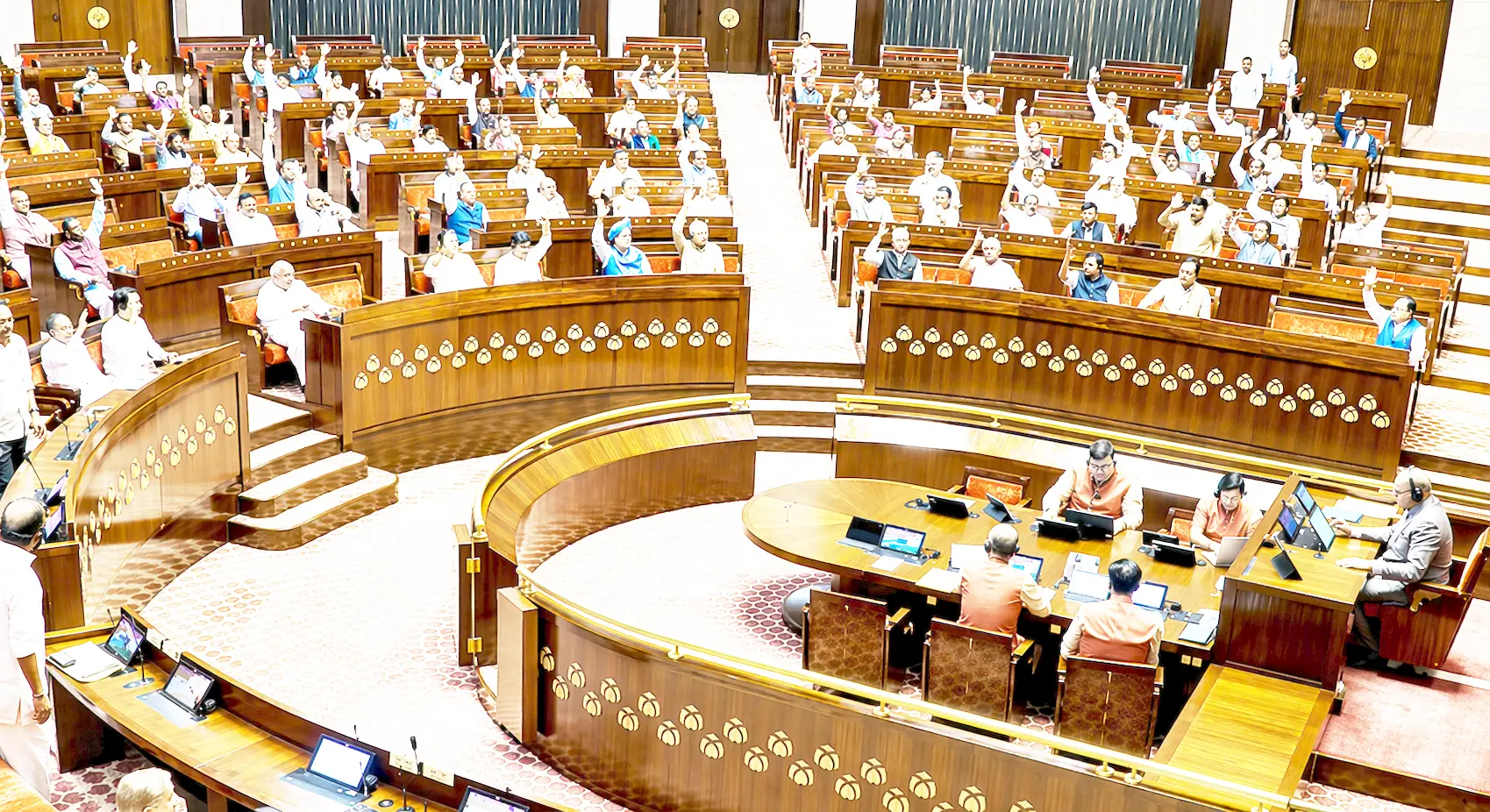
NEW DELHI — The Constitution (131st Amendment) Bill, 2026, which sought to fast-track the implementation of women's reservation for the 2029 elections, was defeated in the Lok Sabha on Thursday, marking the first major legislative setback for the Narendra Modi government in 12 years. Despite 298 members voting in favour and 230 against, the bill fell 54 votes short of the two-thirds majority required to pass a constitutional amendment — dealing a significant blow to the ruling National Democratic Alliance and reigniting one of India's most contentious political debates.
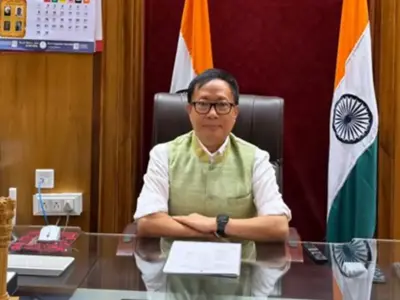
Parliamentary Affairs Minister Kiren Rijiju, acknowledging the outcome from the treasury benches, called the defeat "unfortunate" and a "missed opportunity," before announcing the immediate withdrawal of two companion bills — the Delimitation Bill, 2026 and the Union Territories Laws (Amendment) Bill, 2026 — which could not proceed without the constitutional change.
The bill that was defeated on Thursday was not the original women's reservation legislation. That law — the Nari Shakti Vandan Adhiniyam, or the Constitution (106th Amendment) Act, 2023 — was passed by Parliament in September 2023 with near-unanimous support and widespread celebration. It mandates 33% reservation for women in the Lok Sabha, all state legislative assemblies, and the Delhi Legislative Assembly, with sub-quotas for Scheduled Castes and Scheduled Tribes. The reservation is set for an initial period of 15 years and can be extended by Parliament. Reserved seats will rotate among constituencies after each delimitation exercise.
The catch, however, lies in its implementation clause. The 2023 law specifies that the reservation will only take effect after the first census following the Act's commencement is published and a subsequent delimitation exercise is completed. With the census only beginning on April 1, 2026, implementation is widely expected to be delayed until at least the 2029 or 2030 elections.
It was to break this deadlock that the government introduced the 131st Amendment Bill, 2026 — linking the reservation's implementation to a new Delimitation Bill, 2026, and attempting to put women's reservation on the ground before the next general election. That linkage proved fatal.
The final tally told the story clearly. With 528 members present and voting, the bill needed 352 votes — two-thirds of those voting — to pass. It received 298. The shortfall of 54 votes was not marginal. It reflected near-total floor discipline on both sides, with voting falling strictly along coalition lines.
The National Democratic Alliance, led by the BJP, voted as a block in favour. Key allies TDP and AIADMK supported the bill despite concerns that their home states — Andhra Pradesh and Tamil Nadu — stood to lose relative seat share under the proposed delimitation criteria.
The INDIA bloc voted unanimously against. Congress, the Samajwadi Party, the Trinamool Congress, the Left parties, and the DMK ensured total coordination to deny the government the numbers it needed. There were no abstentions.
The government made no effort to conceal its anger. Prime Minister Narendra Modi had appealed to MPs for a "conscience vote" ahead of the debate, urging them to "not deprive Nari Shakti of new opportunities." He framed the bill as a "historic step" toward women's empowerment and declared that "respect for women is respect for the nation."
Home Minister Amit Shah was sharper. He accused the opposition of being "anti-women" and predicted they would face the "wrath of women" at the polls. On the central controversy — the fear among southern states that a new delimitation exercise would reduce their parliamentary representation — Shah dismissed concerns outright, asserting that southern states would in fact see their representation increase and that the government's only goal was "one person, one vote, one value."
The INDIA bloc rejected that framing entirely, and did so with force. Leader of Opposition Rahul Gandhi called the bill's defeat a "victory for the Constitution," describing the legislation as a "panic reaction" and an "attack on the nation-state." He alleged the government had used women's reservation as a "smokescreen" to push through a delimitation process designed to redraw India's electoral map to the disadvantage of southern and smaller states. His offer, however, was direct: implement the original 2023 law immediately, without conditions, and the opposition would extend "unconditional support."
Congress President Mallikarjun Kharge accused Prime Minister Modi and Home Minister Shah of using women as a "shield" for what he called a "mischievous" delimitation exercise that threatened India's federal structure.
Congress MP Dr Angomcha Bimol Akoijam called it "a surreptitious attempt to manipulate the electoral schemes and political landscape in the country under the mask of women's reservation."
A surreptitious attempt to manipulate the electoral schemes and political landscape in the country under the mask of women's reservation was exposed and defeated in Lok Sabha today!@INCIndia #WomenQuotaBill #DelimitationBill #LokSabha
— A. Bimol Akoijam (@Bimol_Akoijam) April 17, 2026
Tamil Nadu Chief Minister M.K. Stalin was unambiguous in his celebration, greeting the outcome with the slogan "Tamil Nadu defeats Delhi" — framing the bill's failure squarely as a win for southern states' political representation.
Priyanka Gandhi Vadra welcomed the result as a "big win for democracy," rejecting the linking of reservation to what she described as "outdated census data."
TMC MP Kalyan Banerjee questioned the government's decision to call a special sitting during ongoing state elections, calling it "unfair." Dimple Yadav of the Samajwadi Party argued the government would better serve women by focusing on girl-child education rather than what she termed "misleading" legislation.
At the core of the opposition's resistance was a fear that transcends party lines — the fear that a fresh delimitation exercise, based on population data that reflects decades of demographic divergence between India's northern and southern states, would permanently reduce the parliamentary weight of states that have more successfully controlled population growth.
Southern states like Tamil Nadu, Kerala, Karnataka, and Andhra Pradesh have long argued that they are being penalised for following family planning norms, while northern states with larger populations stand to gain seats. By tying women's reservation to a new delimitation exercise, critics argued, the government was attempting to resolve a long-simmering federal dispute under the cover of gender justice.
The opposition's position was not that women's reservation was wrong. It was that this particular bill, at this particular moment, was the wrong vehicle — and a potentially dangerous one.
Thursday's outcome does not undo the Nari Shakti Vandan Adhiniyam of 2023. That law remains on the books. But its implementation now depends entirely on the completion of the census — which began on April 1, 2026 — and a subsequent delimitation exercise, a process that by all estimates will push actual reservation on the ground to 2029 at the earliest, and possibly beyond.
The absence of a sub-quota for women from Other Backward Classes remains a separate and unresolved controversy. Several opposition parties, including the Samajwadi Party, have consistently demanded that OBC women be given a specific quota within the 33% reservation — a demand the government has so far not addressed.
For millions of women across the country who celebrated the passage of the 2023 law, Thursday's developments offer a complicated picture: the original promise stands, but the road to implementation has grown longer, and the politics around it sharper and more divisive than ever.
Beyond the immediate question of women's reservation, Thursday's vote carries a broader political significance. It is the first time in 12 years that the Modi government has suffered a defeat on a major piece of legislation in the Lok Sabha — a chamber where the NDA has held a comfortable majority for the better part of a decade.
The defeat signals that the INDIA bloc, despite its internal tensions and the BJP's dominant numbers, retains the ability to hold together on critical votes and deny the government the supermajority it needs for constitutional amendments. It also signals that the delimitation issue — long simmering beneath the surface of Indian politics — has now arrived at the centre of the national debate, with consequences that will outlast this particular vote.
Kiren Rijiju's withdrawal of the companion Delimitation Bill and the Union Territories Laws (Amendment) Bill confirmed that the government's broader legislative package for this session has collapsed. What comes next — whether the government seeks a fresh path to implementation, reopens negotiations with the opposition, or allows the issue to sit until after the census — remains to be seen.