Transgender activist Malem Thongam has petitioned the Supreme Court, alleging prolonged highway blockades, death threats, and government inaction in Manipur, seeking urgent judicial intervention to restore free movement and enforce constitutional rights.
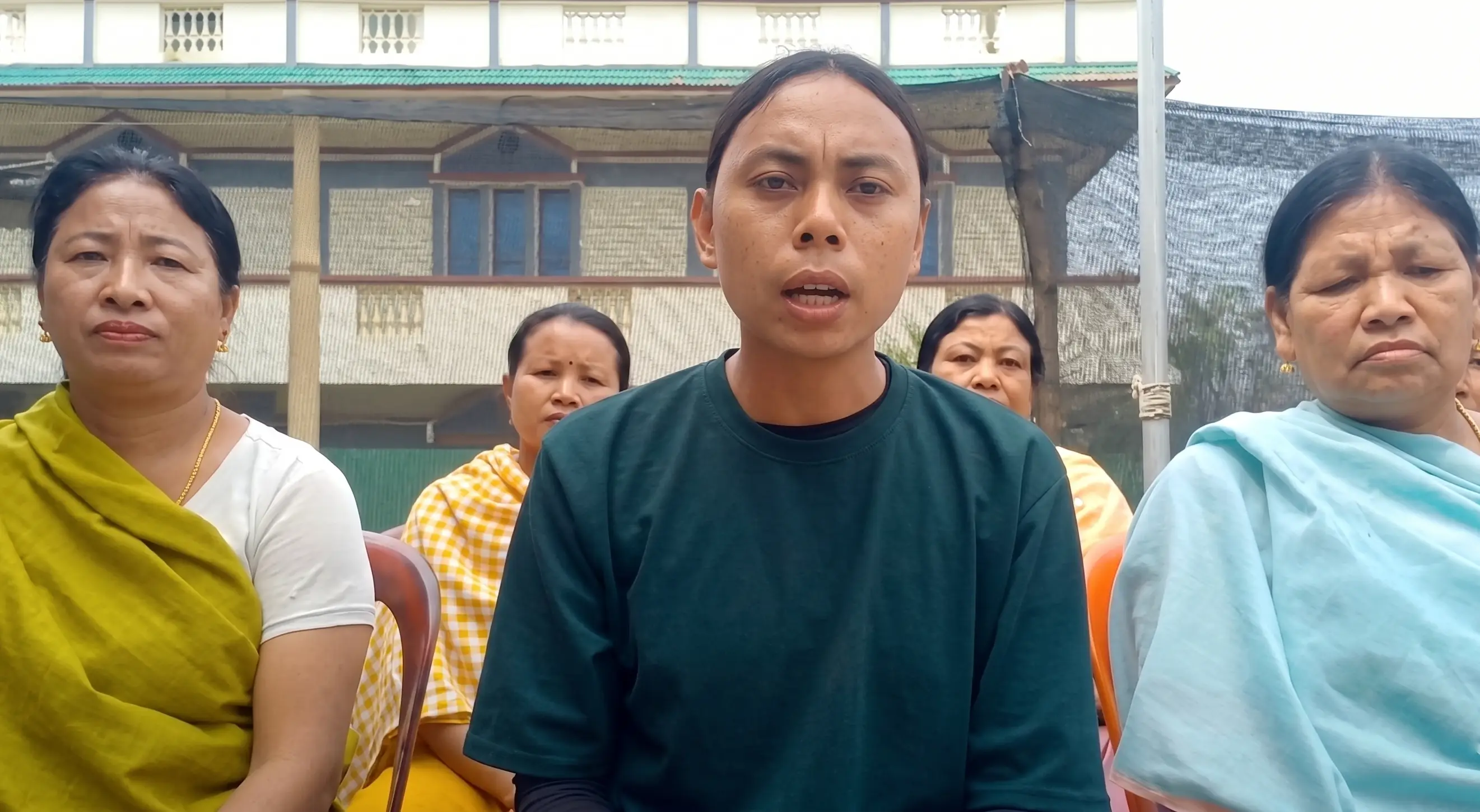
IMPHAL – A transgender social activist from Manipur has petitioned the Supreme Court, seeking suo motu cognizance of what she described as a prolonged collapse of constitutional governance in the state, marked by continued blockades of National Highways, alleged death threats by certain organisations, and inaction by both State and Central authorities.
The petitioner, Malem Thongam, submitted the letter petition to the Chief Justice of India, alleging that the failure to ensure free movement on National Highway-2 and other key routes has resulted in systemic violations of fundamental rights guaranteed under Articles 14, 19, and 21 of the Constitution.
Malem Thongam, identifying herself as a peace campaigner, stated that she had undertaken a 2,300-km “Cycling for Peace” expedition from Delhi to Imphal between October and December 2025. During the journey, she alleged that she received public threats warning of “untoward incidents” if she attempted to pass through certain areas along National Highway-2, particularly Kangpokpi district.
According to the petition, similar warnings were issued again in March 2026, cautioning her against entering parts of Churachandpur district. The petitioner claimed that these threats were made through public statements and social media posts, yet no arrests or legal action followed.
She further alleged that she was eventually compelled to travel under heavy security escort to ensure her safety, raising concerns about the inability of citizens to freely access public roads without protection.
Claims of Government Inaction
The petition contends that both the Manipur government and the Union government have failed to discharge their constitutional responsibilities. It states that despite formal complaints being filed, including requests for registration of FIRs in connection with alleged threats, no effective law enforcement action has been taken.
Malem Thongam argued that the continued existence of blockades and restrictions on highways reflects a broader breakdown of administrative authority. She alleged that the authorities have allowed a situation where access to public infrastructure is effectively determined by non-state actors.
The petitioner also cited Articles 256 and 257 of the Constitution, asserting that the Union government bears responsibility for ensuring compliance with constitutional provisions and maintaining access to national infrastructure.
Impact on Livelihoods and Public Access
Highlighting the broader impact, the petition claims that the restrictions on highway movement have severely affected traders, transport workers, and ordinary citizens. It states that many truck drivers and traders have been unable to operate along National Highway-2 due to fears of violence, extortion, or intimidation.
The petitioner further alleged that residents have been compelled to rely on air travel for movement in and out of the state, resulting in increased financial burden, particularly for students, patients, and low-income families.
According to the petition, the disruption of road connectivity has also affected the supply of essential commodities, including medicines, fuel, and food items, raising concerns over public welfare.
Allegation of Rights Violations
The petition characterizes the situation as a violation of the right to equality, freedom of movement, and the right to life. It argues that the inability of certain communities to access national highways within their own state amounts to discriminatory treatment.
It further contends that the prolonged restrictions have effectively curtailed basic freedoms and access to essential services, thereby undermining constitutional guarantees.
In support of its arguments, the petition refers to previous Supreme Court judgments, including Mazdoor Kisan Shakti Sangathan vs Union of India (2018) and Amit Sahni vs Commissioner of Police (2020), which held that while the right to protest is fundamental, it cannot be exercised in a manner that indefinitely blocks public ways or disrupts essential services.
The petitioner argued that the current situation represents a failure to enforce these principles and maintain the rule of law.
Call for Judicial Intervention
Citing exhaustion of administrative remedies, Malem Thongam urged the Supreme Court to intervene, stating that the judiciary remains the “final sentinel” when executive authorities fail to act.
Among the reliefs sought, the petition requests the court to direct the immediate restoration of free movement on National Highway-2 and other affected routes, ensure safety for all citizens regardless of community, and take action against those allegedly issuing threats or enforcing blockades.
The petitioner has also sought directions for regulation or subsidisation of airfares for Manipur residents until road connectivity is fully restored.
Additionally, the plea calls for the constitution of a judicial commission to examine the reasons behind the prolonged disruption and alleged inaction since May 2023, as well as the appointment of an independent authority to monitor restoration of normalcy.
The petition comes amid continuing concerns over law and order in Manipur, where ethnic tensions and disruptions to transport routes have been reported over an extended period.
The case, if taken up by the Supreme Court, is likely to bring renewed focus on issues of access, governance, and enforcement of fundamental rights in conflict-affected regions.