Uripok seniors met the Governor of Manipur on April 28, submitting a six-point memo to him and the President of India demanding NRC before Census, justice for killings, and removal of SoO camps.
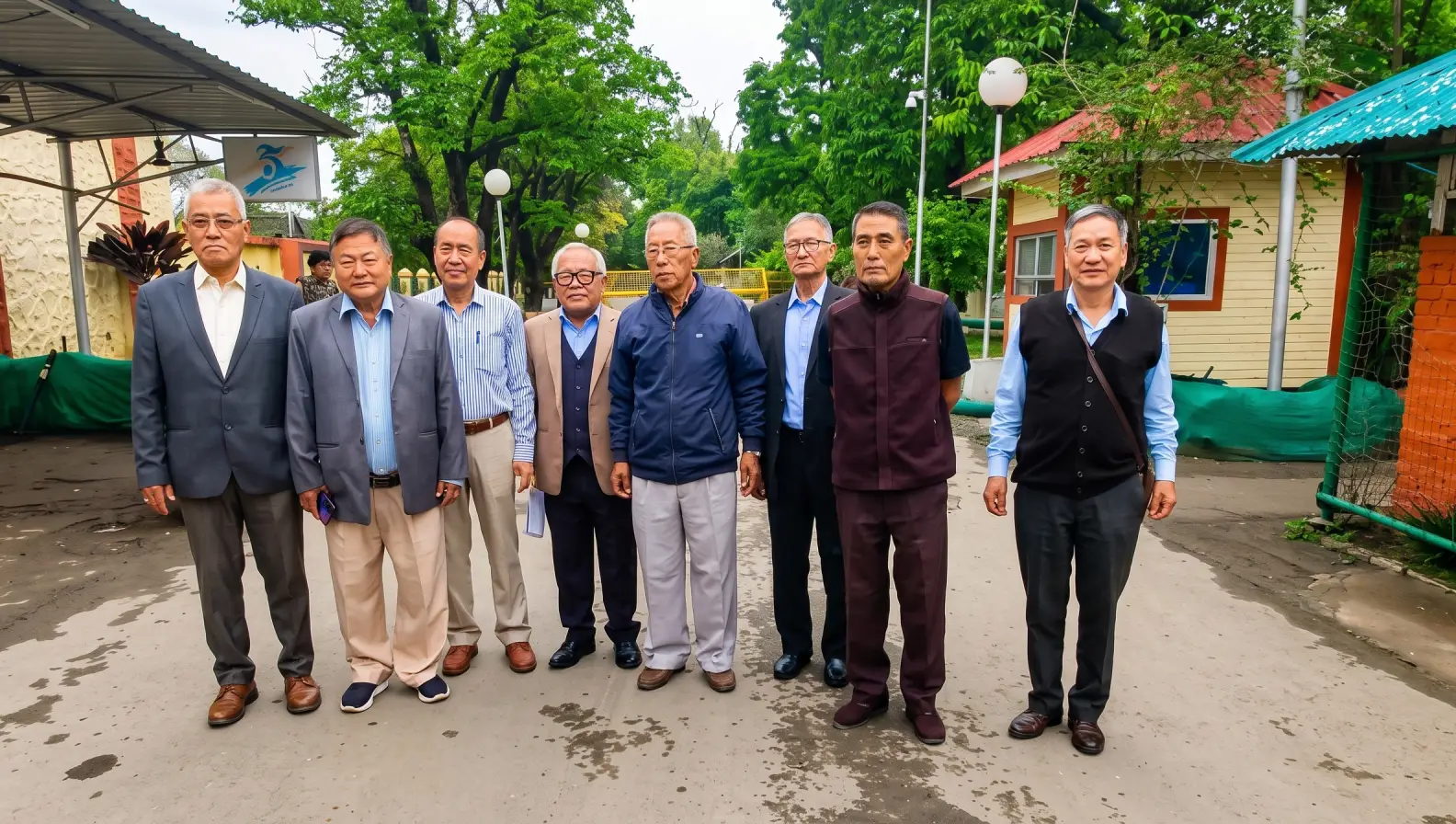
IMPHAL — Senior citizens of the Uripok area in Imphal West district met the Governor of Manipur on Tuesday, April 28, and formally submitted a six-point memorandum calling for wide-ranging intervention by the central and state authorities to address what they described as a comprehensive failure to protect the lives, liberties and constitutional rights of the people of Manipur. An identical memorandum addressed to the President of India was also submitted through the Governor’s office on the same day.
The memorandum had been adopted nine days earlier, on April 19, when the Uripok Apunba Lup (UAL) and the Uripok Nupi Apunba Lup organised a sit-in protest at the Uripok Canteen corner, at which senior citizens of the area appended their signatures to the document. The submission was confirmed by Chingthang Nambam, Publicity Secretary of the UAL. The memorandum is dated April 26, 2026.
A State Under Siege: The Memorandum’s Historical Frame
The document opens with an invocation of Manipur’s antiquity and its post-merger record of distinction, listing internationally recognised figures from the state including Olympic and world champions in boxing, weightlifting and hockey, as well as celebrated figures in theatre, film and science. It notes the recent BAFTA Award won by the Manipuri film BOONG as a marker of the state’s contemporary cultural reach.
Against this backdrop of achievement, the memorandum catalogues the suffering that has accumulated since the outbreak of ethnic violence on May 3, 2023. It places responsibility for the violence squarely on what it terms “Chin-Kuki Narco terrorists” engaged in cross-border drug and arms smuggling along the Myanmar border. More than 50,000 citizens have been displaced, it states, while hill and valley communities have been entirely disconnected from one another. The document alleges that women and children have been abducted, killed and their bodies mutilated and thrown into rivers, and that not a single case has resulted in a conviction. It further alleges that a civilian worker disappeared inside a military station, and concludes that both central and state security forces have failed in their constitutional duty to protect the lives and liberties of citizens.
“Till date, not a single justice has been done to a single case despite hue and cries from the public of the State.”
— From the memorandum submitted to the Governor, April 26, 2026
Specific Atrocities Cited: Jiribam, Tronglaobi and the Ukhrul Highway
The memorandum draws attention to three specific incidents as illustrative of the ongoing pattern of violence and impunity.
? Jiribam, November 2024
Three children and three women were abducted from Jakuradhor under Jiribam District by Hmar-Kuki militants and killed. Their bodies were recovered from the Barak River.
? Tronglaobi, Bishnupur — April 7, 2026
At approximately 1:10 am, the residence of Oinam Mangal Meitei — a BSF personnel — was attacked with a bomb. Five-year-old Tomthin Oinam and five-month-old Yaisana Oinam were killed. Their mother sustained serious injuries. When local villagers stormed the nearby CRPF Camp at Gelmol in protest, three civilians — Wahengbam Bobby (29), Laishram Jiten (41) and Huidrom Micheal (31) — were killed in what the memorandum describes as indiscriminate firing by CRPF personnel.
? NH-202, April 18, 2026
Chinaosang Sokungnao (45), a retired soldier of the Naga Regiment from Tasar village, and Yaruingam Vashum (42) from Kharasom village in Ukhrul district were ambushed and killed on the Imphal–Ukhrul Road. Both were members of the Tangkhul Naga community.
The memorandum describes the killing of civilians on the national highway as a violation of Article 19(1)(d) of the Constitution of India, which guarantees the right to free movement throughout the territory of India, and holds both the central and state governments responsible for failing in their constitutional obligations.
Deforestation, Drugs and Demographic Imbalance: The Wider Grievances
Beyond the immediate security failures, the memorandum raises two structural concerns. The first is large-scale deforestation in hill districts, particularly Kangpokpi and Churachandpur, which it attributes to illegal poppy cultivation. It links this deforestation directly to three consecutive floods in the valley in 2025, to recurring landslides in the hills, to the deterioration of the Loktak Lake — the largest freshwater lake in north-east India — and to broader climatic disruption. It notes a low conviction rate for NDPS cases and a large backlog of drug-related prosecutions pending in courts.
The second structural concern is demographic: the memorandum alleges that large-scale immigration from Myanmar has caused a demographic imbalance in Kuki-dominated districts including Churachandpur, Kangpokpi and Tengnoupal, with an abnormal proliferation of new villages cited as evidence. It calls for detection and deportation of illegal immigrants as an urgent measure to protect the indigenous population.
The Six Demands
The memorandum formally requests the Governor to direct the relevant authorities to take the following six steps:
|
Six-Point Memorandum — Summary of Demands |
|
|
I |
Conduct the National Register of Citizens (NRC) at the earliest, before any Census, in Manipur. |
|
II |
Arrest and prosecute all those involved in the killing of innocent civilians in Manipur since May 3, 2023, within a stipulated time frame. |
|
III |
Prevent deforestation in Kangpokpi and Churachandpur districts; expedite investigation and filing of charge sheets in all pending narcotic drug cases. |
|
IV |
Remove all camps of Kuki militants operating under Suspension of Operations (SoO) agreements from areas adjoining valley districts. |
|
V |
Deploy State Police, Manipur Rifles and Indian Reserved Battalions in sensitive Meitei villages bordering Kuki areas. |
|
VI |
Provide adequate security to enable Meitei community members to travel freely on National Highways, and provide security personnel to the Tangkhul community on the Imphal–Ukhrul Highway. |
Significance: A Grassroots Voice Enters the Political Debate
The submission of the memorandum by Uripok’s senior citizen community arrives at a moment of intensifying political debate over several of its specific demands. The demand for NRC before Census directly contradicts the position stated by Chief Minister Yumnam Khemchand at a press conference on April 25, in which he argued that a Census must precede any NRC exercise — a claim that the MPCC formally challenged on April 27. The memorandum, originating from civil society rather than any political party, lends the NRC-first demand a distinct moral weight: it is framed not as a partisan position but as the considered view of elders from a community living through the crisis.
The demand for removal of SoO camps from valley-adjacent areas and the deployment of state forces in vulnerable Meitei villages reflect longstanding concerns among valley civil society organisations that the current security architecture has left certain communities without adequate protection. The explicit inclusion of the Tangkhul community’s security needs on the Imphal–Ukhrul Highway — following the killing of two Tangkhul civilians on April 18 that triggered the UNC’s 72-hour shutdown — is notable, signalling an attempt by the Uripok community to frame its concerns in terms that acknowledge the shared vulnerability of both Meitei and Naga communities to what the memorandum calls “crime against humanity.”