As Arunachal Pradesh moves further into the 21st century, evidence-based planning must account for the shifting growth rates characterized by the national "inverted U-shaped trajectory".
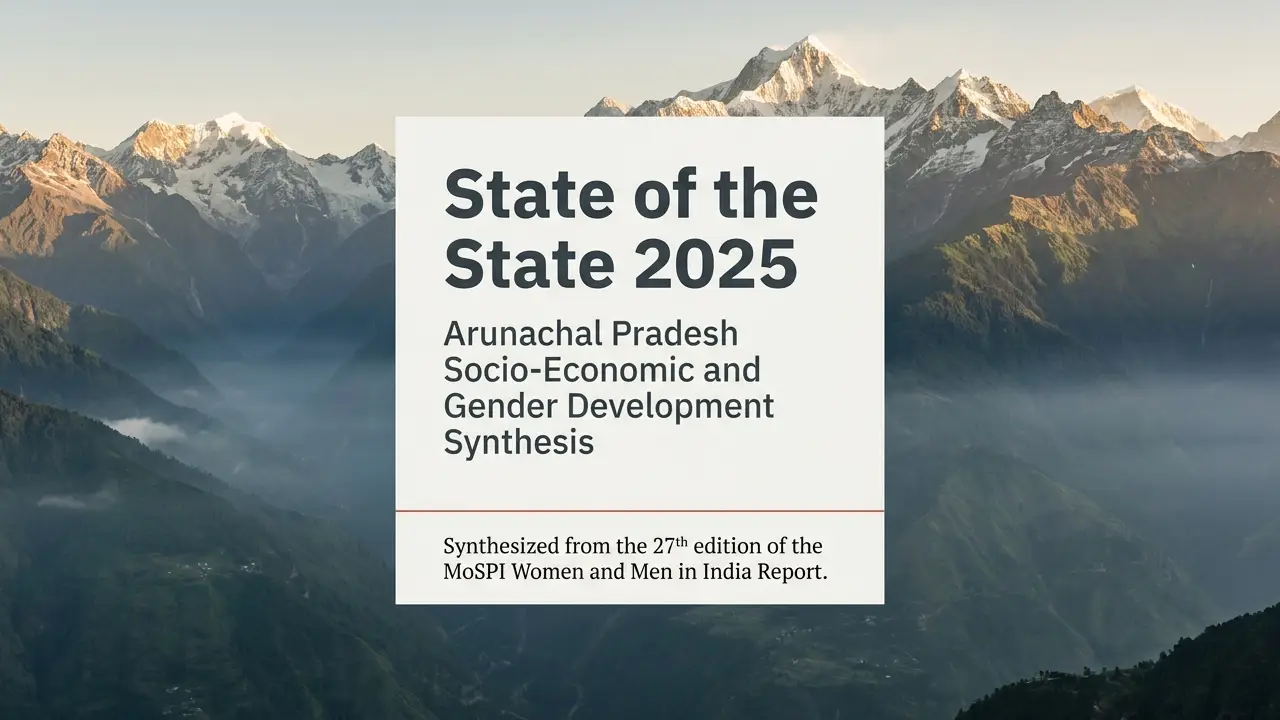
1. Statistical Framework and Demographic Dynamics
In the complex demographic landscape of Arunachal Pradesh, the strategic importance of gender-disaggregated population data is paramount for navigating the state’s unique developmental hurdles. As the state moves further into the 21st century, evidence-based planning must account for the shifting growth rates characterized by the national "inverted U-shaped trajectory". According to the Ministry’s overview, India’s population growth peaked between 1971 and 1981 and is now in a steady decline, with the national average annual exponential growth rate falling from 1.69 in 2001 to 1.63 in 2011. For Arunachal Pradesh, this transition heralds the onset of a demographic dividend, yet the state’s ability to capitalize on this depends entirely on correcting localized gender imbalances that persist across different age cohorts.
The demographic profile of the state, synthesized from Tables 1.3 and 1.4, reveals significant variances when contrasted with national trends. While Arunachal Pradesh has historically maintained a healthier child sex ratio than the national average, the overall sex ratio continues to reflect regional pressures.
|
Demographic Indicator |
Arunachal Pradesh (State Metric) |
National Average (Ref: Overview) |
|
Overall Sex Ratio (Females per 1000 Males) |
938 |
943 |
|
Child Sex Ratio (0-6 Years) |
972 |
919 |
|
Sex Ratio at Birth (SRB) |
940 |
906 |
|
? |
The state’s Sex Ratio at Birth (SRB) of 940 remains significantly higher than the national total of 906 (SRS data). This relative health in birth ratios suggests a cultural baseline of gender parity that outpaces the national average. However, the "So What?" lies in the long-term impact: if this ratio is not protected against the urbanization-led skewing seen in other states, Arunachal Pradesh risks losing its social stability. A healthy SRB ensures a balanced future labor force, but the state must ensure that this demographic foundation is supported by robust healthcare to prevent a decline in female survival rates as children age. |
These population foundations directly influence the state’s health and mortality outcomes, as the survival of this balanced birth cohort depends on the efficacy of the rural healthcare network.
2. Health, Nutrition, and Life Expectancy Analysis
Health indicators serve as the primary yardstick for sustainable development. The Ministry of Statistics and Programme Implementation (MoSPI) underscores that "fostering gender equality" is impossible without rigorous health monitoring. In Arunachal Pradesh, where geographic isolation often dictates service delivery, the quality of maternity and infant care is the ultimate indicator of social equity.
Maternity Care and Infant Survival Data from Tables 2.6 and 2.10 indicate an Infant Mortality Rate (IMR) for Arunachal Pradesh of approximately 31 per 1,000 live births, which stagnates slightly above the national average of 28. More concerning is the gap in accessibility; the percentage of births attended by Skilled Health Personnel (Table 2.11) in the state remains a critical bottleneck. While national urban centers see near-universal skilled attendance, Arunachal Pradesh’s rural delivery rates highlight an urgent need for institutionalizing maternity care to protect the lives of both mothers and newborns.
Life Expectancy and Workforce Burdens The Life Expectancy at Birth for the state lags behind the national figures (69.7 years), reflecting the harsh realities of healthcare accessibility in mountainous terrain. This is further exacerbated by behavioral health risks. Prevalence rates for Tobacco Use (Table 2.15) and Obesity (Table 2.16) among the adult population, coupled with periodic outbreaks of Acute Diarrhoeal Diseases (Table 2.19), create a double burden of disease.
|
? |
The high incidence of preventable diseases and lifestyle-related conditions does not merely strain the healthcare budget—it actively erodes the productivity of the state’s workforce. For a state seeking to transition toward a high-growth economy, a population burdened by chronic illness and high IMR results in a "leaky" human capital pipeline. To fix this, health interventions must move beyond basic survival to holistic wellness, ensuring that the working-age population remains fit for economic participation. |
A healthy population is the prerequisite for the educational attainment necessary to drive social mobility and long-term economic independence.
3. Educational Landscape and Human Capital Development
The education sector in Arunachal Pradesh is currently undergoing a structural transformation under the National Education Policy (NEP), which aims to bridge the historical gender gap in literacy and technical skills.
Literacy and Enrolment Metrics According to Table 3.3, the Literacy Rate in Arunachal Pradesh stands at 65.38%, with a glaring Gender Gap in Literacy of approximately 14.1% (57.7% for females vs 71.8% for males). While the gap is narrowing, the Gross Enrolment Ratio (GER) and Gender Parity Indices (GPI) provide a more nuanced view of the current trajectory:
|
? |
The Mean Years of Schooling (Table 3.12.3) for women in the state remains lower than the male average, which determines the state's readiness for a high-skill economy. The "So What?" is clear: if the state’s female population continues to drop out before reaching higher education or avoids STEM disciplines, Arunachal Pradesh will remain an exporter of raw labor and a consumer of technology rather than a producer. True economic transformation requires that the high GPI seen in primary schools is maintained through the doctorate and professional levels. |
4. Economic Participation and Financial Inclusion Metrics
The Labour Force Participation Rate (LFPR) and Worker Population Ratio (WPR) are the definitive indicators of gendered economic empowerment. In Arunachal Pradesh, the integration of women into the formal economy remains a work in progress.
Labour Market Dynamics The state’s LFPR for women (Table 4.3) is approximately 32%, which, while higher than some northern states, still outpaces the state’s ability to provide formal employment, as evidenced by a female unemployment rate (Table 4.15) that remains higher than the national average for the 15-29 age group.
Financial Inclusion and Grassroots Agency Financial agency is the backbone of economic independence. Current metrics show:
|
? |
The growth of SHGs serves as a powerful proxy for women’s grassroots economic agency. The "So What?" here is that microfinance is currently doing the "heavy lifting" for women’s empowerment in the state. However, to move from grassroots survival to macro-level economic power, these SHGs must be transitioned into Small and Medium Enterprises (SMEs). Without this transition, women’s economic participation will remain confined to the informal sector, limiting their influence on the state’s broader fiscal policies. |
5. Participation in Decision-Making and Governance
Inclusive growth requires that the voices of women are represented not just in the workforce, but at the highest levels of governance and managerial decision-making.
Political and Institutional Representation
|
? |
There is a profound correlation between Women’s Participation in Household Decision-Making (Table 5.19) and political representation. In Arunachal, while women report high levels of participation in household decisions regarding their own health and large purchases (over 85%), this micro-level agency has not yet translated into macro-level political power. The "So What?" is that the state has a "leadership ceiling." Until household agency is converted into legislative presence, the specific needs of women in health and safety will remain secondary in policy formulations. |
6. Safety, Security, and Institutional Redress
The necessity of robust gender statistics is most acute in the realm of safety. A secure environment is the fundamental prerequisite for women to utilize their education and participate in the economy.
Crimes and Institutional Response The Rate of Incidence of Crimes Against Women (Table 6.2) in Arunachal Pradesh is approximately 52 per lakh women, which, while lower than the national peak, is rising in the category of Cyber Crimes (Table 6.12). The state’s institutional response is evidenced by the establishment of Women Help Desks (Table 6.15) in nearly all police stations. However, the Disposal of Cases by Courts (Table 6.6) remains slow, with a high pendency rate.
Social Challenges: Violence and Marriage
|
? |
Safety is currently the primary "hidden" barrier to the state's GDP. High rates of spousal violence and slow judicial redress create an environment of risk that discourages women from entering the public workforce or pursuing leadership. Addressing these security gaps is not just a legal necessity but a strategic economic intervention. |
7. Synthesis and Strategic Outlook
The 2025 socio-economic profile of Arunachal Pradesh reveals a state that is lagging behind the national Sustainable Development Goals (SDGs) in terms of literacy and healthcare infrastructure, yet leading in its fundamental demographic sex ratios. The synthesis of this data suggests that the state’s greatest asset—its balanced population—is being hindered by structural gaps in skilled health personnel, tertiary education retention, and political representation.
|
? |
Arunachal Pradesh needs a transition from "access" to "quality." While girls are in school and women are in the labor force, they are largely absent from high-skill STEM roles and decision-making seats. To bridge these disparities, the state must implement evidence-based interventions that target the transition points: from primary to higher education, and from microfinance to formal entrepreneurship. Only through these targeted, data-driven shifts can Arunachal Pradesh fulfill its journey toward becoming a truly inclusive and prosperous society by 2036. |
Source: “Women and Men in India 2025: Selected Indicators and Data (27th Issue)” released by the Ministry of Statistics & Programme Implementation, National Statistics Office, on 29 April, 2026