Gender-disaggregated data reveals Assam's persistent gaps in labour force participation, maternal healthcare, and gender justice. Bridging the literacy-to-labour divide, strengthening health-skill nexus, and improving crime disposal rates are critical for realising the state's demographic dividend.
The strategic imperative of gender-disaggregated data in Assam is foundational to the state's trajectory toward inclusive growth. As outlined in the Overview of the 27th edition of the Women and Men in India 2025 report by the Ministry of Statistics and Programme Implementation (MoSPI), identifying structural disparities between genders is essential for "Leaving No One Behind" — a core principle of the Sustainable Development Goals (SDGs).
This publication, carrying forward a legacy established in 1995, provides the evidence-based framework required for gender-responsive planning. As noted by Sh. N.K. Santoshi (Director General, NSO) and Sh. S.C. Malik (Additional Director General), robust statistics are not merely descriptors but indispensable tools for identifying persistent gaps and designing targeted interventions.
The institutionalisation of this data was further strengthened by the re-constitution of the Expert Committee on Gender Statistics on 29 October 2025, ensuring that regional analyses like this one are grounded in validated, harmonised metrics.
This analysis synthesises indicators across health, education, and economic participation to provide a clear picture of Assam's standing, cognisant of the fact that while the report is the 2025 edition, the official messages were finalised in March 2026, reflecting the necessary lag in comprehensive data validation.
India's population growth follows an inverted U-shaped trajectory, reaching its peak during the 1971–1981 decade and steadily declining thereafter. For Assam, this transition signals the onset of a demographic dividend phase that will eventually lead to population ageing. The state must navigate this dividend with a keen eye on gender balance to ensure social stability.
|
Demographic Indicator |
Assam |
India (National Average) |
|
Sex Ratio (Post-Independence Trend) |
NR |
Variable (Fluctuating) |
|
Sex Ratio at Birth (SRB): Total |
NR |
907 – 918 |
|
Sex Ratio at Birth (SRB): Rural |
NR |
904 – 910 |
|
Sex Ratio at Birth (SRB): Urban |
NR |
906 – 912 |
|
Avg. Annual Pop. Growth Rate: Female |
NR |
1.58% |
|
Avg. Annual Pop. Growth Rate: Male |
NR |
1.63% |
NR = Not Reported in provided source summary.
The divergence between rural and urban sex ratios — nationally showing a higher range in urban centres (up to 912) compared to rural areas (904–910) — indicates a critical area for developmental planning. In Assam, these figures dictate the scale of healthcare infrastructure required, particularly as the population age structure shifts.
Reproductive health indicators are strategic pillars for sustainable growth, directly influencing the quality of the future workforce. Metrics such as the Total Fertility Rate (TFR) and Maternal Mortality Ratio (MMR) are indicative of the state's success in providing accessible healthcare. Gender statistics are essential for assessing outcomes across life cycles, particularly in regions where geographic barriers may impede access to skilled birth attendance.
|
Health Indicator |
Assam |
National Average / Benchmark |
|
Total Fertility Rate (TFR) |
NR |
Replacement Level Target (2.1) |
|
Infant Mortality Rate (IMR) — Female |
NR |
Gender-Specific (Table 2.6) |
|
Infant Mortality Rate (IMR) — Male |
NR |
Gender-Specific (Table 2.6) |
|
Maternal Mortality Ratio (MMR) |
NR |
SDG Target 3.1 |
|
Skilled Health Personnel Attendance (%) |
NR |
Key Safety Indicator (Table 2.11) |
|
! |
The correlation between the percentage of births attended by skilled health personnel (Table 2.11) and mortality outcomes is a vital policy lever. In a state like Assam, a high MMR or IMR would suggest a deficit in the coverage of Registered Nurses and Midwives (Table 2.25). Improving the health-skill nexus is a prerequisite for stabilising mortality figures, thereby creating the social stability necessary for educational and economic pursuits. |
Gender parity in education is a fundamental human right and a strategic economic necessity under the National Education Policy (NEP) 2020. Achieving parity ensures women possess the Mean Years of Schooling (MYS) required to navigate a modern economy. For Assam, the transition from primary to higher education — monitored via the Gender Parity Index (GPI) — reveals where educational leakages occur.
|
Educational Metric |
Assam |
National Average |
|
Literacy Rate (7+ Years) |
NR |
National Literacy Trends |
|
Adjusted Net Enrolment Rate (ANER) |
NR |
Table 3.6.1 |
|
Mean Years of Schooling (15+ years) |
NR |
Table 3.12.3 |
|
Gender Parity Index (Secondary / Higher Ed) |
NR |
Table 3.8.1 / 3.8.3 |
|
! |
Analysing dropout rates (Table 3.15.1) alongside average expenditure on school education (Table 3.17) provides insight into the state's future skill levels. If female dropout rates in Assam exceed the national trend, the state risks a permanent gender gap in high-value economic sectors. Education must translate into economic participation to prevent the literacy-labour gap from widening. |
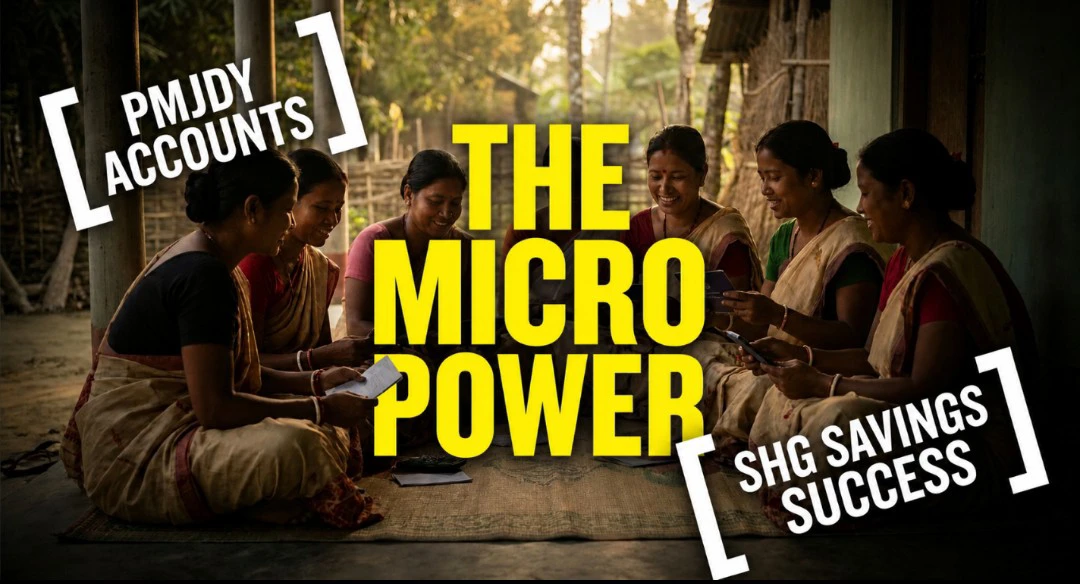
Female economic participation is essential for inclusive growth. In Assam, the gap between the Labour Force Participation Rate (LFPR) and the Worker Population Ratio (WPR) highlights the difference between those willing to work and those actually employed. Financial inclusion — measured through PMJDY accounts and Self-Help Group (SHG) microfinance — is a critical enabler for women transitioning to paid economic activities.
|
Economic Indicator |
Assam |
India (National Average) |
|
LFPR (15 Years & Above) |
NR |
Table 4.3 Benchmark |
|
Avg. Wage Earning (Casual Labour) |
NR |
Daily Earning Disparity |
|
SHG Savings with Banks (Amount) |
NR |
Table 4.33 |
|
Accounts under PMJDY (Female) |
NR |
Table 4.28 |
|
! |
A high proportion of workers in the informal sector (Table 4.12) influences economic security, as these roles lack formal contracts and safety nets. The success of SHG savings (Table 4.33) demonstrates a grassroots model of financial inclusion. However, the strategic goal remains to transition women from informal micro-enterprises to formal, managerial positions to ensure long-term economic security. |
There is a direct correlation between female representation in governance and gender-responsive policy outcomes. In Assam, the presence of women in the State Assembly and Panchayati Raj Institutions (PRIs) serves as a measure of political empowerment.
|
Leadership & Decision-Making |
Assam |
National Average |
|
Elected Women in State Assembly (%) |
NR |
Table 5.4 Benchmark |
|
Women in Managerial Positions |
NR |
Table 5.9 |
|
Female Police Officers per 100k Pop. |
NR |
Table 5.11 |
|
Voter Turnout — General Election 2024 |
NR |
Table 5.7 (Target 66%+) |
The contrast between female voter turnout and elected representation (Table 5.4) suggests that while women are politically engaged as citizens, barriers to power attainment persist. Similarly, the strength of female police officers (Table 5.11) is a vital indicator of the state's ability to handle gender-specific grievances and ensure public safety.
Systemic barriers such as Gender-Based Violence (GBV) impede social progress. In Assam, the incidence rate of crimes and the emerging threat of cybercrimes (Table 6.12) necessitate a robust protective infrastructure.
|
Social Safety Metric |
Assam |
National Context |
|
Total Crimes vs. Women (per Lakh) |
NR |
Table 6.2 |
|
Incidence of Spousal Violence (%) |
NR |
Table 6.4 |
|
Cases Reported in Cybercrime Portal |
NR |
Table 6.13 |
|
Women Help Desks (Police Stations) |
NR |
Table 6.15 |
|
! |
The disparity between reported crime rates (Table 6.2) and court disposal rates (Table 6.6) acts as a barrier to gender justice. If court pendency remains significant, the deterrent effect of the law is weakened, discouraging victims from coming forward. Strengthening institutional responses — including the efficacy of Women Help Desks (Table 6.15) — is critical for creating a safe environment. |
The 2025 socio-economic profile of Assam, viewed through the lens of the 27th edition of the MoSPI report, reveals a state grappling with the transition from demographic potential to economic reality. Three persistent gaps emerge as primary challenges.
While the NEP 2020 structure aims for parity, the gap in Labour Force Participation (Table 4.3) remains a structural hurdle. If educational gains do not yield higher worker population ratios, the return on educational investment for the state is effectively halved.
The reporting of crimes (Table 6.2) must be met with efficient court disposal (Table 6.6). A state with high reporting but low disposal risks masking the true extent of GBV and discouraging economic participation by women who fear for their safety.
Mortality rates (Tables 2.6 and 2.9) are inextricably linked to the availability of skilled personnel (Table 2.11). Addressing this nexus is a prerequisite for sustainable demographic health outcomes.
These findings demand evidence-based interventions that move beyond generalities. Policy focus in Assam must shift toward vocational STEM education to bridge the wage gap and leverage high participation in SHGs into formal entrepreneurial leadership. By addressing these structural disparities through gender-responsive planning, Assam can ensure its demographic dividend is realised through equity and sustainable development.
Source: “Women and Men in India 2025: Selected Indicators and Data (27th Issue)” released by the Ministry of Statistics & Programme Implementation, National Statistics Office, on 29 April, 2026