For a state to function under the rule of law, it must provide citizens with the certainty of safety or, in its absence, a clear path to administrative and judicial recourse.
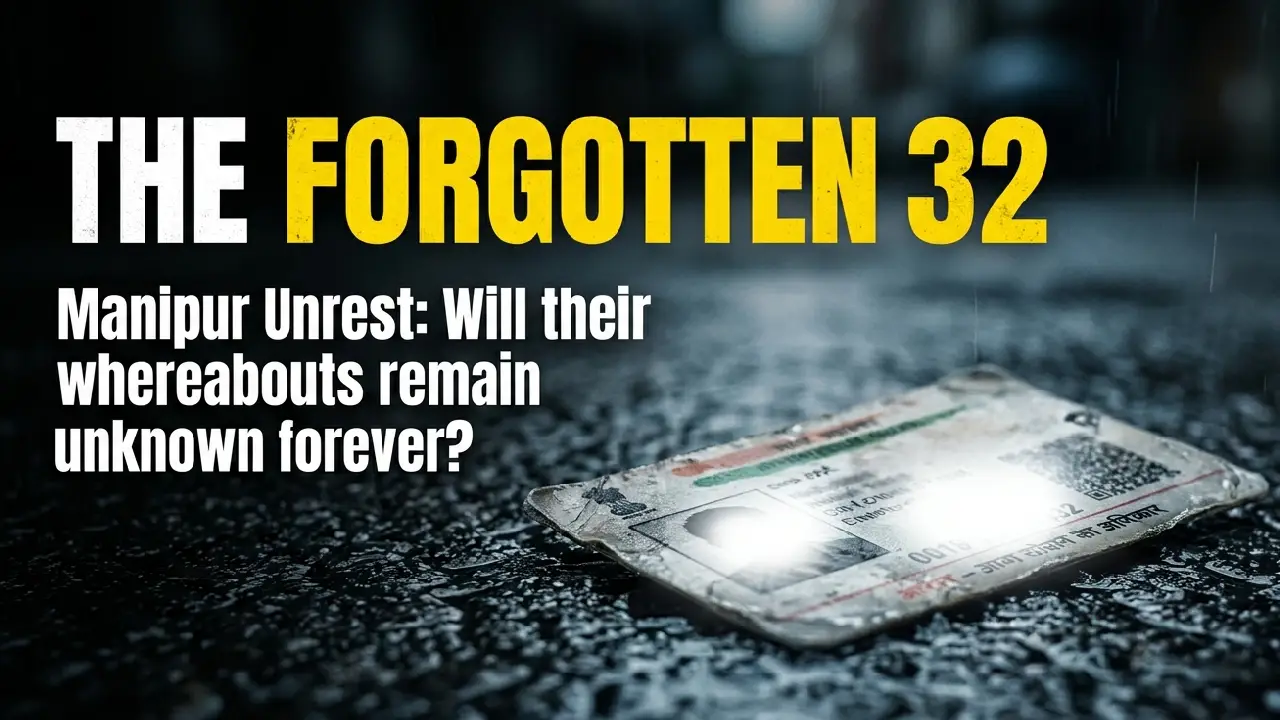
The missing persons crisis in Manipur represents a profound humanitarian emergency and a critical failure of the state's administrative and protective obligations. Since the onset of unrest on May 3, 2023, the disappearance of citizens has evolved from a volatile security concern into a systemic breakdown of the social contract. For a state to function under the rule of law, it must provide citizens with the certainty of safety or, in its absence, a clear path to administrative and judicial recourse. The current environment of silence and uncertainty not only violates the fundamental rights of the missing but also inflicts secondary victimization on families left in a state of perpetual legal and emotional limbo.
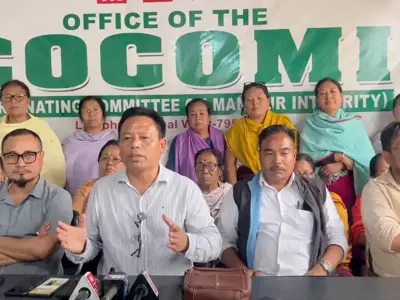
While 31 families spoke collectively at the Manipur Press Club to highlight this vacuum, our records document 32 specific cases that define this crisis.

The following table documents 32 individuals reported missing between May 2023 and March 2025. These records are vital for establishing a baseline for investigative accountability.
|
Sl. No. |
Name (Age) |
Last Known Location / Address |
Date of Disappearance |
|
1 |
Moirangthem Ingo (25) |
Moreh Khunou Leikai |
May 3, 2023 |
|
2 |
Waikhom Nanao (39) |
Moreh Khunou Leikai |
May 3, 2023 |
|
3 |
Thoudam Kanto (33) |
Khongjom Sapam Mamang Leikai |
May 3, 2023 |
|
4 |
Atom Samarendra (47) |
Vicinity of 'Olympic Park', Sangaithel (Res: Khumbong Bazar) |
May 6, 2023 |
|
5 |
Yumkhaibam Kirankumar (47) |
Khumbong Bazar Mayai Leikai |
May 6, 2023 |
|
6 |
Chirom Itocha (38) |
Moreh Turel Wangma Ward No. 7 |
May 8, 2023 |
|
7 |
Leishangthem Lanngamba (37) |
Moreh Heinoumakhong |
May 8, 2023 |
|
8 |
Naorem Prakash alias Nanao (40) |
Torbung Bangla Bazar |
May 11, 2023 |
|
9 |
Leichombam Suraj (23) |
Tera Khongsangbi |
May 11, 2023 |
|
10 |
Thongam Shyam (33) |
Torbung Bangla Bazar |
May 11, 2023 |
|
11 |
M. Devan (34) |
Awang Sekmai Parao Mamang Leikai |
May 15, 2023 |
|
12 |
Toijam Tomba |
Awang Sekmai Parao Mamang Leikai |
May 15, 2023 |
|
13 |
Haobijam Romeo (24) |
Molnom Village |
May 19, 2023 |
|
14 |
Laimayum Amarjit (64) |
Serou Makha Leikai |
May 28, 2023 |
|
15 |
Maisnam Malemnganba (24) |
Ningthoukhong Mayai Leikai |
June 6, 2023 |
|
16 |
Gurumayum Bony (25) |
Ningthoukhong Mayai Leikai |
May 6, 2023 |
|
17 |
Pukhrambam Abhinash (23) |
Ningthoukhong Mayai Leikai |
May 6, 2023 |
|
18 |
Nepram Boramani (45) |
Langathel Mamang Leikai |
June 10, 2023 |
|
19 |
Thoudam Raghumani (30) |
Khonghampat Awang Leikai |
May 14, 2023 |
|
20 |
Thokchom Ningthouremba (30) |
Moreh Heinoumakhong |
July 1, 2023 |
|
21 |
Sagolshem Ngaleiba (31) |
Sekmaijin Khunou Awang Leikai |
July 4, 2023 |
|
22 |
Irengbam Chingkheinganba (24) |
Sekmaijin Khunou Awang Leikai |
July 4, 2023 |
|
23 |
Linthoingambi Hijam (17) |
Tera Tongbram Leikai |
July 6, 2023 |
|
24 |
Phijam Hemanjit (20) |
Takyel Kolom Leikai |
July 6, 2023 |
|
25 |
Maibam Abhinash (15) |
Akham Awang Leikai |
Nov 5, 2023 |
|
26 |
Ningthoujam Anthony (19) |
Akham Awang Leikai |
Nov 5, 2023 |
|
27 |
Pukhrambam Birachandra |
Ningthoukhong Ward No. 8 |
Nov 13, 2023 |
|
28 |
Sagolshem Pishakmacha (70) |
Thinungei Ward No. 6 |
Nov 13, 2023 |
|
29 |
Okram Khomei (62) |
Ningthoukhong Ward No. 2 |
March 4, 2024 |
|
30 |
Khangembam Apamba (48) |
Thangmeiband Khomdram Selungba Leikai |
April 14, 2024 |
|
31 |
Laishram Kamalbabu (56) |
Gosaipur, Cachar |
Nov 25, 2024 |
|
32 |
Luwang Mukesh (20) |
Keishamthong Leimajam Leikai |
March 16, 2025 |
|
Note: Please contact us with details if any names are missing from this list. This record is maintained for investigative accountability and will be updated as new information is received. |
The chronology of these disappearances reveals a pattern of 'normalised' crisis rather than a contained incident. A statistical analysis shows that 24 of the 32 documented disappearances — exactly 75% — occurred during the initial surge in May and June 2023. However, the occurrence of new cases as recently as March 2025 demonstrates that the threat has not been neutralised; it has become a persistent, low-frequency feature of the conflict.
This timeline has exhausted the resilience of the affected families. While chronologically the unrest continues even after three years, the absence of communication and the density of the trauma have led many families to express the passage of time as a much longer, unbearable duration of neglect. This shift from acute crisis to chronic instability erodes public trust and suggests a state apparatus that has accepted disappearance as a static reality rather than an urgent investigative priority.
The transition from these statistics to the lived experience of the families reveals a harrowing narrative of survival amidst an unresponsive state.
In any region experiencing civil unrest, the rapid and transparent deployment of high-level investigative bodies — such as the Central Bureau of Investigation (CBI) — is a strategic necessity to maintain the rule of law. Such interventions serve as a check against local investigative bias and provide families with objective evidence regarding the fate of the missing. However, in Manipur, there exists a significant and troubling gap between the government's official claims of high-level investigative action and the reality experienced on the ground.
Testimony from families — specifically that of Atom Ongbi Kabita, whose husband Atom Samarendra disappeared from the vicinity of 'Olympic Park' in Sangaithel — reveals a deep-seated investigative vacuum. The families do not merely express confusion; they harbour a growing suspicion that the government's claim of transferring cases to the CBI is a fabrication intended to pacify the public. Three specific failures have been identified:
• Procedural Obscurity: There is no verifiable proof shared with the families that the CBI has formally taken up or registered these cases.
• Absence of Field Engagement: Despite the gravity of the disappearances, families report that not a single CBI team has visited their residences for questioning, site inspections, or evidence collection. This lack of physical presence fundamentally undermines the credibility of the state's assertions.
• Psychological Cost of State Silence: The government's refusal to provide updates or maintain a line of communication has led families to feel as though their loved ones are being systematically erased from public memory. This silence functions as a form of administrative apathy that compounds the original trauma.
Based on family testimonies, the investigative process is characterised by the following failures:
• Zero Home Visits: A total lack of engagement from specialised investigative agencies at the primary points of contact — the families themselves.
• Non-existent Briefings: No formal updates regarding the progress, or even the existence, of a purported inquiry.
• Narrative Stagnation: The cessation of any mention of the missing in public meetings, political discourse, or government communications.
This failure of the investigative mechanism does not only stall justice; it creates a secondary administrative crisis that paralyses the survivors' ability to function legally and economically.
In conflict zones, administrative documentation — specifically death certificates — serves as the essential gatekeeper to legal rights and economic survival. Without such documentation, survivors are unable to settle the affairs of the missing or access the support systems designed to protect the vulnerable. In Manipur, the state has failed to adapt its administrative framework to the exigencies of an unrest that has been going on even after three years, leaving families in a state of legal paralysis.
The primary hurdle cited by families is the statutory requirement governing the presumption of death. Under Section 108 of the Indian Evidence Act, 1872, a person is only presumed dead after they have not been heard of for seven years. While this is a standard legal safeguard in peacetime, its rigid application in a conflict zone is an insurmountable barrier. Families of missing breadwinners cannot wait nearly a decade to resolve their legal and financial status while their immediate survival is at stake.
The economic consequences for families are severe and multifaceted:
1. Impediment to Compassionate Appointments: For families of missing breadwinners, securing a Compassionate Appointment — a job granted in place of the missing person — is legally impossible without a death certificate.
2. Cessation of Professional Income: For individuals in Central Government Service, salaries and benefits are frozen. Without legal proof of death or a specific administrative waiver, families are deprived of their primary source of income.
3. Inadequacy of Compensation: The proposed Rs 10 lakh compensation is viewed by families as an insufficient and even offensive settlement for the loss of a human life and the long-term career value of a breadwinner. A one-time payment cannot replace a lifetime of professional earnings and security.
As families navigate the 36th month of this crisis, they report:
• Acute Survival Struggles: Families are operating without the earnings of their primary breadwinners for an extended period, leading to mounting debt and deprivation.
• Frozen Succession Rights: Access to bank accounts, insurance, and service benefits is locked behind the 7-year statutory requirement under Section 108.
• Administrative Abandonment: Many families report they have yet to receive any form of interim financial or administrative assistance despite official rhetoric.
The transition from government silence to active intervention is no longer a matter of policy preference, but a matter of basic human survival for the families left behind.
The crisis of the missing in Manipur has reached a critical juncture where the prolonged silence of the state threatens the total breakdown of the social contract. To restore a semblance of justice, the government must move beyond rhetorical claims and implement tangible administrative relief that acknowledges the unique nature of conflict-related disappearances.
Based on the urgent appeals made by the families at the Manipur Press Club, the following recommendations are necessary:
|
Recommendation 1: CBI Transparency and Accountability The government must immediately release a definitive status report on all cases purportedly handed over to the CBI, including case registration numbers and the names of the assigned investigating officers. |
|
Recommendation 2: Issuance of Certificates of Missingness The state could enact an emergency provision to issue Provisional Death Certificates or Certificates of Missingness for conflict victims. This would bypass the 7-year requirement under Section 108 of the Indian Evidence Act, specifically for the purpose of processing Compassionate Appointments. |
|
Recommendation 3: Sliding Scale Compensation and Interim Maintenance Instead of an inadequate one-time lump sum, the state should implement Interim Maintenance Allowances that reflect the missing person's lost salary, ensuring families do not fall into poverty while the investigation is pending. |
The government has a fundamental, non-negotiable obligation to reveal the whereabouts of its missing citizens and to support the survivors. To remain silent in the face of such extreme suffering is to abdicate the state's most basic duty of care toward its people.