Emerging scientific evidence shows that aging, cloudy plastic water jars and PET bottles can shed microplastics into drinking water, raising serious health concerns and prompting experts to advise safer storage practices.Emerging scientific evidence shows that aging, cloudy plastic water jars and PE
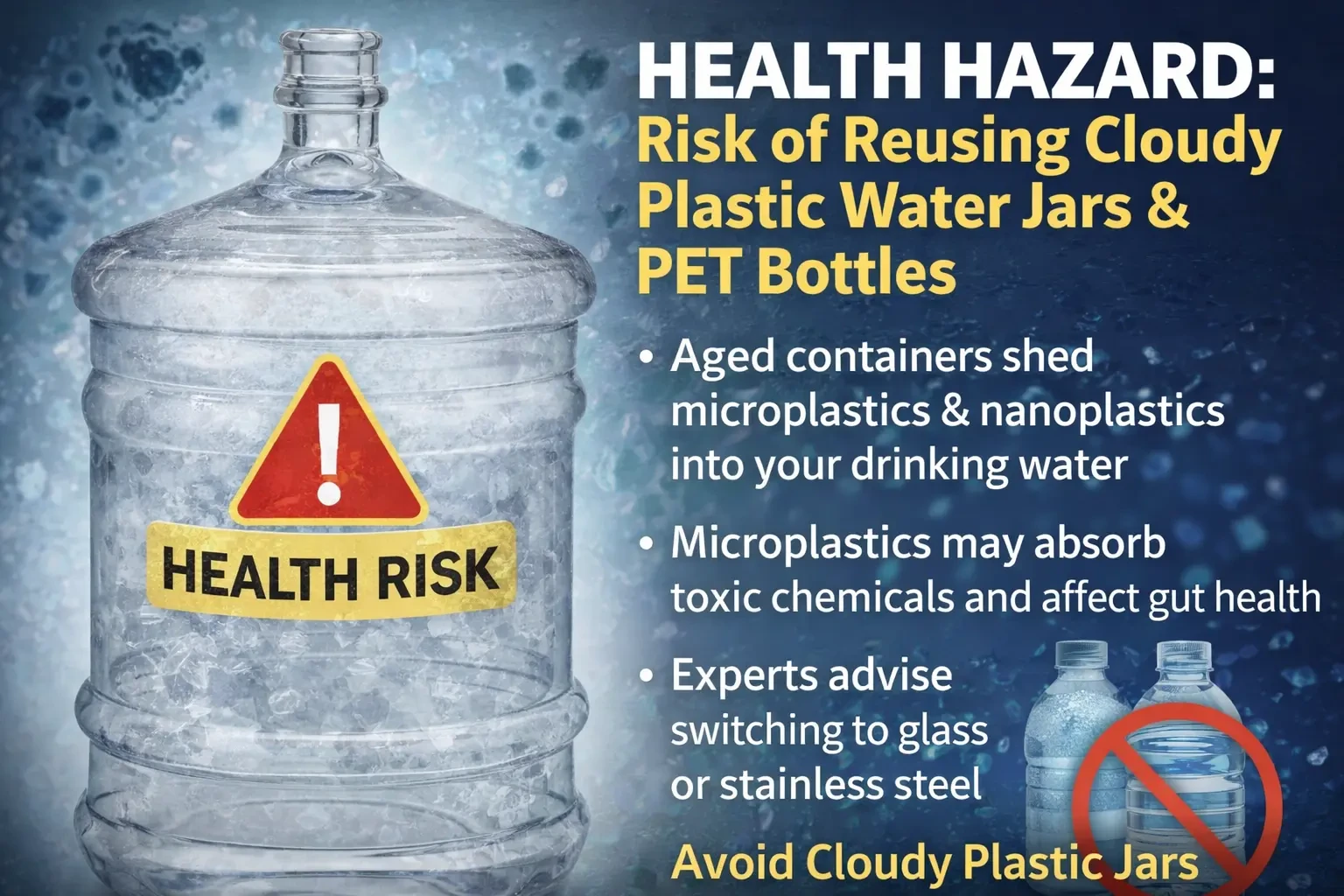
IMPHAL (NE Dispatch): A growing body of scientific research is raising alarms over a common household habit: reusing large plastic water jars and single-use PET bottles long after they begin to show signs of wear. Experts warn that when these containers turn cloudy or develop scratches, they may be releasing microscopic plastic particles into drinking water, posing potential health risks.
Plastic containers made from polyethylene terephthalate (PET) are widely used due to their affordability and convenience. However, prolonged use subjects them to mechanical stress, repeated washing, exposure to heat, and sunlight. Over time, these factors degrade the plastic structure, leading to visible cloudiness and micro-abrasions—key indicators that the material is breaking down.
A landmark study published in the Proceedings of the National Academy of Sciences on January 8, 2024, highlighted the scale of this issue. Researchers found that a single litre of bottled water contains an average of 240,000 plastic fragments—far exceeding earlier estimates. Notably, about 90 percent of these particles are nanoplastics, small enough to enter the bloodstream and potentially reach vital organs, including the brain and heart.
Further evidence underscores how environmental exposure accelerates this degradation. A study published in Royal Society of Chemistry journal Soft Matter in July 2025 found that sunlight triggers photochemical reactions in PET bottles, causing rapid breakdown of polymer bonds. Within just 30 days of sunlight exposure, microparticle concentrations in water rose significantly, particularly in older containers.
Mechanical wear also plays a crucial role. Research in ACS ES&T Water (June 2021) revealed that routine actions like opening and closing bottle caps can generate microplastics through friction. The study observed that after just 11 uses, microplastic concentrations in water nearly doubled, indicating how quickly contamination can escalate even under normal use conditions.
Health implications of ingesting these particles are increasingly concerning. A comprehensive review published in the journal Pollutants in March 2026 found that nano- and microplastics can induce oxidative stress in human cells, leading to inflammation and cellular damage. The review also noted disruptions to gut microbiota and impairment of the intestinal barrier, which could have long-term health consequences.
Additionally, these particles can act as carriers for toxic substances. Microplastics are known to absorb environmental pollutants and chemical additives such as phthalates and bisphenol A (BPA), which may leach into the body upon ingestion. Recent clinical findings have even detected microplastics in human arterial tissues, with researchers linking their presence to an increased risk of cardiovascular events.
Temperature further amplifies these risks. A 2026 meta-analysis in the Journal of Hazardous Materials: Plastics confirmed that higher temperatures accelerate microplastic release from PET and polyethylene containers. This makes storing water in aging plastic bottles in warm environments or under direct sunlight particularly hazardous.
Public health experts are now urging consumers to reconsider their reliance on aging plastic containers. Single-use PET bottles, they stress, should not be reused for extended periods. For larger reusable water jars, regular inspection is essential. Any signs of cloudiness, scratches, or structural wear should prompt immediate replacement.
To reduce exposure, experts recommend storing drinking water in cool, shaded environments and transitioning to safer alternatives such as stainless steel or glass containers. These materials do not degrade in the same way and are less likely to introduce contaminants into drinking water.
As awareness grows, the issue highlights a broader challenge: balancing environmental concerns with public health. While reusing plastic containers may seem eco-friendly, scientists caution that prolonged use beyond their intended lifespan could carry hidden and potentially serious risks.