By developing this system through the Centre for Development of Telematics (C-DOT), India eliminates foreign dependencies and avoids vendor lock-in, ensuring that the nation’s most critical emergency response tools are governed by local data sovereignty and tailored for the Indian mobile ecosystem.
1. Strategic Context: The Evolution of Public Safety Communications
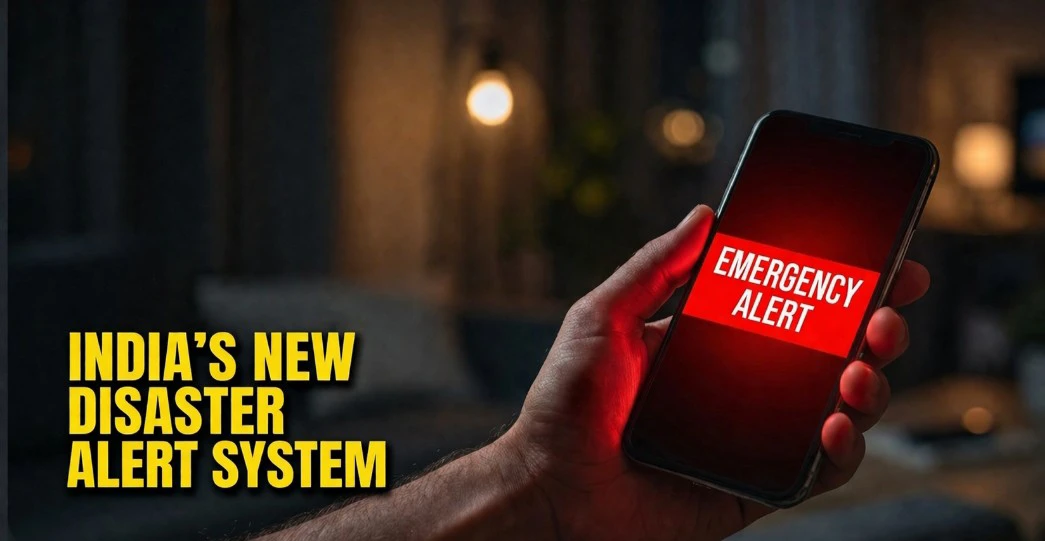
In the complex geographical and demographic landscape of India, the ability to disseminate rapid, accurate disaster alerts is a strategic necessity that transcends mere technical capability. Moving from a reactive to a proactive communication posture is a fundamental pillar of national resilience, ensuring that citizens are not just recipients of news, but are empowered with actionable information before a crisis unfolds. This mission is spearheaded by a robust institutional collaboration between the Ministry of Communications, the Department of Telecommunications (DoT), and the National Disaster Management Authority (NDMA). Together, these entities provide the regulatory, operational, and strategic framework required to safeguard the lives of over 1.4 billion people. This synergy has facilitated the transition from legacy, fragmented systems toward a unified, indigenous technological foundation.
2. Technological Foundation: From SACHET to Cell Broadcast
Effective public safety infrastructure must leverage existing successes while identifying the inherent limitations of legacy systems in time-critical scenarios. While traditional methods have provided a baseline for communication, the demands of modern emergency management require a move away from congestion-prone protocols toward more resilient architectures.
The cornerstone of this effort is the Integrated Alert System (SACHET), a platform that aligns with global best practices to ensure a standardized response across the country.
Attribute Details
System Name: Integrated Alert System (SACHET)
Developer: Centre for Development of Telematics (C-DOT)
Protocol: Common Alerting Protocol (CAP)
Reach: Operational across all 36 States and Union Territories
Standardization: Adheres to International Telecommunication Union (ITU) recommendations
The existing SMS-based framework has demonstrated significant scale, yet its structural limitations are becoming evident:
Scale of Dissemination: Over 134 billion SMS alerts have been sent to date.
Linguistic Inclusivity: Support for more than 19 Indian languages ensures diverse reach.
Proven Utility: Extensively utilized for cyclones, weather warnings, and general natural disasters.
Despite these achievements, the inherent delays in SMS delivery during network congestion—where messages are queued and sent individually—necessitate a transition to Cell Broadcast technology for emergencies where every second is a factor.
3. The Significance of Indigenous Cell Broadcast (CB) Technology
"Indigenous development" signifies more than domestic manufacturing; it represents the assertion of national sovereignty and strategic autonomy. By developing this system through the Centre for Development of Telematics (C-DOT), India eliminates foreign dependencies and avoids "vendor lock-in," ensuring that the nation’s most critical emergency response tools are governed by local data sovereignty and tailored specifically for the Indian mobile ecosystem.
Cell Broadcast (CB) provides a transformative shift in delivery architecture compared to traditional SMS:
Broadcast vs. Queue-Based Messaging: Unlike SMS, which is a point-to-point protocol that can suffer from network congestion and delivery delays, CB is a "point-to-area" technology. It transmits to all devices simultaneously within a targeted area.
Near Real-Time Delivery: By bypassing the individual message queue, alerts reach thousands of handsets in seconds.
Geo-Targeting Precision: The system allows authorities to define a strict geographic area for alerts, ensuring the right information reaches the right people without overloading broader networks.
As the premier R&D center for the Department of Telecommunications, C-DOT’s indigenous solution ensures the system is optimized for the vast array of both high-end and budget-friendly handsets found in the Indian market. This leap in technical capability translates directly into tangible safety benefits for the citizenry.
4. Core Benefits: Speed, Simultaneity, and Inclusivity
The introduction of Cell Broadcast technology transforms disaster management from a general mass-messaging exercise into a precision-engineered life-saving intervention. The "Near Real-Time" delivery is particularly critical for hazards with extremely short warning windows, such as lightning strikes—a major cause of fatalities in rural India—as well as tsunamis and earthquakes.
Inclusivity remains central to this technological shift. By delivering alerts in multiple Indian languages, the system ensures that warnings are accessible and comprehensible to a non-specialist audience. The CB system is uniquely equipped to handle a wide spectrum of emergencies:
1. Natural Hazards: Cyclones, tsunamis, earthquakes, and sudden lightning strikes.
2. Meteorological Events: Severe weather and flash flood warnings.
3. Man-made Hazards: Gas leaks, chemical spills, or industrial accidents.
These core benefits establish the Cell Broadcast system as a fundamental component of the national safety infrastructure, ensuring that no citizen is left vulnerable due to a lack of timely information.
5. Strategic Implications for National Resilience
The long-term implications of a pan-India, indigenous alert system on the country's disaster risk reduction profile are profound. It represents a shift from localized, often fragmented warnings to a synchronized, nationwide capability. The use of "geo-targeting" is a masterstroke of public policy; it ensures that those in the "defined geographic area" receive high-priority alerts while preventing mass panic in unaffected regions. This precision preserves public trust and optimizes the mobilization of emergency services. However, strategic goals remain theoretical without the empirical validation provided by a rigorous testing phase.
6. Measures for Operational Excellence: The Testing and Validation Phase
Rigorous pan-India testing is a non-negotiable prerequisite for a life-safety system of this magnitude. Current protocols involve disseminating "test messages" in English, Hindi, and various regional languages to assess system performance and reliability across the entire mobile network infrastructure.
The content of these messages is standardized to prevent confusion:
English: This is a TEST Cell Broadcast message sent by the National Disaster Management Authority in coordination with the Department of Telecommunications (DoT), Government of India, as part of testing the Cell Broadcast solution for disseminating alerts. During the testing of the Cell Broadcast solution, you may receive this message multiple times on your mobile handset. Please ignore these message(s); no action is required at your end.
To participate in these trials, users must ensure their handsets are configured to receive test signals. The menu path is generally: Settings → Safety and emergency → Wireless emergency alerts → Test alerts
This phase is designed to identify and rectify technical bottlenecks prior to the system's formal inauguration and dedication to the nation. Public cooperation during these trials is essential for engineers to validate the system across diverse handset models and service provider configurations.
7. Objectives and Future Outlook: Ensuring Systematic Functionality
The ultimate goal of the Cell Broadcast system is universal reach, ensuring that every citizen—regardless of their technical knowledge or handset settings—receives life-saving information. While the current testing phase requires manual activation of test channels, the finalized system will bypass such settings during actual emergencies to ensure a failsafe, "one-to-many" delivery.
The collaboration between the DoT, NDMA, and C-DOT serves as a definitive model for indigenous technological advancement in the service of public safety. By integrating extreme speed, linguistic diversity, and geographic precision, India is establishing a global benchmark for national emergency communication infrastructure.
For ongoing public updates and resources, the Department of Telecommunications (DoT) maintains active communication through the following official handles:
X (formerly Twitter): https://x.com/DoT_India
Instagram: https://www.instagram.com/department_of_telecom?igsh=MXUxbHFjd3llZTU0YQ==
Facebook: https://www.facebook.com/DoTIndia
YouTube: https://youtube.com/@departmentoftelecom?si=DALnhYkt89U5jAaa