Discover how Google Gemini Omni is replacing Veo, moving from standard video generation to a native multimodal world model with conversational editing.
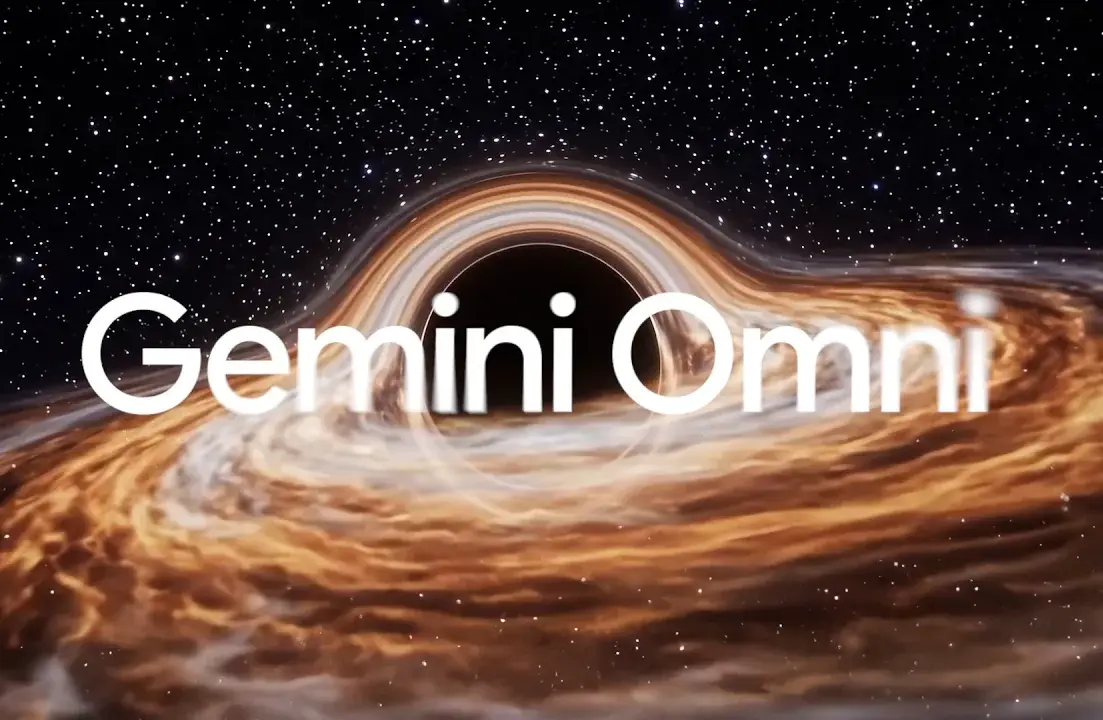
IMPHAL, May 22: At its annual developer conference, Google fundamentally altered the landscape of creative artificial intelligence. DeepMind CEO Demis Hassabis took the stage to announce Gemini Omni, a powerhouse family of creative models designed to entirely replace Google Veo across consumer and prosumer applications.
The announcement signals far more than a routine rebrand or a simple version increment. The transition from the Veo framework to the Omni architecture marks a major philosophical shift: Google is moving away from isolated "media generators" and toward unified "world models."
To understand why this change matters, one has to look at how generative video has traditionally worked. Under the hood of platforms like Google Labs' VideoFX or the early iterations of Google Flow, video production was a piped, multi-stage task. If a user entered a prompt, a traditional Large Language Model (LLM) first expanded the text. That text was passed to an image model like Imagen to set a keyframe, and a diffusion model like Veo 3.1 was left to guess how those pixels should move through time.
Gemini Omni completely tears down those architectural walls.

Omni is built natively on top of Google’s frontier Gemini architecture. It is a true omni-model, meaning it ingests, processes, and reasons over text, multi-image spreads, audio tracks, and raw video files simultaneously in a single computational step. It does not translate inputs into an intermediary text layer before guessing the pixels. Because it understands all these mediums natively, the output achieves structural and contextual consistency that traditional pipelines simply cannot match.
While Veo 3.1 was widely praised for its high-fidelity texture and cinematic grain, it suffered from the structural limitations that plague standard diffusion models. Omni targets and corrects these specific bottlenecks through three distinct pillars.
With Veo, if a generated five-second clip was visually stunning but a character’s jacket color was incorrect, the user’s only option was to alter the prompt, hit re-roll, and pray to the random seed generator.
Omni introduces fluid Video-to-Video conversational editing. An initial generation or an uploaded camera-roll video becomes a living canvas inside the Gemini chat. Users can issue natural language commands across multiple turns:
"Change his wardrobe to a black leather jacket, but keep his facial expressions identical."
"Now swap the sunny background out for a rainy cyberpunk alleyway."
"Adjust the scene lighting so the neon reflections from the alley bounce realistically off the wet jacket."
Because Omni maintains a continuous memory of the spatial layout, character geometry, and camera tracking throughout the entire chat session, it can selectively swap or alter specific elements without forcing a complete re-roll of the video.
While Veo focused heavily on superficial photorealism, it regularly stumbled on basic physical logic—clipping objects through one another or letting liquids dissolve mid-air.
Hassabis revealed that Omni achieves its realism by merging generative media with spatial reasoning engines, pulling heavily from DeepMind’s legacy Project Genie. Omni doesn't just guess what the next frame looks like; it calculates the underlying physics of the environment. During the keynote, Hassabis demonstrated this by commanding the model to "Make a claymation explainer of protein folding." The resulting video managed to preserve scientific accuracy while perfectly maintaining a stop-motion clay texture. The engine is trained to map:
· Mass and Kinetic Momentum: Objects collide, slide, transfer weight, and bounce according to simulated mass.
· Fluid Dynamics: Fluids splash, pour, pool, and interact with boundaries rather than morphing abstractly.
· Lighting and Material Continuity: Moving light sources dynamically change how shadows stretch across moving, complex surfaces.
Veo traditionally anchored its generations to a single image input. Gemini Omni expands this, allowing creators to upload up to five distinct photographic references at once. A creator can supply an image of an actor, a separate snapshot of a distinct landscape, and a third photo depicting a specific painterly art style, and Omni will seamlessly synthesize them into a coherent scene.
Furthermore, Omni introduces a built-in Digital Avatar Engine. Following a rigorous verification workflow—requiring users to read randomized text prompts aloud to prevent deepfaking—creators can build digital likenesses that replicate their personal facial inflections and voice profiles for automated video asset generation.
The road from the established Veo baseline to the sudden deployment of Gemini Omni moved at an incredibly rapid pace over the first half of this year:
|
? |
The Veo Baseline Early 2026 Google relies on Veo 3.1 as its flagship video-generation framework. Accessible through specialized enterprise routes on Vertex AI and inside Google Labs' creative platform Google Flow, the model remains a layered pipeline separating text processing from temporal video rendering. |
|
? |
The Interface Leak May 2, 2026 An unannounced UI placeholder string is spotted inside the Gemini video generation interface: “Start with an idea or try a template. Powered by Omni.” Independent trackers verify that "Omni" is listed right alongside "Toucan"—the long-running internal codename for Google’s Veo 3.1 pipeline. |
|
? |
Silent A/B Testing May 11, 2026 Google quietly enables a “Create with Gemini Omni” prompt for random high-tier subscribers. Early video clips leak into online forums, showcasing massive improvements in prompt adherence and physical logic over the standard Toucan/Veo outputs. |
|
? |
Keynote Reveal May 19, 2026 Google DeepMind officially unveils the Gemini Omni architecture at Shoreline Amphitheatre. Hassabis frames Omni as a critical evolutionary step toward Artificial General Intelligence (AGI), highlighting its capability to synthesize "anything from any input." |
|
? |
Subscription Deployment May 19–20, 2026 Google immediately replaces the consumer-facing Veo infrastructure by launching Gemini Omni Flash—a highly optimized, speed-focused tier. The feature goes live globally for Google AI Plus, Pro, and Ultra subscribers inside both the primary Gemini App and Google Flow. |
|
? |
Wider Public Integration Late May 2026 Google pushes Omni Flash integration down to the general consumer level, embedding the video generation engine directly into YouTube Shorts and the YouTube Create mobile app ecosystem for instant multi-asset generation. |
|
? |
Developer APIs and Omni Pro Mid-2026 (Upcoming) While Veo 3.1 is preserved on Google Cloud Vertex AI to maintain stability for existing enterprise software, dedicated Gemini Omni APIs are scheduled to open for external developers in the coming weeks. Google confirms that a cinema-grade Omni Pro model is currently being trained for professional production studios. |
With Omni making the distortion of visual reality effortless, Google has integrated severe safety features into the model's core rendering loop.
Every single frame created, tweaked, or overhauled by Gemini Omni automatically carries DeepMind's proprietary SynthID watermarking. This digital signature is entirely invisible to human viewers and cannot be scrubbed away by compressing, cropping, or re-encoding the final video file. This structural safeguard ensures that hosting networks (like YouTube) and web browsers (like Google Chrome) can instantly parse the file metadata and flag the media's AI origin for general transparency.
Furthermore, Google has temporarily paused full audio-dialogue editing capabilities. While creators can utilize verified personal avatars, natural language manipulation of third-party vocal speech remains restricted inside the testing sandbox until DeepMind finalizes stricter safety parameters.
The arrival of Gemini Omni completely alters a highly aggressive AI video landscape. With OpenAI shifting Sora 2 to an exclusive API structure earlier this year and ByteDance's Seedance 2.0 leading public cinematic benchmarks, Google is choosing to win on workflow integration rather than raw standalone generation.
By baking an advanced world model directly into an app ecosystem that already reaches 900 million monthly active users, Google is attempting to turn generative video from a niche technical novelty into a ubiquitous conversational habit.