WHO’s Ebola emergency declaration has intensified global response efforts as infections spread from DR Congo into Uganda.
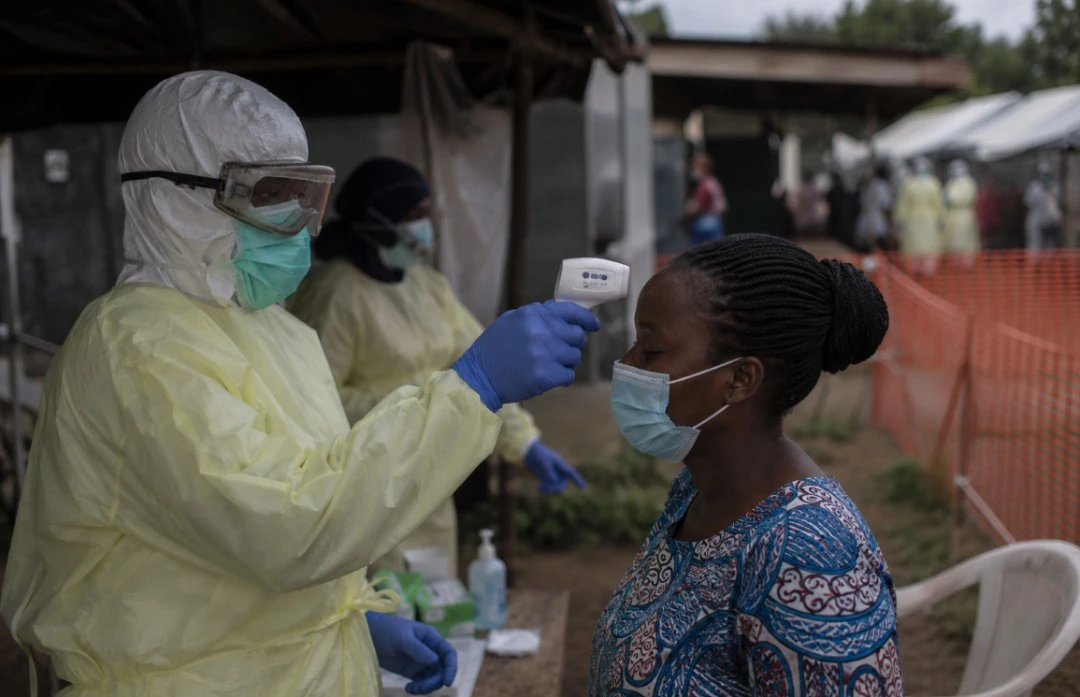
Geneva/Kinshasa, May 18: The World Health Organization has intensified international coordination efforts after declaring the ongoing Ebola outbreak in Central Africa a Public Health Emergency of International Concern (PHEIC), as health authorities continue to report rising infections, cross-border transmission and mounting pressure on fragile healthcare systems in the region.
The declaration, announced over the weekend, came after confirmed Ebola infections spread from the Democratic Republic of the Congo into neighbouring Uganda, reviving fears of wider regional transmission similar to previous outbreaks that destabilised parts of West and Central Africa.
According to updates issued by the WHO, the Centers for Disease Control and Prevention and Africa Centres for Disease Control and Prevention, the outbreak remains concentrated in Ituri Province in eastern Congo, particularly in the health zones of Bunia, Rwampara and Mongbwalu.
Health agencies said more than 336 suspected Ebola cases and 88 suspected deaths have been recorded in Congo so far. Laboratory testing has confirmed at least 10 Ebola infections. Officials cautioned that the actual number of infections could be significantly higher due to delayed reporting, insecurity and limited laboratory access in remote conflict-hit areas.
The outbreak crossed international borders after two individuals travelling from Congo tested positive in Kampala, Uganda. One of the patients later died, according to regional health authorities.
Public health experts say the current outbreak presents a particularly difficult challenge because it involves the Bundibugyo strain of the Ebola virus, a rarer variant for which no approved vaccine or targeted treatment currently exists.
Unlike the more common Zaire Ebola strain, which has licensed vaccines and several therapeutic options developed after earlier epidemics, the Bundibugyo strain has limited medical countermeasures. As a result, doctors are relying largely on supportive care, including intravenous fluids, electrolyte management, isolation measures and treatment of complications.
The WHO said early diagnosis and rapid supportive treatment remain the most effective tools available at present.
Healthcare workers have emerged among the worst affected. At least four medical personnel have died in the outbreak zone, raising concerns over hospital-based transmission and inadequate protective infrastructure.
International health agencies said some treatment centres in eastern Congo continue to face shortages of protective equipment, trained personnel and secure transport routes.
The outbreak is unfolding in one of the most unstable parts of Central Africa. Ituri Province has witnessed years of armed insurgencies, militia violence and displacement, conditions that officials say are severely hampering containment efforts.
Medical teams reportedly face difficulties reaching remote communities because of armed checkpoints, damaged roads and security threats. In several areas, laboratory samples require long transport times before confirmation can be completed, delaying isolation and contact tracing measures.
WHO officials warned that insecurity in eastern Congo risks creating “silent transmission chains” in villages that remain beyond consistent medical access.
Despite the emergency declaration, the WHO has advised countries against imposing blanket travel or trade restrictions on Congo or Uganda. The agency stated that the current situation, while serious, does not yet constitute a global pandemic emergency.
Instead, neighbouring countries have been urged to strengthen border surveillance, expand health screenings and prepare isolation facilities.
Authorities in Kenya and several East African states have already introduced enhanced screening protocols at airports and land border crossings. Regional governments are also reviewing emergency preparedness plans developed during earlier Ebola outbreaks.
The WHO said international response teams are now focusing heavily on identifying contacts of infected patients, monitoring high-risk exposure chains and conducting safe burial procedures.
Ebola spreads primarily through direct contact with bodily fluids such as blood, vomit, feces and saliva from infected individuals or contaminated surfaces. Transmission can also occur during funeral rituals involving physical contact with deceased patients.
Doctors say symptoms usually begin with fever, fatigue, muscle pain, headaches and sore throat before progressing to vomiting, diarrhoea, abdominal pain and, in severe cases, internal or external bleeding.
According to the CDC, the Bundibugyo Ebola strain historically carries a fatality rate ranging between 25 and 50 percent, though outcomes depend heavily on the speed of medical intervention and supportive treatment availability.
The latest outbreak has also revived concerns over global preparedness for emerging infectious diseases after the COVID-19 pandemic exposed weaknesses in international health coordination systems.
Public health analysts note that Ebola outbreaks are becoming increasingly difficult to contain because conflict zones, population displacement and mistrust of authorities complicate traditional containment methods.
Some experts have also warned that misinformation circulating online may discourage infected individuals from seeking early treatment or cooperating with health surveillance teams.
At present, no Ebola cases linked to the outbreak have been reported outside Africa.
Indian health authorities have not issued any travel restrictions, though public health agencies continue to monitor developments through WHO advisories and international disease surveillance networks.
The WHO has appealed for stronger international funding and logistical support to prevent the outbreak from escalating further across Central Africa.
Officials say the coming weeks will be critical in determining whether containment operations can prevent sustained cross-border transmissiobn.