The opening reception of the Modern Subika Art exhibition in Washington, D.C. drew strong crowds from the Manipuri diaspora and arts community, celebrating a rare and revived Manipuri art form.
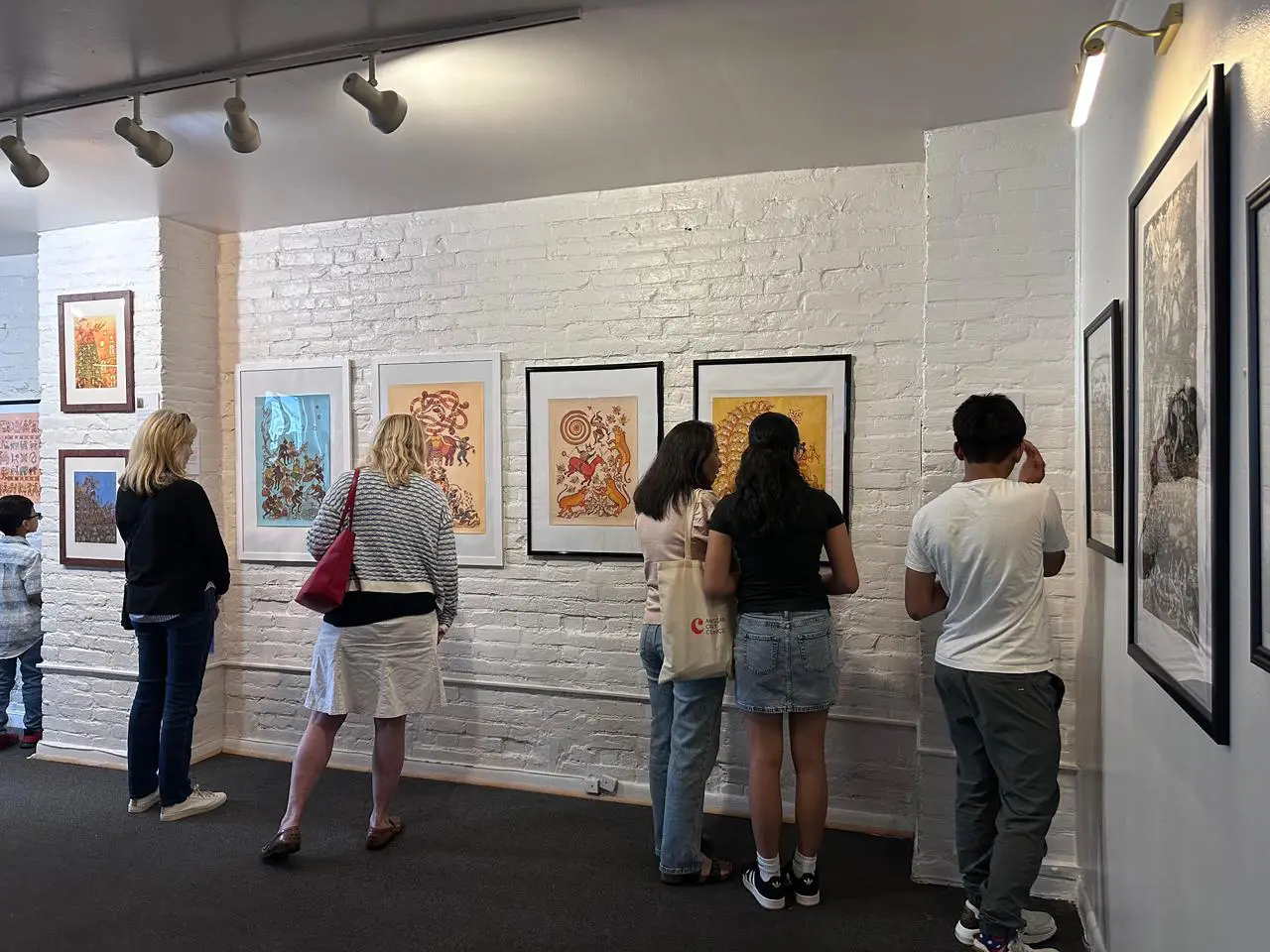
The opening reception of The Revival of the Forgotten Art of Manipur: An Exhibition of Modern Subika Art, held on the evening of May 9 in Washington, D.C., drew an overwhelming turnout, bringing together residents of the D.C. metropolitan area, members of the Manipuri diaspora, and notable figures from the arts and cultural community. The event marked a significant moment for Subika art — a rare and historically rooted Manipuri art form — as it found visibility and appreciation in one of the world's most culturally vibrant capitals.
The opening evening witnessed a strong outpouring of interest across a diverse audience. Many Manipuri families who attended expressed genuine happiness at seeing an art form from their homeland presented and contextualized in Washington, D.C., describing the experience as one of cultural reconnection. Collectors, art enthusiasts, and members of the broader community also showed keen interest in the works on display, reflecting the exhibition's appeal well beyond the Manipuri diaspora.
Visitors were particularly drawn to the storytelling embedded within each painting. The exhibition's curatorial approach — featuring detailed write-ups accompanying every artwork — provided historical background, mythology, and cultural context that allowed audiences to engage more meaningfully with what they were seeing. Rather than encountering the works in isolation, visitors moved through the gallery with curiosity, pausing to read the narrative behind each piece before proceeding to the next, creating an experience that unfolded as both a visual and literary journey.
"Visitors moved through the exhibition with curiosity, often drawn to read the story behind each work and continue to the next, creating an experience that unfolded as both a visual and narrative journey."
Subika art is a traditional Manipuri art form historically rooted in manuscript practices, drawing from indigenous mythology, cultural memory, and the rich visual heritage of the region. The exhibition reintroduces this largely forgotten tradition as a living, evolving cultural expression — one reimagined through modern techniques, materials, and narrative approaches while remaining deeply anchored in its historical origins.
The show features more than 20 works by artist Dr. Yumnam Sapha, curated by Wangam Somorjit. The artworks expand the traditional visual vocabulary of Subika art to engage with indigenous mythology, history, and significant moments from the region's cultural landscape. The exhibition is envisioned as an attempt to bring renewed attention to Subika art and open it to wider engagement in today's contemporary context.
The exhibition is presented by The Kolorbox, in association with the Advanced Research Consortium Library & Archives (ARCLA), and is hosted at Gallery 16Ten — a cultural space in Washington, D.C. known for presenting contemporary art and supporting international exchange. The Kolorbox is an art initiative founded by Priyananda Soubam and Nomit Joshi, dedicated to amplifying artists' voices and bringing their practices into broader cultural dialogue.
The initiative reflects a growing effort to surface underrepresented artistic traditions from Northeast India onto international platforms. By situating Subika art within a global arts context, the exhibition invites international audiences to engage with a cultural heritage that has long remained outside mainstream visibility.
The Revival of the Forgotten Art of Manipur: An Exhibition of Modern Subika Art will remain open to the public through May 19, 2026, at Gallery 16Ten in Washington, D.C. Following the strong response at the opening reception, the exhibition presents an opportunity for a wider audience to engage with one of Manipur's most distinctive and historically significant cultural art forms as it steps into a new chapter of visibility and relevance.