Assam Assembly passed the UCC Bill 2026, making Assam the first Northeast state to adopt a Uniform Civil Code framework amid strong political reactions.
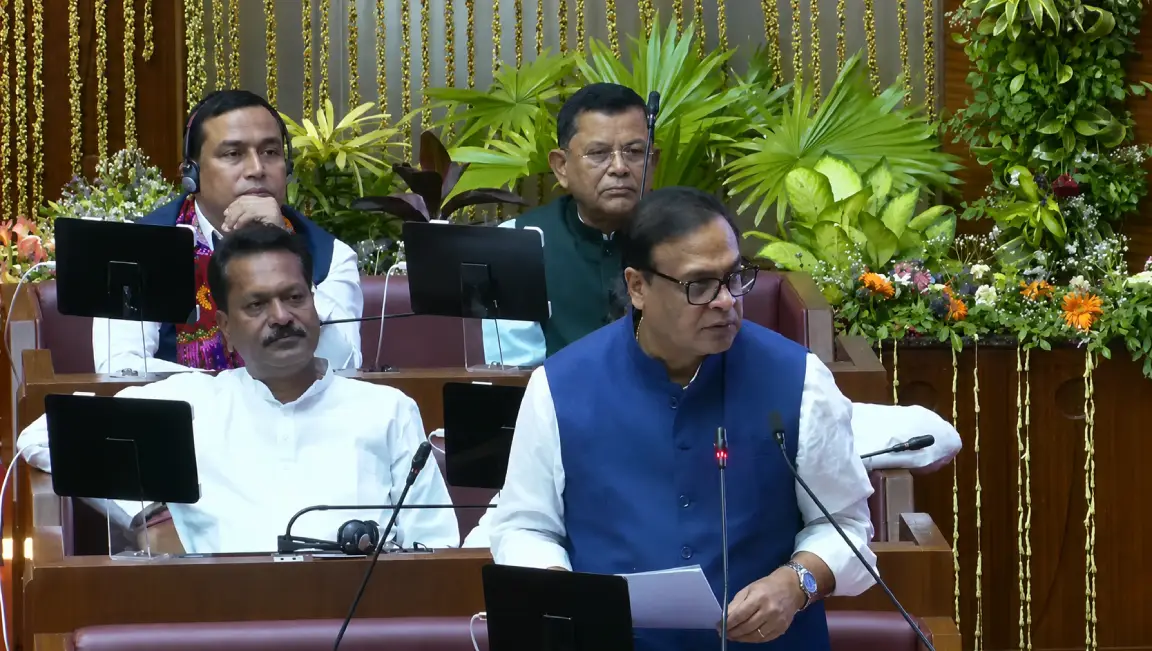
Imphal, May 27: The Assam Legislative Assembly on Wednesday passed the proposed Uniform Civil Code (UCC) Bill, 2026, making Assam the first state in Northeast India and among the few states in the country to adopt a state-level Uniform Civil Code framework after Uttarakhand and Gujarat.
The Bill, introduced in the Assembly on May 25, was passed after debates between the ruling BJP-led alliance and Opposition parties, which criticised the legislation and the manner in which it was passed. Chief Minister Himanta Biswa Sarma described the legislation as a “historic bill” and said it fulfilled a long-standing ideological commitment of the BJP as well as a promise made in the party’s election manifesto.
Speaking after the passage of the Bill, Sarma said Assam had now become the third Indian state to adopt a Uniform Civil Code framework. He said the legislation would now be sent to the President of India for assent.
The proposed legislation seeks to introduce common civil provisions relating to marriage, divorce, inheritance, succession and live-in relationships across communities in the state, with exemptions provided for Scheduled Tribes and areas governed under customary systems.
According to details shared by the state government, one of the major provisions of the Bill is a ban on polygamy. The legislation proposes uniform marriage laws across communities and prohibits multiple marriages.
The Bill also makes registration of marriages mandatory. Marriages are required to be registered within a prescribed period, reportedly within 60 days. Another key provision relates to live-in relationships. Couples entering live-in relationships would be required to register the relationship, generally within one month.
The proposed law further introduces uniform inheritance and succession provisions irrespective of religion. Divorce procedures and child custody-related provisions have also been standardised under the legislation.
Children born from registered live-in relationships would be recognised as legitimate under the proposed framework.
The Assam government, however, clarified that Scheduled Tribes in the state would remain exempt from the scope of the law. Tribal customary laws, traditions and religious practices would continue to remain outside the purview of the legislation.
The exemption of tribal communities has already become one of the major talking points in the political debate surrounding the Bill. AIMIM chief Asaduddin Owaisi criticised the proposed law and questioned why tribal autonomy was being protected while other communities were being brought under the legislation.
In a post on X on May 25, Owaisi stated that the Assam Uniform Civil Code was “not uniform at all” because tribal communities had been excluded from its coverage. Referring to inheritance provisions, he also alleged that the proposed law was “far from a gender just law”.
Chief Minister Sarma defended the exemption granted to tribal communities. In a series of posts on X after the Bill was passed, he stated that Assam’s tribal communities had historically protected the dignity of women through customary systems and collective social responsibility.
He also said the legislation was intended to ensure equality before the law in civil matters for all communities across Assam except Sixth Schedule areas. Sarma described the passage of the Bill as “a watershed moment” in the state’s history.
The Chief Minister said the Bill fulfilled three important objectives — Article 44 of the Constitution, the BJP’s founding ideals and the BJP Assam unit’s electoral promise. He also claimed that the law would strengthen women’s safety and dignity.
Among the points highlighted by Sarma were strict provisions against “Love Jihad” and the ban on polygamy, which he said had been included under the proposed legislation.
Union Home Minister Amit Shah also welcomed the passage of the Bill. In a post on X, Shah congratulated the people of Assam and said the Uniform Civil Code had been part of the BJP’s ideological commitment since the party’s formation.
He stated that under Prime Minister Narendra Modi’s leadership, BJP-led state governments were moving towards establishing uniform laws for every citizen. Shah congratulated Sarma and legislators who supported the Bill in the Assembly.
Opposition parties, however, strongly criticised both the content of the legislation and the process through which it was passed.
The Congress accused the BJP government of pushing the Bill through the Assembly without adequate consultation. Congress legislators said they did not have the numbers to stop the legislation but claimed they had raised concerns over provisions they considered problematic.
The party alleged that the Bill was passed in a “Hitler-like manner” and termed it a betrayal of the people of Assam. Congress leaders also claimed the legislation had been introduced under the direction of the RSS and BJP leadership.
The lone Trinamool Congress MLA in the Assam Assembly, Sherman Ali Ahmed, staged a walkout during proceedings on Wednesday. Ahmed alleged that the legislation had been introduced with “malicious intention” by the BJP-led NDA government and opposed certain provisions contained in the Bill.
Raijor Dal president and MLA Akhil Gogoi also criticised the legislation, alleging that it could result in state interference in the personal lives of citizens. Gogoi claimed the law would create a system allowing authorities and bureaucrats to monitor personal relationships and lifestyles, particularly through provisions relating to live-in relationship registration.
The passage of the Assam UCC Bill has revived wider national discussions around Article 44 of the Indian Constitution, which calls for the state to work towards securing a Uniform Civil Code for citizens. The development is also politically significant in the Northeast, where customary laws and community-based personal legal systems have historically held considerable influence. The exemptions granted to tribal communities are expected to remain central to future debates surrounding the implementation of the law.
The Bill will come into force only after receiving Presidential assent.