Union Cabinet approves major Rs. 1 lakh crore initiative to strengthen cooperative sugar mills, boost ethanol production, enhance farmer incomes, and modernise infrastructure, aiming to improve sustainability, energy security, and rural economic resilience.
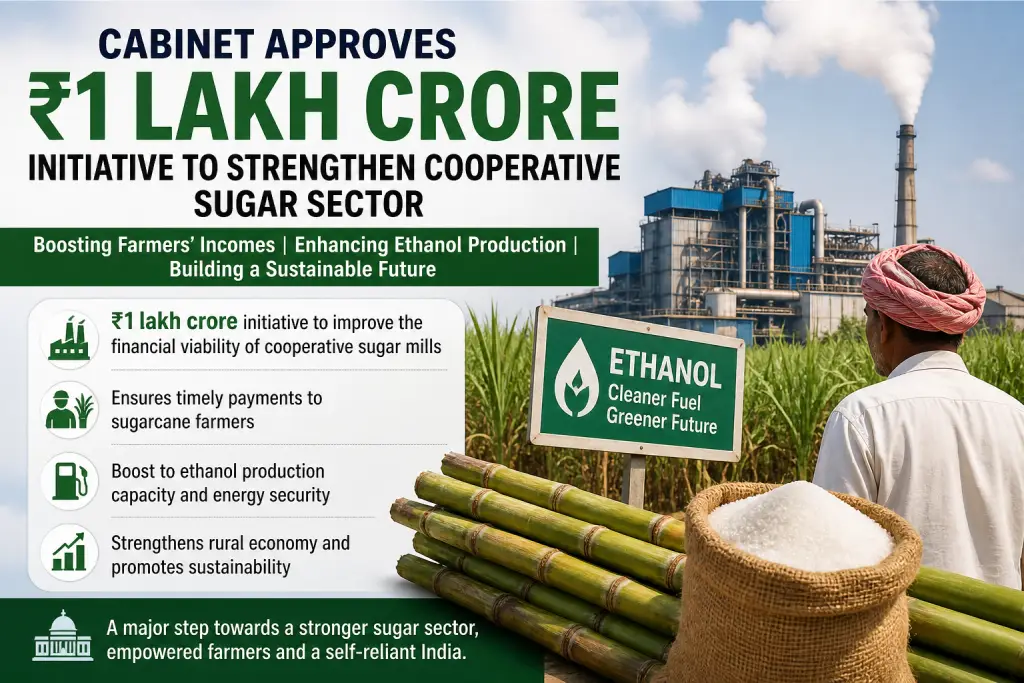
India has taken a significant step toward strengthening its sugar sector, with the Union Cabinet approving a major financial package aimed at revitalising cooperative sugar mills and boosting ethanol production capacity.
According to a press release issued by the Press Information Bureau, the initiative is designed to enhance the financial viability of cooperative sugar mills while supporting the government’s broader goals of energy security, farmer welfare, and rural development.
Boosting Cooperative Sugar Mills and Farmer Incomes
The approved scheme seeks to provide substantial financial support to cooperative sugar mills across the country. These mills play a critical role in India’s rural economy, especially in sugarcane-producing states where millions of farmers depend on them for livelihood.
The government aims to improve the liquidity and operational capacity of these mills, ensuring timely payments to farmers. Delayed payments have long been a concern in the sector, and this intervention is expected to address that structural issue.
“The initiative will strengthen cooperative sugar mills and ensure timely payments to sugarcane farmers,” the government noted in its official statement. (Press Information Bureau)
By stabilising the financial health of mills, the scheme is expected to directly benefit farmers through improved price realisation and reduced payment delays.
Focus on Ethanol Production and Energy Security
A key component of the Cabinet decision is the push toward expanding ethanol production. India has been actively promoting ethanol blending in petrol as part of its strategy to reduce dependence on imported fossil fuels and cut carbon emissions.
The scheme will facilitate investment in ethanol production facilities, enabling sugar mills to diversify revenue streams beyond traditional sugar production. This shift is crucial in managing surplus sugar stocks and ensuring long-term sustainability of the industry.
The government has been targeting higher ethanol blending ratios, and strengthening the sugar sector is central to achieving these targets. Increased ethanol production not only supports energy security but also contributes to environmental sustainability.
Key Highlights
· Rs. 1 lakh crore initiative for cooperative sugar sector
· Focus on improving financial viability of sugar mills
· Boost to ethanol production capacity
· Ensures timely payments to sugarcane farmers
· Supports rural economy and energy security
Strengthening Rural Economy and Sustainability
The sugar sector is deeply intertwined with rural livelihoods, and the Cabinet’s decision reflects a broader strategy to enhance rural economic resilience. By supporting cooperative mills, the government is also reinforcing the cooperative movement, which has been a cornerstone of rural development in India.
Additionally, the initiative aligns with India’s climate commitments by encouraging cleaner fuel alternatives like ethanol. This dual focus on economic and environmental sustainability positions the sugar sector as a key player in India’s transition toward a greener economy.
The government emphasised that the move will “promote sustainability and strengthen the overall ecosystem of the sugar industry.” (Press Information Bureau)
This initiative is expected to ensure stability in the sugar sector while supporting farmers and enhancing ethanol production capacity.
The Cabinet’s approval marks a strategic intervention aimed at addressing long-standing challenges in the sugar sector, including financial stress, delayed payments, and over-reliance on sugar output.
By integrating financial support with structural reforms such as ethanol diversification, the initiative lays the groundwork for a more resilient and future-ready sugar industry.
As India continues to balance economic growth with sustainability goals, such policy measures highlight the government’s focus on creating a robust agricultural and energy ecosystem that benefits both farmers and the broader economy.