Central Forest Division reported positive results from its Miyawaki plantation initiative at Langol Reserve Forest aimed at ecological restoration and greening Imphal.
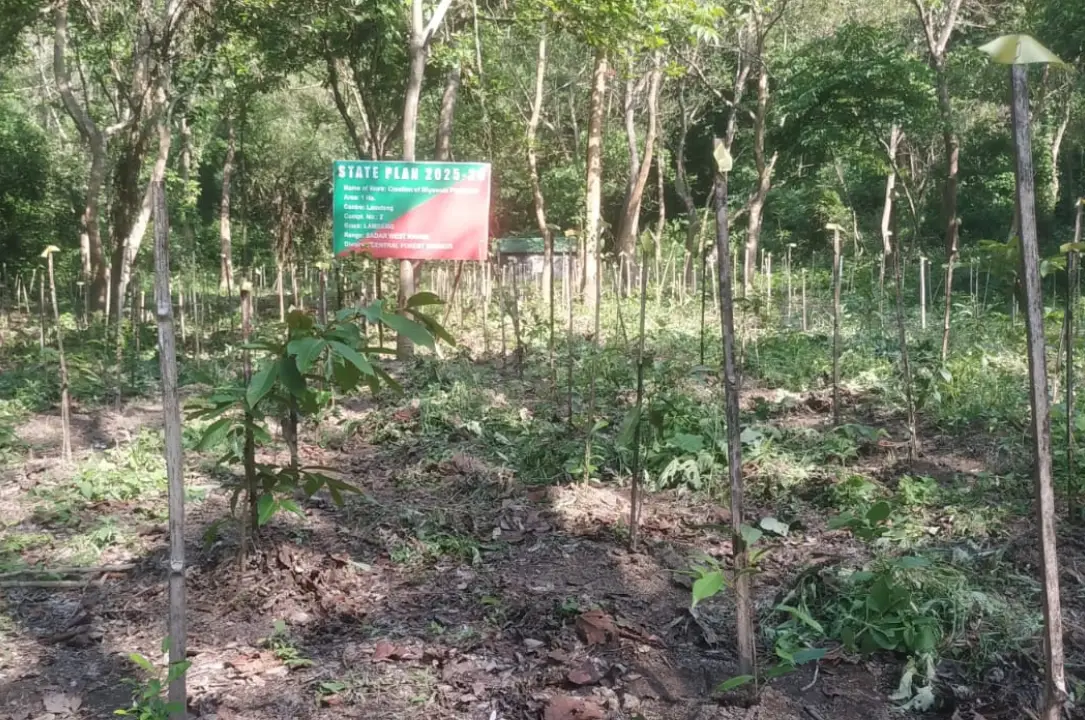
Imphal, May 23: Central Forest Division has reported encouraging progress in its Miyawaki plantation initiative undertaken during the 2025-26 financial year at Compartment No. 2 of Langol Reserve Forest in the Lamdeng Block under Sadar West Range.
According to a statement issued by Divisional Forest Officer Vikram Suresh Nadhe, the project was launched with the aim of restoring degraded forest land through scientific high-density afforestation using the Miyawaki method.
Under the initiative, around 10,000 saplings were planted using native species arranged in a multi-layered forest structure to accelerate ecological restoration and improve biodiversity in the area.
The Miyawaki technique, developed by Japanese botanist Akira Miyawaki, is known for creating dense native forests within a relatively short period. Unlike conventional plantation methods that maintain wide spacing between trees, the Miyawaki model involves planting three to four saplings per square metre. The dense plantation encourages competition for sunlight among plants, resulting in faster growth and stronger root systems.
The method also focuses on improving soil quality through aeration and the use of organic materials such as compost and biomass. According to the forest division, these measures help improve microbial activity, retain moisture and support long-term sustainability of the plantation.
Officials stated that the Langol plantation site was prepared with scientific soil enhancement measures before plantation activities began. The plantation was designed to replicate the structure of a natural forest ecosystem with different vegetation layers.
The upper canopy layer includes species such as Terminalia myriocarpa, Gmelina arborea and Parkia species. Middle canopy species include Syzygium cumini and Citrus limon, while various shrubs, herbs and climbers were also planted to increase structural diversity and ecological balance.
The forest division said the plantation has shown vigorous growth within a year of implementation. Saplings have reportedly established well, with a satisfactory survival rate and gradual canopy formation already becoming visible at the site.
Officials attributed the progress to continuous monitoring, soil health management and the adaptive nature of the Miyawaki method. The plantation is now gradually developing into a dense green patch and is expected to improve biodiversity, strengthen ecological stability and contribute to better micro-climatic conditions in the surrounding area.
The department described the initiative as an example of innovative forestry practice aimed at long-term environmental restoration and sustainable conservation.
The statement also linked the plantation drive to the broader vision of “Greening Imphal,” noting that dense urban and peri-urban forests can improve the environmental profile of the capital city while supporting tourism and eco-tourism activities.
According to the department, compact green forests developed near urban and tourist areas can enhance scenic beauty, provide natural recreational spaces and strengthen Imphal’s image as a clean and eco-friendly city. Over time, such initiatives are expected to complement the city’s cultural and historical attractions while contributing to sustainable urban development.