Union Home Minister Amit Shah announced a high-level committee to study demographic changes linked to illegal immigration and infiltration across India.
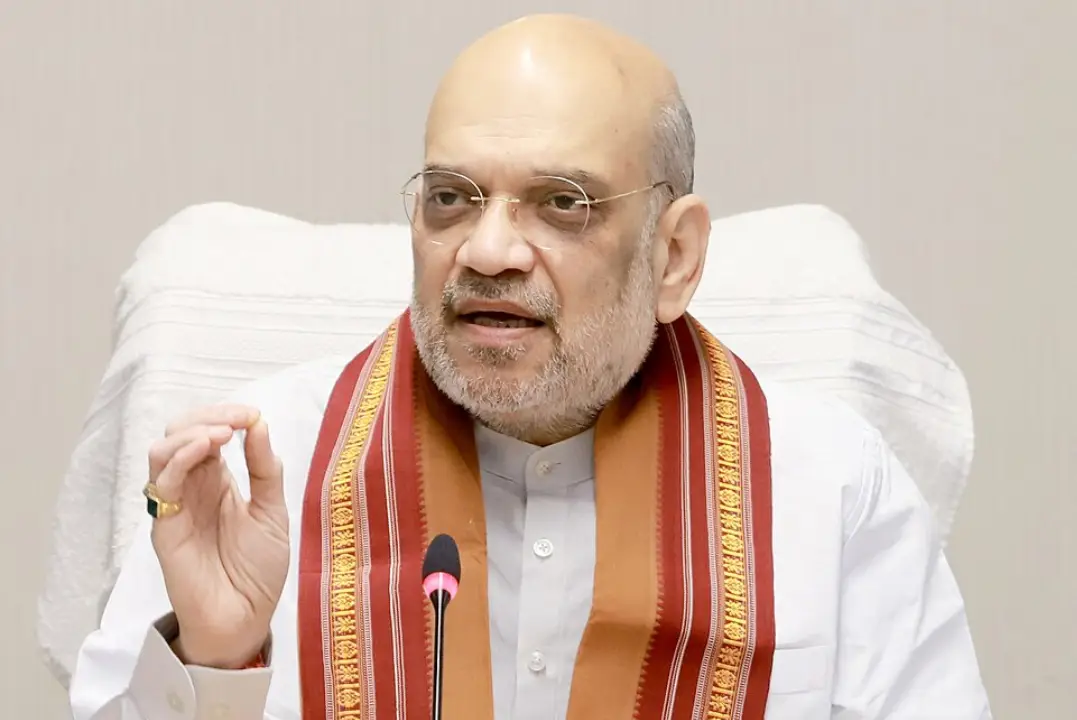
New Delhi, May 26: Union Home Minister Amit Shah on Tuesday announced that the Centre has constituted a high-level committee to examine what the government described as “unnatural demographic change” caused by infiltration and illegal immigration across the country.
In a post on X, Shah said, “Infiltration and other reasons causing Unnatural Demographic Change pose a very significant challenge to the present and future of any nation.” He added that Prime Minister Narendra Modi had first announced the formation of the committee on August 15, 2025.
According to Shah, the committee has now been formally constituted under retired Justice Prakash Prabhakar Naolekar. The panel will include former Union Home Secretary and Census Commissioner Durga Shankar Mishra, former IPS officer Balaji Srivastava and economist Dr Shamika Ravi as members. The Joint Secretary (Foreigners-I) in the Ministry of Home Affairs will serve as the Member Secretary.
Shah stated that the committee would conduct a “comprehensive assessment of demographic changes occurring across India due to illegal immigration and other unnatural causes” and examine “patterns of abnormal population shifts” among religious and social communities. He said the panel would prepare a “planned and time-bound solution” to address the issue.
The Union Home Minister further said demographic change was linked not only to “our sovereignty” but also to national security, law and order, social stability and “the preservation of tribal society.”
?????? ?? ???? ?????? ?? Unnatural Demographic Change ???? ?? ??????? ?? ??????? ? ?????? ?? ??? ?? ???? ???? ?????? ???
— Amit Shah (@AmitShah) May 26, 2026
??? ?????? ?? ?????? ?? ??? 15 ????? 2025 ?? ???????????? @narendramodi ?? ?? ‘High-Level Committee on Demographic Change’ ?? ????? ?? ??? ???? ????? ??? ????…
The High-Level Committee will carry out a scientific study of demographic changes reported in different parts of the country, particularly those linked to illegal immigration and other unusual factors. It will examine the underlying causes behind such shifts and suggest suitable policy, legal and administrative measures to address the issue. The proposed composition and Terms of Reference of the committee are as follows:
· To comprehensively deliberate upon the challenges arising from demographic changes, including illegal immigration.
· To study the possible causes of such demographic changes, such as cross-border activities (including illegal immigration), economic opportunities, and other socio-environmental factors.
· To identify the underlying factors behind these changes, which include illegal immigration, abnormal settlement patterns, and orchestrated migration
· To analyse structural population changes at the level of religious or social communities, particularly where they deviate from broader trends.
· To recommend a streamlined and permanent operational mechanism for the legal, fair, and time-bound identification, detention, and deportation of illegal immigrants already residing in the country.
· To recommend an appropriate institutional mechanism to strengthen border management, population stabilization, and identification systems for the continuous monitoring of such trends.
· To propose a comprehensive policy framework to enhance coordination between the Central and State Governments on matters related to illegal immigration and the resulting demographic imbalances.
· The Committee may recommend any other measures it deems appropriate to address the challenges arising from demographic changes, including illegal immigration.
The issue of infiltration and alleged illegal immigration has remained politically sensitive, particularly in northeastern and border states such as Assam, Tripura and Manipur. Over the years, the BJP-led government and several regional organisations have repeatedly raised concerns over undocumented immigration from neighbouring Bangladesh and Myanmar, especially in areas sharing porous international borders.
In Manipur, the issue has become closely tied to the ongoing ethnic conflict and debates surrounding border security, forest encroachment and the identification of illegal immigrants. The state government had earlier launched surveys and eviction drives in reserved forest areas, claiming that illegal settlements and cross-border infiltration posed a threat to indigenous communities and internal security.
Chief Minister N Biren Singh had on multiple occasions alleged that unchecked illegal immigration from Myanmar following the military coup in the neighbouring country contributed to demographic pressure in parts of the state. Several Meitei civil society groups have also linked the issue to demands for implementation of the National Register of Citizens (NRC) and stricter border monitoring mechanisms in Manipur.
At the same time, tribal organisations and rights groups have often disputed such claims, arguing that the issue should not be used to target specific communities without verified data.
Recently, Shah also spoke about developing “smart borders” along India’s borders with Bangladesh and Pakistan to stop infiltration and prevent attempts at demographic change. Authorities have been asked to identify infiltration routes and strengthen surveillance systems in vulnerable border regions.
The Centre has not yet announced a timeline for submission of the committee’s report.