Union Health Minister J.P. Nadda reviewed India’s Ebola preparedness measures as the Centre intensified surveillance and screening following outbreaks in parts of Africa.
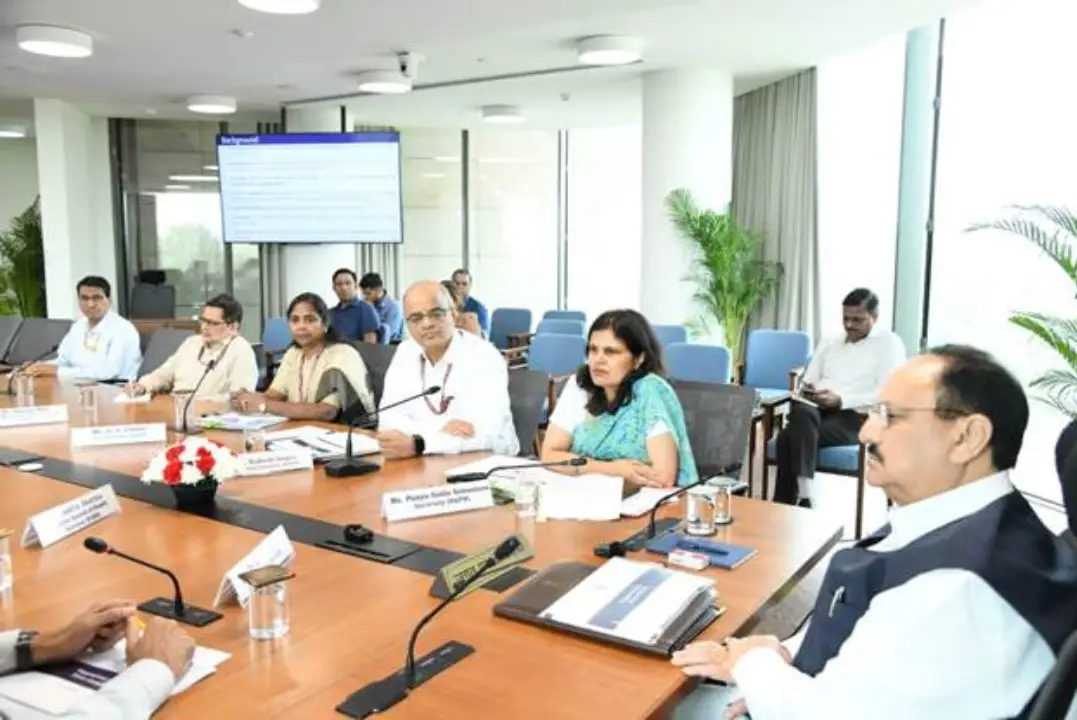
New Delhi, May 25: Union Health Minister Jagat Prakash Nadda on Monday reviewed the country’s preparedness and surveillance measures for Ebola disease in view of the recent outbreak reported in some parts of Africa.
During the review meeting, the minister stated that India has not reported any case of Bundibugyo Ebola disease so far. However, following the declaration of Ebola as a Public Health Emergency of International Concern (PHEIC) by the World Health Organization and a Public Health Emergency of Continental Security (PHECS) by the Africa Centres for Disease Control and Prevention, the Government of India has stepped up precautionary measures across the country.
According to the Union Health Ministry, the Centre is closely monitoring the Ebola situation in Africa and has intensified surveillance and preparedness mechanisms to safeguard public health.
Nadda said that the Union Health Ministry, in coordination with the National Centre for Disease Control, Directorate General of Health Services, Indian Council of Medical Research, Civil Aviation authorities, immigration authorities and other concerned departments, has strengthened surveillance systems and public health preparedness nationwide.
He said that enhanced screening and surveillance measures have been initiated at international airports and other points of entry into the country.
The minister also noted that advisories and Standard Operating Procedures (SOPs) related to screening, quarantine, laboratory testing, clinical management and infection prevention practices have already been shared with all States and Union Territories.
Meetings have also been conducted with state governments and stakeholders to review preparedness and response measures.
Nadda directed senior officials, including the Union Health Secretary, Director General of ICMR and Director of NCDC, to ensure that arrangements related to tracking, testing and surveillance remain in a constant state of readiness.
On May 24, India issued a travel advisory asking citizens to avoid non-essential travel to the Democratic Republic of the Congo, Uganda and South Sudan due to the Ebola outbreak.
Prior to this, the Union Health Ministry had issued an SOP on May 21 outlining public health preparedness and response measures related to Ebola disease. The SOP included protocols to be followed by international passengers arriving in India.
On May 22, separate guidelines were issued regarding hospital infection control, isolation facility preparedness and safe handling of the remains of Ebola patients.
The ministry stated that Integrated Disease Surveillance Programme (IDSP) units and Airport Health Organisations have been instructed to maintain heightened vigilance for unexplained febrile illnesses among international travellers and ensure prompt reporting and management of any suspected cases.
Ebola disease is a severe viral haemorrhagic fever with a high mortality rate. According to officials, there are currently no approved vaccines or specific treatments available for Ebola disease caused by the Bundibugyo virus strain.
Senior officials present during the meeting included Union Health Secretary Punya Salila Srivastava, ICMR Director General Rajiv Bahl, DGHS Sunita Sharma and other officials from the Union Health Ministry.