COCOMI rebukes KOHUR's press note on Kamjong cross-border attacks, asserting KNA(Burma) armed infiltration threatens Manipur's border security and civilian safety.
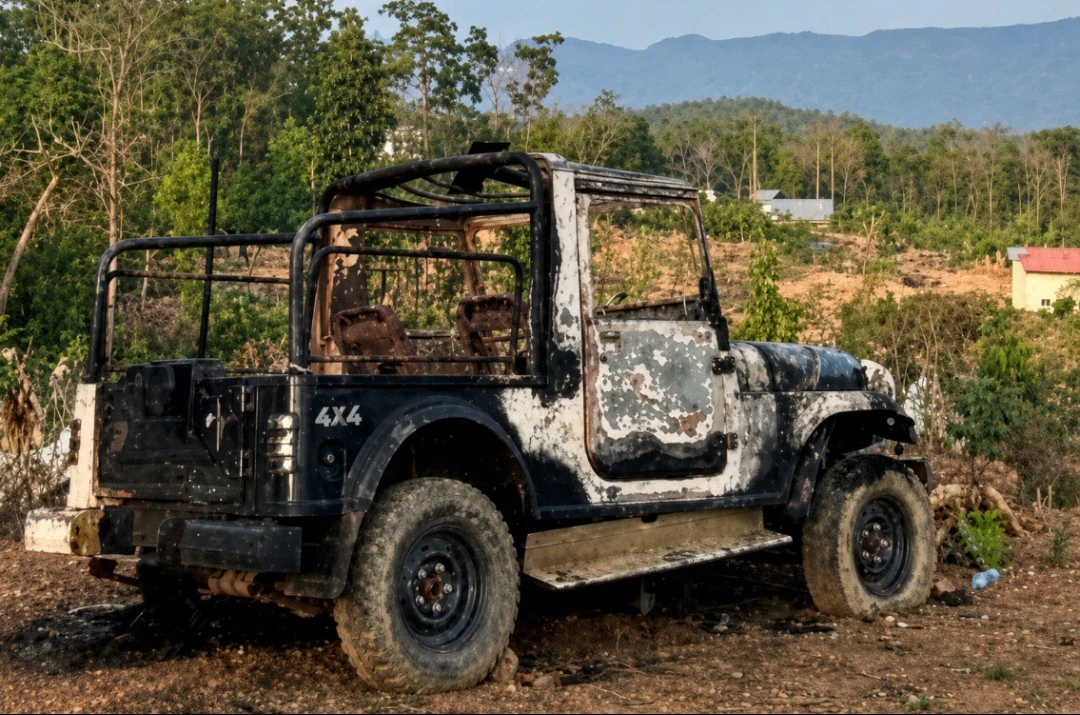
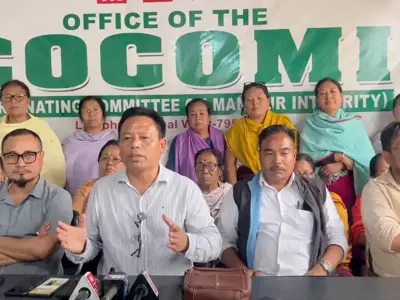
The Coordinating Committee on Manipur Integrity (COCOMI) has issued a sharp rebuttal to a press note released by KOHUR, a civil society organization, accusing it of attempting to discredit legitimate security concerns raised over terrorist attacks in Kamjong District along the Indo-Myanmar border. COCOMI described KOHUR's statement as 'deeply unfortunate, misleading, and detached from ground realities.'
KNA(Burma) Identified in Kamjong District Cross-Border Attacks
According to COCOMI, the incidents that unfolded in the border villages of Kamjong District were not politically manufactured claims but constituted direct acts of armed aggression by heavily armed groups operating from across the international border in Myanmar. COCOMI pointed out that the sitting MLA of the affected region had openly acknowledged the involvement of KNA(Burma) — the Kuki National Army's Burma faction — and allied armed elements in the attacks.
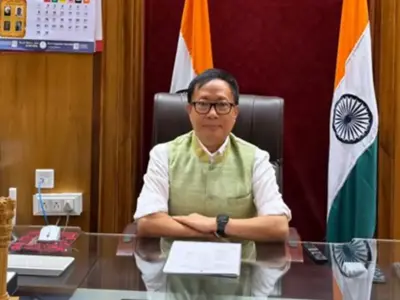
Further corroborating the cross-border infiltration, COCOMI cited a Ministry of Defence statement (Ref. No. PR/058/KOH/2026) that acknowledged the rescue of a Naga woman from Namlee and the apprehension of KNA(Burma) operative Lal Thag John, aged 38, along with weapons and ammunition from Churachandpur. The individual was subsequently handed over to local police. COCOMI stated that this official acknowledgement 'further corroborates the consistent testimonies of local villagers, civil society organisations, and elected representatives.'
COCOMI Accuses KOHUR of Shielding Narco-Terrorist Groups and Selective Silence
COCOMI launched a pointed criticism against KOHUR, alleging that the organization has consistently shielded violent armed elements under the guise of human rights activism. The statement accused KOHUR of labelling genuine national security concerns as 'communal' — a characterization COCOMI called 'an insult to the affected villagers who have continuously lived under fear and insecurity due to unchecked militant movements along the porous international boundary.'
COCOMI also alleged that KOHUR remained conspicuously silent on the Jiribam massacre where six women and children were killed, the terrorist attack in Tronglaobi where infants were targeted, and the recent killing of two innocent Tangkhul civilians at T. Kamson in Ukhrul District. 'Such selective outrage seriously undermines the credibility of any organization claiming to stand for justice, peace, and human rights,' the statement read.
National Security, Not Communalism: COCOMI's Position on Border Infiltration
COCOMI firmly stated that raising alarm against cross-border armed aggression cannot be equated with hatred against any community. The organization emphasized that the core issue is national security, territorial integrity, and the protection of Indian civilians from foreign-origin armed groups that have increasingly exploited instability in Myanmar to expand their operations into Indian territory.
The statement further cautioned that 'pseudo Human Rights groups' selectively invoke human rights language only when it serves their narrative, while ignoring repeated attacks, intimidation, extortion, displacement, and violence faced by indigenous communities in Manipur's border regions. COCOMI asserted that 'human rights cannot become a shield for armed aggression or a tool to whitewash extremist activities.'
COCOMI's Four-Point Demand for Border Security and Justice
COCOMI concluded its rebuttal by outlining four specific demands it urged responsible civil society organizations to collectively champion:
1. Stronger border security along the Indo-Myanmar frontier.
2. Immediate neutralization of foreign-origin armed incursions.
3. Protection and rehabilitation of civilians affected by cross-border attacks in Manipur.
4. A transparent investigation into cross-border militant activities threatening India's sovereignty.
COCOMI closed with a stern warning that denialism and narrative manipulation would only deepen public mistrust and further destabilize Manipur. 'The truth cannot be erased merely through press statements,' the organization declared, underscoring that history would hold accountable not only those who committed violence but also those who chose silence in its face