COFTI, CAU-Imphal has developed bamboo wine technology aimed at boosting entrepreneurship, sustainable livelihoods and bamboo-based industries in the Northeast.
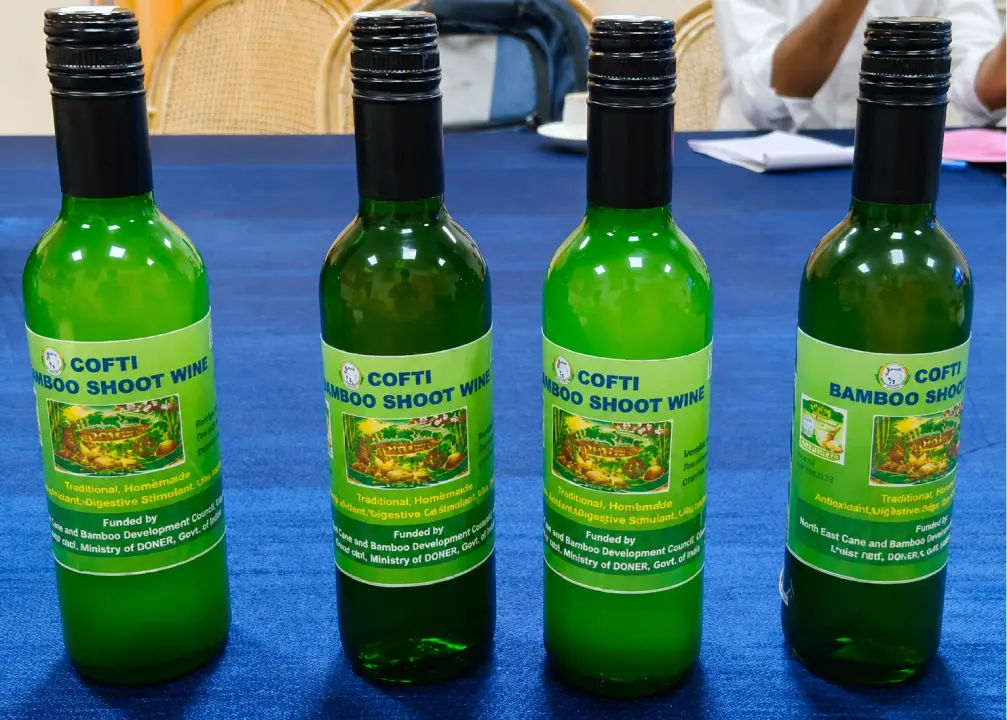
Imphal, May 28: The College of Food Technology (COFTI), under Central Agricultural University, has successfully developed bamboo wine production technology under a research project aimed at exploring the commercial and scientific potential of bamboo-based beverages.
The innovation, developed through the project titled “Exploring the Potential of Bamboo Wine: Production, Properties, and Market Viability”, is expected to create new opportunities for entrepreneurship, value addition and sustainable livelihoods in the Northeast region, according to a press statement issued on Thursday.
The project was led by Dr. Ng. Taibangnganbi Chanu, Assistant Professor of Microbiology, as Principal Investigator, under the guidance of Prof. Ng. Iboyaima Singh, Dean of COFTI, who served as the Nodal Officer for the initiative.
Researchers at the college successfully transformed bamboo shoots and bamboo powder into premium wine products through scientific processing and fermentation techniques. The institution described the development as a major milestone in food technology innovation and sustainable resource utilisation.
On May 20, the final project report along with bamboo wine samples was formally handed over to Shri Kayio Kayina Th., Managing Director of the North East Cane & Bamboo Development Council (NECBDC), at Byrnihat near Guwahati.
With the transfer of the technology package to NECBDC, the bamboo wine production model is now expected to become accessible to entrepreneurs, startups and local communities interested in entering the bamboo-based food and beverage sector.
COFTI stated that it would continue supporting technology transfer through practical demonstrations, training programmes and technical guidance to ensure the smooth transition of the innovation from laboratory research to commercial enterprise.
The institution said the achievement demonstrates the growing role of scientific research in creating sustainable and region-specific industries in the Northeast, where bamboo resources are abundant and widely available.

Bamboo is increasingly being recognised globally as an important renewable resource because of its rapid growth cycle and environmental benefits. Unlike traditional timber species, bamboo can reach its full height within two to four months and is considered a highly efficient carbon sink capable of absorbing significantly larger amounts of carbon dioxide.
Apart from its role in construction materials, bioenergy and industrial products, bamboo has also attracted growing attention in the food and beverage sector because of its nutritional and medicinal properties.
According to available industry data, the global bamboo wine market was valued at approximately USD 2.1 billion in 2024 and is projected to grow to around USD 3.6 billion by 2033, with an estimated compound annual growth rate of 6.5 percent between 2025 and 2033.
The growth is being driven by increasing consumer demand for sustainable, plant-based and functional beverages, as well as rising global interest in Asian food and culinary products.
Bamboo wine production has evolved in different forms across several countries. In parts of East Africa, a traditional fermented bamboo sap drink known as “Ulanzi” is prepared by tapping young bamboo shoots. The naturally fermented beverage is known for its sweet taste during early fermentation and higher alcohol content after several days.
In China, bamboo leaf extracts are also used in the preparation of leaf-infused wines and medicinal beverages. Bamboo leaves contain flavonoids, antioxidants and other bioactive compounds that are increasingly being studied for their potential health benefits.
Researchers have reported that bamboo-based beverages may contain water-soluble B vitamins, amino acids and ACE-inhibitory peptides that could help regulate blood pressure and support cardiovascular health.
At the same time, experts have stressed the importance of proper processing and safety protocols in bamboo-based food production. Fresh bamboo shoots naturally contain taxiphyllin, a cyanogenic compound capable of releasing hydrogen cyanide if consumed without adequate treatment.
Scientific studies have shown that heat treatment at around 85 degrees Celsius and controlled fermentation can significantly reduce cyanide levels to safe limits. Processing methods can also help reduce soluble oxalates, which are associated with kidney stone formation.
The research initiative undertaken by COFTI is being viewed as an important step towards developing value-added bamboo products in the Northeast, where bamboo has long been an integral part of local economies and traditional lifestyles.
The project also aligns with broader efforts to promote bamboo as a strategic resource for rural development, sustainable industry and green entrepreneurship in the region.
Officials associated with the initiative said the collaboration between COFTI and NECBDC would help create opportunities for local producers and startups while encouraging scientific utilisation of bamboo resources.
They added that continued investment in bamboo research and processing technologies could help strengthen rural economies and expand the Northeast’s presence in emerging global markets linked to sustainable food and beverage products.