UN Secretary-General António Guterres calls for global financial reform, climate justice, and equal partnership with Africa at the Africa Forward Summit in Nairobi on May 12, 2026.
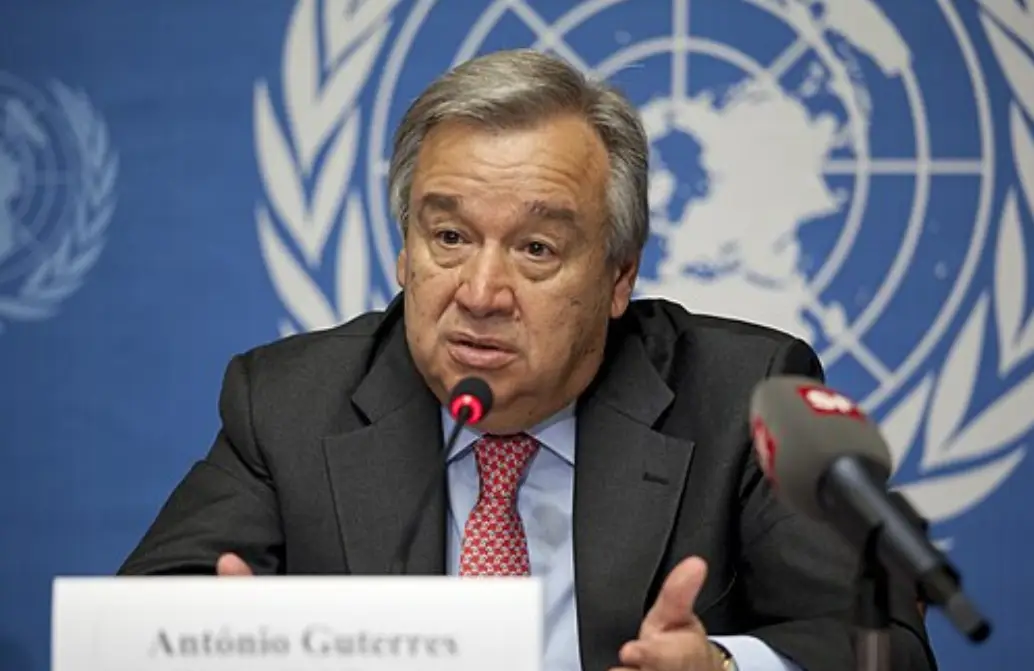
United Nations Secretary-General António Guterres delivered a landmark address at the Africa Forward Summit in Nairobi, Kenya, on 12 May 2026, calling for a sweeping overhaul of the global financial architecture, urgent climate justice for Africa, and a genuinely equal France-Africa partnership grounded in mutual respect and African leadership.
Co-hosted by Kenyan President William Ruto and French President Emmanuel Macron, the summit brought together African heads of state, global leaders, and a new generation of young African voices to chart a path forward for development, investment, and reform.
Guterres opened by highlighting Africa's increasingly assertive role in reshaping a global financial system he described as "designed in 1945 for a world that no longer exists." He credited African nations with spearheading landmark initiatives that are redrawing the rules of international finance.
African leadership, he said, was instrumental in securing approval of the Pact for the Future at the UN General Assembly and in building the Borrowers' Platform — a mechanism enabling debtor nations to negotiate collectively and from a position of strength. Africa also helped secure the Sevilla Commitment, which aims to expand lending capacity of multilateral development banks, mobilise private capital at scale, and ease the debt burden on developing economies.
The Secretary-General further pointed to Africa's challenge of the prevailing credit ratings system, which he said unjustly locks many African countries out of affordable borrowing, and to the African Development Bank's bold vision to reform the continent's financial architecture from within — mobilising African resources for African priorities. He also praised African-led efforts to advance a UN Framework Convention on International Tax Cooperation, aimed at ending the systemic loss of tax revenues that developing nations are rightfully owed.
Guterres did not mince words on climate justice. Despite contributing minimally to global emissions, Africa is warming faster than the global average and bearing disproportionate consequences — including displaced communities, destroyed harvests, and severe economic shocks. The collapse of Official Development Assistance (ODA), he warned, compounds what is both a financing crisis and a crisis of solidarity.
The UN chief stressed that the Africa climate finance gap must be urgently addressed. The continent holds 60 per cent of the world's best solar potential, yet receives only 2 per cent of global clean energy investment. With appropriate financing, Africa could generate ten times more electricity than it currently needs by 2040 — entirely from renewables. Instead, 600 million Africans remain without electricity, and one billion still depend on unclean cooking fuels, a crisis claiming approximately 800,000 lives annually — predominantly women and children.
Compounding these challenges, African nations face average borrowing costs twice as high as OECD countries — costs Guterres attributed not to market realities but to structural injustices embedded in the global financial system. He called for climate adaptation to be placed at the centre of international finance, and for Africa's adaptation finance gap to be fully closed.
The Secretary-General turned to Africa's vast reserves of critical minerals — resources indispensable to the global green energy transition — and delivered a stark indictment of the extractive model that has long defined the continent's relationship with the outside world. For too long, he said, Africa's minerals have been extracted and value captured elsewhere, while environmental damage has been left behind.
Citing the United Nations Panel on Critical Energy Transition Minerals, Guterres called for fair value chains, in-country processing and manufacturing, full transparency, and rigorous environmental and human rights standards — with meaningful benefits flowing directly to affected communities. "No more exploitation. No more plundering," he declared, asserting that the people of Africa must be the primary beneficiaries of Africa's own resources.
Switching partly to French, Guterres articulated a vision for a genuinely reinvented France-Africa partnership — one built on equality, complementarity, and mutual benefit, not historical power imbalances. This means investing together in African-created and African-owned industries, strengthening African universities and research institutions, and developing African capabilities in artificial intelligence shaped by African data, African languages, African researchers, and African leadership.
He called on partners to align with Africa's own development roadmaps — including the African Continental Free Trade Area (AfCFTA) and the African Union's Agenda 2063 — and to finance African ambition on fair and sustainable terms. Guterres also underscored the need for Africa's voice in international governance, noting the continent's 1.5 billion people currently hold no permanent seats on the UN Security Council and lack proportional influence in international financial institutions.
Closing on an optimistic note, Guterres pointed to Africa's demographic future — by 2050, one in four people on the planet will be African — and celebrated the young leaders present at the summit as the embodiment of a new partnership. "When Africa succeeds, the whole world gains," he said, calling for investment at scale, fairer international systems, and partnerships anchored in mutual respect.