ICMR transferred three indigenous medical technologies to industry partners during National Technology Day 2026, showcasing India’s growing strength in healthcare innovation, diagnostics, and biotechnology under the ‘Vigyan-Tech’ initiative.
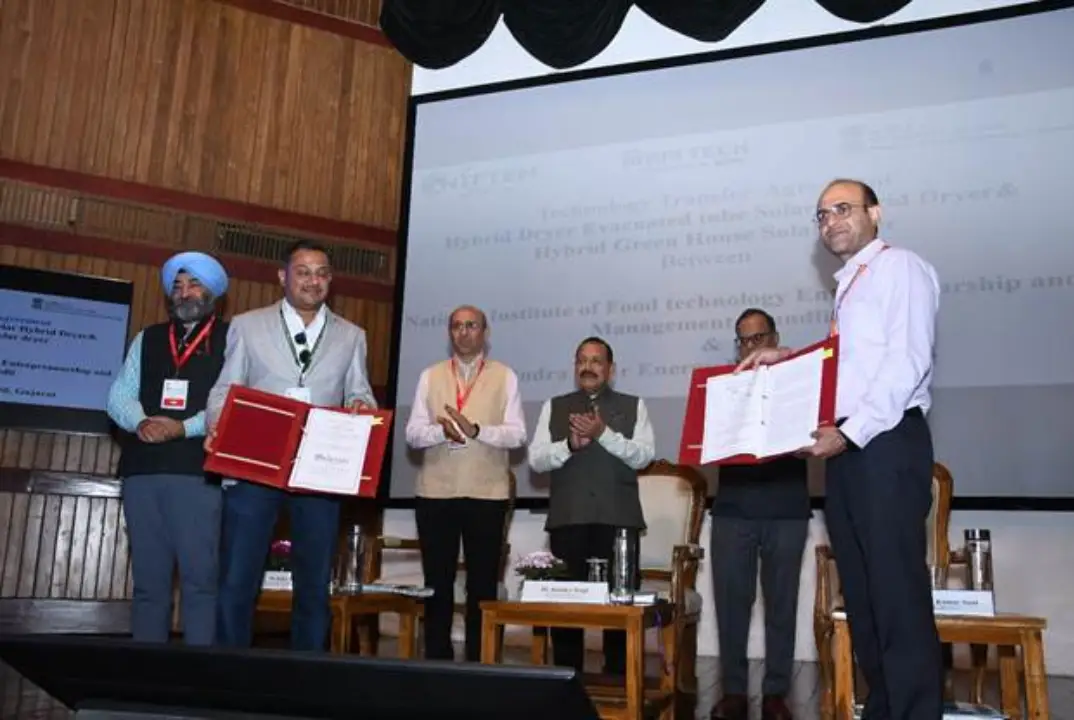
The Indian Council of Medical Research (ICMR) transferred three indigenous medical technologies to industry partners during the National Technology Day 2026 celebrations, marking a significant step toward strengthening India’s self-reliant healthcare innovation ecosystem.
The technology transfer took place during the national programme ‘???????–Tech’ organised at the BRIC–National Institute of Immunology (NII) in New Delhi. The programme was coordinated by the Office of the Principal Scientific Adviser (PSA) in collaboration with the Department of Biotechnology (DBT).
The event brought together 14 scientific ministries and departments in what officials described as a “Whole-of-Government” approach aimed at showcasing India’s scientific excellence and technological advancements.
Union Minister of State (Independent Charge) for Science and Technology Dr. Jitendra Singh inaugurated the national technology exhibition and interacted with innovators and exhibitors participating in the event.
Among those present were Prof. Ajay Kumar Sood, Principal Scientific Adviser to the Government of India, and Dr. Rajiv Behl, Secretary of the Department of Health Research and Director General of ICMR.
ICMR used the platform to exhibit six high-impact indigenous technologies spanning the biopharma, health, and bioindustrial sectors. The showcased technologies included Covaxin, the COVID Kavach ELISA Kit, a CRISPR-Cas-based tuberculosis detection system, the Nipah point-of-care assay, a diagnostic ELISA kit for dengue detection, and a biolarvicide for mosquito control.
The council also highlighted 25 additional technologies and innovations developed by various ICMR institutes. These innovations focused on diagnostics, medical devices, digital health systems, disease surveillance, and translational medical research.
According to officials, the technologies underline ICMR’s commitment to addressing national healthcare priorities through indigenous research and innovation.
A major highlight of the programme was the formal transfer of three ICMR-developed technologies to private industry partners through licensing agreements facilitated under ICMR’s Medical Innovations Patent Mitra initiative.
The first technology transferred was a cost-effective PSP94 ELISA test designed to guide prostate biopsy decisions in patients with PSA levels below 20 ng/ml. The technology was developed by Dr. Dhanashree Jagtap, Dr. Smita Mahale, and Dr. Bhakti Pathak at the ICMR–National Institute for Research in Women’s Health (ICMR-NIRWoH).
The technology was licensed to Krishgen Labs Pvt. Ltd., enabling commercial development and wider deployment.
The second technology transfer involved a Factor VIII Inhibitor and Coagulation Disorder point-of-care diagnostic system developed by Dr. Rucha Patil at the ICMR–National Institute for Research on Blood and Immune Disorders (ICMR-NIRBID).
This diagnostic technology was licensed to Meril Life Sciences.
The third technology transferred was a Single-Tube Multiplex Real-Time RT-PCR diagnostic system for the detection of dengue, chikungunya, and Zika viruses. The technology was developed by Dr. Alagarasu K at the ICMR–National Institute of Virology (ICMR-NIV).
The technology was licensed to Vanguard Life Sciences.
These transfers were conducted during the National Technology Transfer and MoU Exchange Session organised alongside the release of a national compendium featuring technologies developed by autonomous institutes and laboratories under participating ministries and departments.
Officials said the successful licensing of the three technologies reflects ICMR’s growing emphasis on protecting publicly funded innovations through structured intellectual property support while ensuring their transition into industry-ready solutions.
The initiative is aligned with the vision of “Make in Bharat,” focusing on indigenous manufacturing, strengthening India’s medical innovation value chain, and building a self-reliant healthcare ecosystem.
The ‘???????–Tech’ programme also served as a national platform for promoting collaboration among government agencies, research institutions, academia, and industry stakeholders.
According to the Ministry of Health and Family Welfare, the event reaffirmed the collective commitment of India’s scientific ministries and departments toward building a robust innovation ecosystem in support of the broader vision of Viksit Bharat.
The transfer of indigenous healthcare technologies is expected to support faster commercialization of research innovations while enhancing access to affordable diagnostic and medical technologies developed within India.