The MHA has granted a sixth extension to the Manipur Commission of Inquiry, setting a November 20, 2026 deadline amid renewed ethnic violence, hostage crises, and leadership changes.
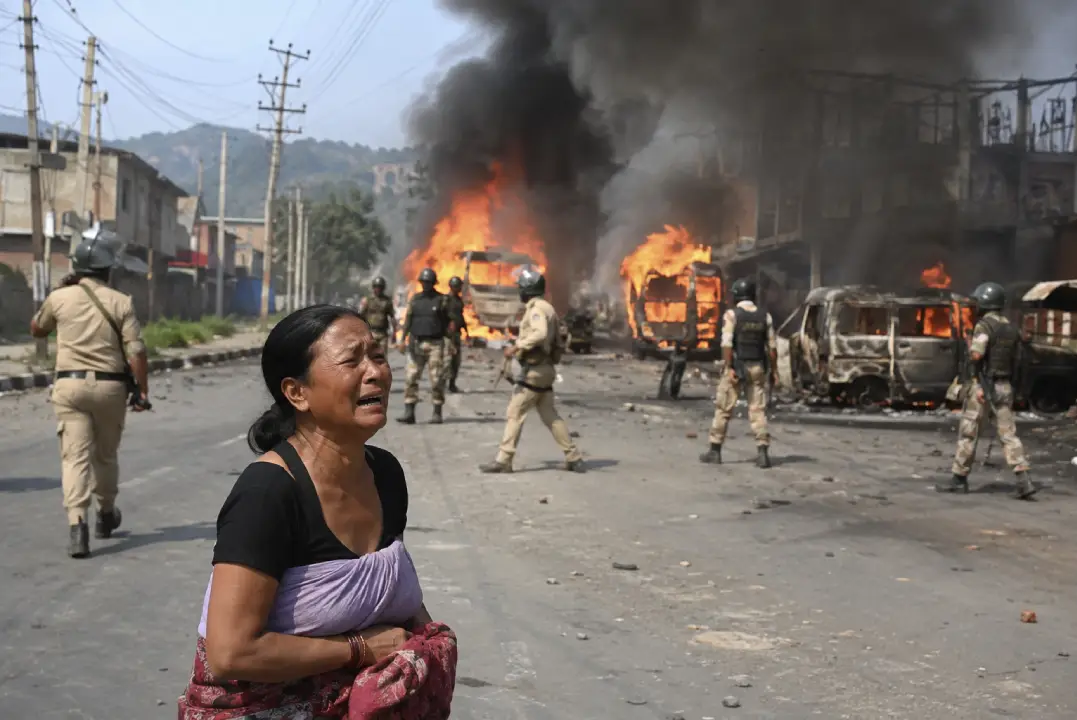
The Ministry of Home Affairs (MHA) has granted a sixth extension to the Manipur Commission of Inquiry, the statutory body investigating the devastating ethnic violence that engulfed the northeastern state beginning in May 2023. Under the latest notification issued on May 14, 2026, the three-member panel now has until November 20, 2026, to submit its comprehensive findings to the Central Government — marking yet another significant step in one of India's most prolonged and complex post-conflict investigations.
The Manipur ethnic violence crisis was ignited on May 3, 2023, when a "Tribal Solidarity March" opposing the Meetei community's demand for Scheduled Tribe status spiralled into large-scale clashes between the Meitei and Kuki-Zomi communities. The fallout was catastrophic — hundreds of fatalities, thousands of injuries, and the displacement of approximately 60,000 individuals who were forced into relief camps as entire neighbourhoods were reduced to ash by systematic arson.
In response, the MHA established the Commission of Inquiry (Manipur) 2023 on June 4, 2023, under the powers conferred by Section 3 of the Commissions of Inquiry Act, 1952. The Commission was also granted the powers of a Civil Court under Section 5 of the Act, enabling it to summon witnesses, compel the production of documents, and receive evidence on affidavit. Originally mandated to submit its findings within six months of its first sitting, the sheer scale of the crisis has since demanded far more time.
The Manipur Commission of Inquiry saw a major leadership transition in early 2026. Justice Ajai Lamba, the former Chief Justice of the Gauhati High Court who had led the panel since its inception, resigned from his post in late February 2026. His resignation was accepted effective February 28, 2026, bringing the panel's primary fact-finding era to a close.
Effective March 1, 2026, the Central Government appointed Justice Balbir Singh Chauhan, a former Judge of the Supreme Court of India, as the new Chairperson of the Commission. The elevation from a High Court-level chairman to a Supreme Court-level jurist signals a shift toward the Commission's final deliberative and reporting phase. Retired IAS officer Himanshu Shekhar Das and retired IPS officer Aloka Prabhakar continue as the other two members, providing critical institutional memory across the leadership transition.
The protracted Manipur conflict triggered an unprecedented constitutional crisis. Following nearly two years of instability and hundreds of deaths, Chief Minister N. Biren Singh resigned on February 9, 2025. President Droupadi Murmu subsequently issued a Proclamation under Article 356 of the Constitution on February 13, 2025, imposing President's Rule based on the Governor's report citing a complete breakdown of constitutional governance in the state.
President's Rule lasted nearly a year before being revoked on February 4, 2026. Two-time MLA Yumnam Khemchand Singh was subsequently named the BJP legislature party leader and sworn in as the new Chief Minister, restoring elected governance to Manipur. The Commission's continuity through this period of direct federal rule underscored its role as an independent institutional anchor amid profound political volatility.
Bimol Slams Repeated Extensions to Manipur Violence Inquiry Panel
Inner Manipur MP Angomcha Bimol Akoijam has strongly criticised the repeated extensions granted to the Commission of Inquiry probing the Manipur ethnic violence, accusing the Government of India of being “scared to fix responsibility” for the crisis.
Reacting to the Ministry of Home Affairs’ latest decision to extend the panel’s tenure by another six months till November 20, 2026, Dr Bimol questioned why the inquiry, constituted in 2023 with a mandate to submit its findings within six months, has continued for years without a final report.
He said the repeated extensions reflect the Centre’s reluctance to identify and hold accountable those responsible for orchestrating the violence. He also questioned why the Government of India was hesitant to fix responsibility on the individuals and armed groups involved in the conflict.
Dr Bimol appealed to the Centre to immediately conclude the inquiry and make its findings public. He further demanded that the judicial commission clearly identify the specific communities and factions to which the armed groups involved in the violence belong so that accountability could be fixed transparently.
Calling the prolonged delay an “irresponsible abdication of duty” by the state, Dr Bimol said justice cannot be indefinitely postponed while victims continue to suffer. He urged the authorities to take swift legal action against those responsible for the violence and provide immediate compensation and relief to affected families.
The sixth extension arrives against a deeply troubling backdrop of renewed violence in Manipur. In mid-May 2026, three senior church leaders were killed and five others seriously injured in an attack by unidentified armed assailants in the Kangpokpi district. Hours later, a man from the Naga community was killed and two others injured in an ambush in the Jouzangtek area of Noney district. In the aftermath of these attacks, more than 38 individuals from the Naga and Kuki communities were reportedly taken hostage by armed groups, though some were subsequently released.
These incidents illustrate the persistent atmosphere of fear and insecurity that continues to complicate the Commission's investigative work. While the MHA notification did not explicitly cite reasons for the latest extension, officials indicated that the breadth and complexity of the inquiry — compounded by recurring episodes of fresh violence — necessitate additional time to gather evidence and ensure a thorough final report.
With a firm "not later than November 20, 2026" deadline now in place, the Commission's work is approaching its decisive final phase. The panel, headquartered in Imphal, continues to review a vast array of complaints, affidavits, and representations, and to assess the long-term adequacy of the security and administrative measures deployed during the crisis. Its eventual report is expected to serve as the definitive administrative and historical record of the Manipur ethnic violence — and a critical foundation for future accountability and institutional reform. However, the real question is will there be another extension.