A new scientific volume documents Manipur’s biodiversity, medicinal plants, sacred groves, indigenous rice varieties, orchids, and traditional ecological knowledge amid rising environmental threats.
Imphal, May 28: Manipur’s rich biological heritage, traditional healing systems, sacred groves, indigenous rice varieties, and centuries-old ecological knowledge have been extensively documented in a newly published scientific volume that researchers say could become an important reference for biodiversity conservation in Northeast India. The publication, Biological Resources of Northeast India Volume I, highlights how the state’s forests, wetlands, local markets, and farming traditions continue to sustain both cultural identity and community livelihoods amid growing environmental pressures.
The volume, edited by researcher Sanjeet Kumar and published by the Ambika Prasad Research Foundation in April 2026, places special emphasis on Manipur’s unique relationship between people and nature. From the medicinal plants traded at Imphal’s women-run Ema Market to the sacred Umang Lai groves protected through customary beliefs, the study presents Manipur as one of the region’s most significant living repositories of biological and traditional knowledge.
Located within the Indo-Burma biodiversity hotspot and influenced by the Eastern Himalayan ecological zone, Manipur supports a wide range of ecosystems, including wetlands, river valleys, hill forests, and alpine landscapes. According to the publication, these varied habitats have allowed thousands of plant species to thrive, many of which continue to hold nutritional, medicinal, and economic significance for indigenous communities.
One of the major highlights of the publication is the documentation of traditional edible and medicinal plants still widely consumed in the state. Among them is Senegalia insuavis, locally known as Khang, a climbing plant commonly used in Manipuri cuisine. The leaves of Khang are traditionally boiled, fried, or mixed into local dishes and are valued as a source of dietary fibre, micronutrients, and plant-based protein.
The volume notes that Khang also occupies an important place in local ethnomedicine. Different parts of the plant are used by traditional healers to treat fever, headaches, bronchitis, burns, dysentery, muscle spasms, and snakebites. In some communities, the raw leaves are consumed to help remove trapped fowl bones from the throat.
Researchers cited phytochemical studies showing the presence of compounds such as caffeic acid, p-coumaric acid, saponins, and quercetin derivatives, which may possess antioxidant, anti-inflammatory, antimicrobial, and anticancer properties.
The study further points out that the plant is often confused with the morphologically similar Senegalia pennata, locally called Khang-nganu. However, researchers stated that S. insuavis or Khang can be distinguished through specific botanical features, including its strong odour when the leaves are crushed. The publication recommends proper identification and organised cultivation of the species to support future nutritional and medicinal research.
Traditional rice diversity in Manipur forms another major section of the volume. Rice remains the staple food of the region, and generations of local farmers have developed highly adaptable indigenous varieties suited to different climatic and geographical conditions.
A market survey conducted in the valley districts documented 14 important local rice varieties, including aromatic and non-aromatic types such as Dharam Cheng, Ayangleima Cheng, Phouren-mubi, Moirangphou, Leima-phou, and Sanaphou.
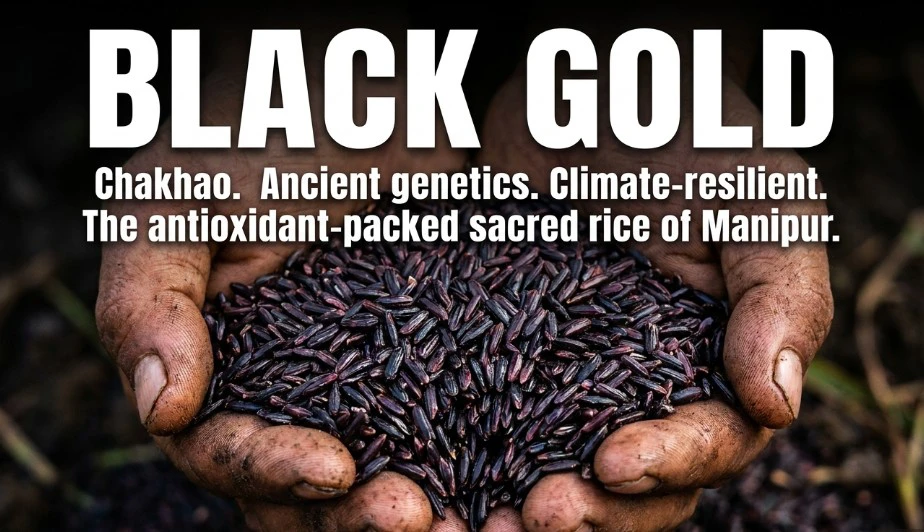
Particular attention was given to the state’s famous pigmented rice group known as Chak-hao. Varieties such as Chak-hao amubi (black aromatic rice), Chak-hao angangba (red aromatic rice), and Chak-hao poireiton continue to hold cultural significance in Manipuri households and ceremonial food traditions.
Beyond their culinary importance, the publication notes that Chak-hao rice is increasingly recognised for its nutritional value. Researchers stated that Chak-hao contains anthocyanins, flavonoids, vitamins, and other bioactive compounds associated with antioxidant and anti-diabetic properties.
The publication describes these traditional rice varieties as important genetic resources for climate-resilient agriculture, especially as farmers across the region face erratic rainfall, floods, pest outbreaks, and changing weather patterns.
The report also emphasises the importance of community seed preservation systems in protecting indigenous rice diversity from commercial homogenisation.
Another significant section of the publication focuses on the medicinal plant trade at the historic Ema Keithel, the all-women market that remains one of Manipur’s most recognisable economic and cultural institutions.
Researchers documented 12 medicinal plant species commonly sold in the market. Many of these plants are collected from wetlands, foothills, forests, and open fields across the state and continue to play a major role in household healthcare systems.
Among the widely used species are Centella asiatica, locally known as Peruk, and Houttuynia cordata, called Toningkok, both of which are associated with treatments for ulcers, digestive disorders, hypertension, and throat infections.
The publication also records the medicinal use of Zanthoxylum armatum, locally called Mukthrubi, for respiratory illnesses such as bronchitis and cough, while Litsea cubeba, known as Mayangton, is traditionally applied to relieve rheumatic pain.
Aquatic vegetable Ipomoea aquatica, locally known as Komprek, is also documented as a medicinal food plant traditionally consumed to improve digestion and physical strength.
Researchers cautioned that rising commercial demand for herbal products could lead to unsustainable extraction of medicinal plants from the wild. The report calls for organised cultivation and sustainable harvesting systems to reduce pressure on natural habitats.
The volume also documents the continued use of wild edible roots, rhizomes, and tubers in the state’s traditional food systems. A survey identified 20 species commonly traded in local markets, including yams, taro, lotus roots, and various ginger and turmeric relatives.

Species such as Amorphophallus paeoniifolius, locally called Haopan, Colocasia esculenta or Paan, and several Dioscorea yam species known locally as Kham-alu continue to be important food sources in both hill and valley communities.
Rhizomes such as Alpinia nigra or Pullei, Curcuma longa known as Yaingang, and Zingiber officinale called Shing are also widely consumed.
The edible roots of Nelumbo nucifera, locally known as Thambou, and Allium hookeri or Maroi Nakuppi are also highlighted in the publication for their nutritional and medicinal importance.
According to the publication, many of these underground plant resources function as nutraceutical foods because they combine nutritional and medicinal properties. Researchers noted that they contain starch, fibre, essential minerals, vitamins, and phytochemicals linked to anti-inflammatory and antidiabetic benefits.
The report warns that rapid lifestyle changes and urban food habits may gradually reduce the use of traditional plant-based diets among younger generations.
Another chapter explores the use of edible flowers in Manipuri cuisine and traditional medicine. Ethnobotanical surveys identified 35 species whose flowers are consumed in local dishes such as singju, kangsu, and eromba.
Flowers from plants such as Bauhinia variegata, locally called Chingthrao, Hibiscus sabdariffa known as Sougri, and Phlogacanthus thyrsiformis, called Nongmangkha, are used not only for food but also for herbal preparations believed to support immunity and respiratory health.
The banana blossom of Musa paradisiaca, locally known as Laphu, is also widely used in traditional cooking and is believed in local food traditions to help the body adapt to environmental changes during travel.
Researchers noted that many edible flowers contain vitamin C, provitamin A, flavonoids, and anthocyanins, making them important but under-recognised nutritional resources.
The publication also highlights the role of plants in the traditional textile culture of Manipur. A survey among local weavers and artisans documented 20 plant species used for natural dye extraction.

Traditional garments such as the Phanek historically relied on dyes prepared from leaves, bark, seeds, flowers, and other plant materials. One of the most culturally significant textiles discussed in the study is the Kum Phanek, traditionally associated with Manipuri heritage and royalty.
The black dye used in the textile is prepared using the leaves of Strobilanthes cusia, locally known as Kum, through a fermentation process that can take several days. Researchers noted that oyster shell ash is traditionally used during the dyeing process to produce a distinctive and durable black colour.
Other natural dye sources documented in the publication include Bixa orellana, locally called Ureirom, and Mallotus philippensis, known as Kumti, both recognised for producing bright orange pigments.
The report warns that traditional natural dyeing knowledge is steadily declining due to the widespread use of synthetic chemical dyes and changing textile production methods. Researchers recommended linking traditional dyeing practices with sustainable handloom and eco-textile industries.
Among the most culturally significant conservation systems documented in the publication are Manipur’s sacred groves, locally known as Umang Lai. These forest patches are protected through religious beliefs and customary practices and are traditionally regarded as the dwelling places of forest deities.
Activities such as tree cutting, hunting, and grazing are traditionally restricted within these sacred landscapes. Researchers described the groves as important in-situ conservation sites that continue to preserve rare and medicinal plant species.
The publication documents ethnobotanical surveys conducted in sacred groves such as Ima Chaning Lairembi Laikol and Konthoujam Lairembi Laikol. Several medicinally important plants recorded in these groves include Cassia fistula or Chahui, Dillenia indica known as Heikru, and Ficus hispida, locally called Khoi.
Sacred trees such as Toona ciliata or Tairen and Xylosma longifolia, locally known as Nongleishang, are also associated with purification rituals and traditional religious ceremonies.
Apart from their ecological importance, the sacred groves remain closely linked to the traditional Lai Haraoba festival and the cultural practices of the Meetei community.
Researchers stated that the conservation value of sacred groves demonstrates how indigenous belief systems have historically contributed to biodiversity protection long before the emergence of formal environmental policies.
The publication further highlights the extraordinary orchid diversity of Northeast India, noting that the region supports nearly 70 percent of India’s orchid species.
Genera such as Dendrobium, locally known in some communities as Leihao orchids, Cymbidium, and Vanda continue to thrive in the humid forests and hill ecosystems of the region.
Several orchid species are deeply integrated into cultural and ceremonial practices across communities in Manipur and neighbouring states. Flowers such as Aerides odorata, locally called Kundo Lei, and Vanda coerulea are traditionally used during festivals and dances.
Rhynchostylis retusa, popularly known as Kopou Phul in Assam, is also mentioned in the publication for its ceremonial and cultural importance across Northeast India.
Some terrestrial orchids continue to be used in folk medicine for respiratory ailments, reproductive disorders, and general weakness.
At the same time, researchers warned that orchid populations face increasing threats from illegal collection, deforestation, habitat fragmentation, and climate change.
The report recommends a combination of conservation approaches, including sacred grove preservation, orchidariums, seed banks, tissue culture research, and community-led sustainable harvesting systems.
Throughout the publication, researchers repeatedly stress that the biological resources of Manipur and Northeast India cannot be separated from the indigenous knowledge systems that have preserved them for generations.
The volume argues that conservation strategies focused only on protecting species without safeguarding traditional ecological knowledge may prove inadequate in the long term. It calls for stronger collaboration between scientists, policymakers, educational institutions, and local communities to document and preserve traditional knowledge before it disappears.
Researchers also emphasised that many indigenous food systems and medicinal practices developed over centuries may hold future value for sustainable agriculture, nutrition research, climate adaptation, and natural healthcare systems.
Traditional Knowledge Meets Modern Economic Potential
Beyond conservation concerns, the publication also raises important questions about how Manipur and the wider Northeast can transform traditional biological knowledge into sustainable economic opportunities without damaging fragile ecosystems. Researchers note that many indigenous food plants, medicinal herbs, orchids, natural dyes, and traditional rice varieties already possess growing commercial value in national and international markets.
Products such as Chak-hao black rice, medicinal herbs like Toningkok and Peruk, natural dyes derived from Kum and Ureirom, and nutritionally rich edible flowers are increasingly attracting interest from health food industries, organic farming sectors, herbal medicine companies, and eco-textile markets. However, the report cautions that commercialisation without proper regulation could repeat patterns of over-extraction already visible in several biodiversity-rich regions across the world.
The publication argues that Manipur currently stands at a critical point where biological resources could either become engines of sustainable rural livelihoods or victims of uncontrolled exploitation. Researchers stress that local communities, especially women vendors, farmers, traditional healers, and indigenous knowledge holders, must remain central stakeholders in any future bio-economy model.
The study also indirectly highlights a larger policy gap. Despite possessing globally significant biodiversity, many traditional crops and medicinal resources from Manipur still lack proper branding, geographical indication protection, scientific processing infrastructure, and organised market linkages. As a result, local communities often receive limited economic benefit from resources that hold high external commercial value.
Researchers suggest that future policy approaches should combine scientific research, biodiversity conservation, local entrepreneurship, and indigenous rights protection. According to the publication, community-led cultivation systems, village-level seed banks, medicinal plant gardens, orchid conservation centres, and sustainable handloom clusters could help create long-term ecological and economic resilience.
At a time when climate change and industrial agriculture are narrowing biological diversity across the globe, the report presents Manipur’s traditional ecological systems not as relics of the past, but as living models that may hold important lessons for future sustainability.
As environmental pressures continue to grow across the Northeast, the publication presents Manipur not only as a biodiversity-rich region, but also as a living cultural landscape where ecological conservation and traditional knowledge remain deeply interconnected.