NFHS-6 reports improvement in maternal healthcare, child nutrition, immunisation and women’s empowerment across India during 2023-24.
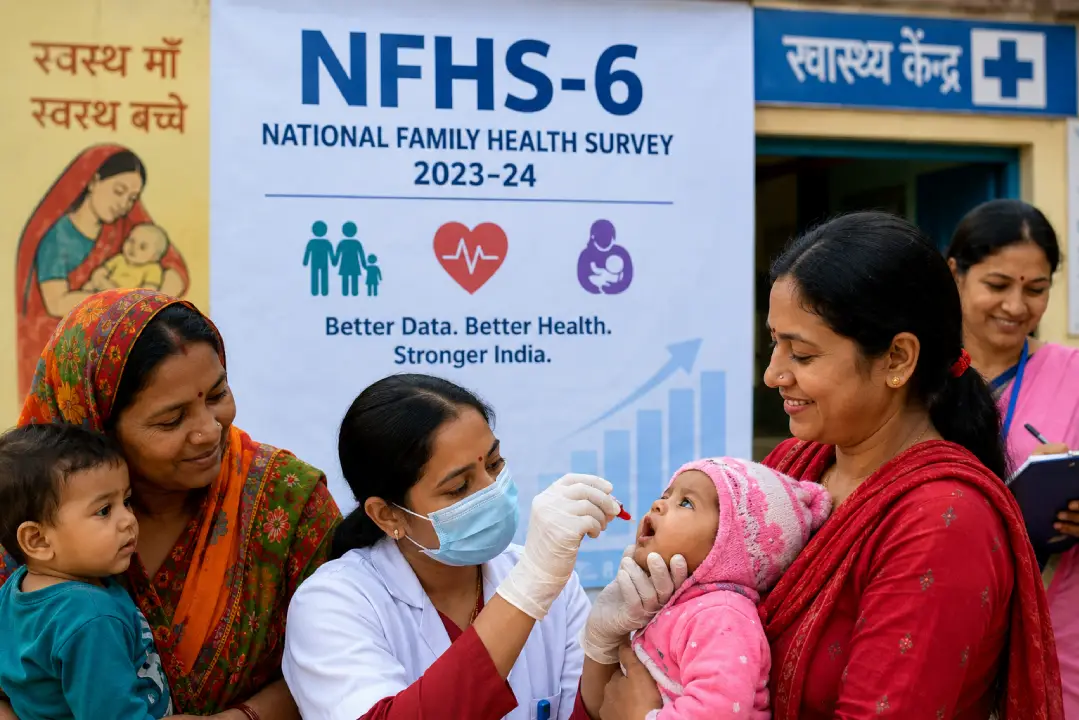
New Delhi, May 29: India has recorded notable progress across several health, nutrition and social development indicators, according to the National Family Health Survey-6 (NFHS-6) released by the Ministry of Health and Family Welfare (MoHFW) on Thursday.
The survey, conducted during 2023-24 by the Ministry with the International Institute for Population Sciences (IIPS), Mumbai as the nodal agency, covered nearly 6.79 lakh households across 715 districts in the country.
NFHS-6 provides data on population, health, nutrition and family welfare indicators and serves as an important source for evidence-based planning and programme implementation at national, state and district levels. The findings indicate improvements in maternal and child healthcare services, nutrition outcomes, immunisation coverage, women’s financial inclusion and health insurance coverage, while also highlighting emerging concerns related to lifestyle diseases and obesity.
According to the report, maternal healthcare indicators showed significant improvement during the period between NFHS-5 (2019-21) and NFHS-6 (2023-24). The percentage of pregnant women receiving antenatal care (ANC) rose to 95.9 percent. Mothers receiving ANC during the first trimester increased from 70 percent to 76.2 percent, while those receiving at least four ANC visits increased from 58.5 percent to 65.2 percent.
Institutional deliveries also improved from 88.6 percent to 90.6 percent, while births attended by skilled health personnel increased from 89.4 percent to 91.3 percent. Postnatal care for newborns within two days of delivery improved from 79.1 percent to 85.3 percent.
The survey also recorded gains in maternal nutrition indicators. Mothers consuming iron folic acid supplements for 100 days or more during pregnancy increased from 44.1 percent to 54.9 percent. Consumption of supplements for 180 days or more rose from 26 percent to 37.8 percent.
The Ministry attributed these improvements to programmes such as Janani Suraksha Yojana (JSY), Janani Shishu Suraksha Karyakram (JSSK), Pradhan Mantri Surakshit Matritva Abhiyan (PMSMA), SUMAN, Facility-Based Newborn Care, Home-Based Newborn Care and Pradhan Mantri Matru Vandana Yojana (PMMVY 2.0).
The survey found that India’s Total Fertility Rate (TFR) remained stable at 2.0, while the Contraceptive Prevalence Rate (CPR) increased from 66.7 percent to 69.1 percent, indicating wider access to family planning services. The Ministry said the gains reflected the impact of family planning initiatives, including Mission Parivar Vikas.
In the area of child immunisation, the survey reported continued progress towards universal coverage. Full vaccination coverage among children aged 12-23 months increased from 83.8 percent to 87.1 percent. Around 95.6 percent of children received vaccinations through public health facilities.
Coverage of the rotavirus vaccine rose sharply from 36.4 percent to 85.4 percent, while the second dose of measles-containing vaccine improved from 58.6 percent to 71.8 percent. The report also noted a decline in symptoms of acute respiratory infection (ARI) among children from 2.8 percent to 1.9 percent. Severe diarrhoea prevalence also declined to 0.5 percent.
The Ministry stated that strengthened frontline healthcare delivery, improved cold chain infrastructure, digital tracking systems such as U-WIN and community engagement under the Universal Immunization Programme contributed to the improvements.
NFHS-6 also recorded positive trends in child nutrition indicators.
Breastfeeding among children below six months remained high at 95.6 percent. Children breastfed within one hour of birth increased from 41.8 percent to 50.1 percent.
Stunting among children below five years declined significantly from 35.5 percent to 29.3 percent, while severe wasting declined from 7.7 percent to 5.2 percent.
The prevalence of underweight children also registered a slight decline from 32.1 percent to 31.8 percent.
Children aged 6-8 months receiving solid or semi-solid food along with breastmilk increased from 45.9 percent to 59.5 percent.
The Ministry said initiatives such as POSHAN Abhiyaan, Saksham Anganwadi and POSHAN 2.0, along with interventions under the National Health Mission, contributed to improved nutrition outcomes. The survey also highlighted major expansion in health insurance coverage. Household coverage under health insurance or financing schemes increased from 41 percent to 60.2 percent.
According to the Ministry, flagship programmes such as Ayushman Bharat-Pradhan Mantri Jan Arogya Yojana (PM-JAY) played an important role in expanding financial protection and improving access to healthcare services.
NFHS-6 further recorded improvements in women’s digital and financial empowerment.
Women who had ever used the internet nearly doubled from 33.3 percent to 64.3 percent. Women operating their own bank or savings accounts increased from 78.6 percent to 89 percent, while women using their own mobile phones rose from 53.9 percent to 63.6 percent. The use of hygienic menstrual protection methods among women aged 15-24 years also increased from 77.6 percent to 79.2 percent.
The Ministry said initiatives under the Menstrual Hygiene Scheme and Pradhan Mantri Bhartiya Janaushadhi Pariyojana helped improve awareness and access to sanitary products. While acknowledging the progress made, the report also pointed to emerging public health challenges, including rising non-communicable diseases, lifestyle-related risks and the growing dual burden of undernutrition and obesity among adults. The Ministry said continued focus on preventive healthcare, behavioural change and balanced nutrition strategies would remain important in the coming years.
According to the report, the findings reaffirm India’s progress towards achieving the Sustainable Development Goals (SDGs) and reflect the impact of coordinated implementation of welfare and healthcare programmes across the country.