PMEGP scheme surpasses targets, creating 36.33 lakh jobs and 4,03,706 micro-enterprises with full utilisation of Rs. 13,554 crore, boosting rural entrepreneurship, women, and SC/ST/OBC inclusion.
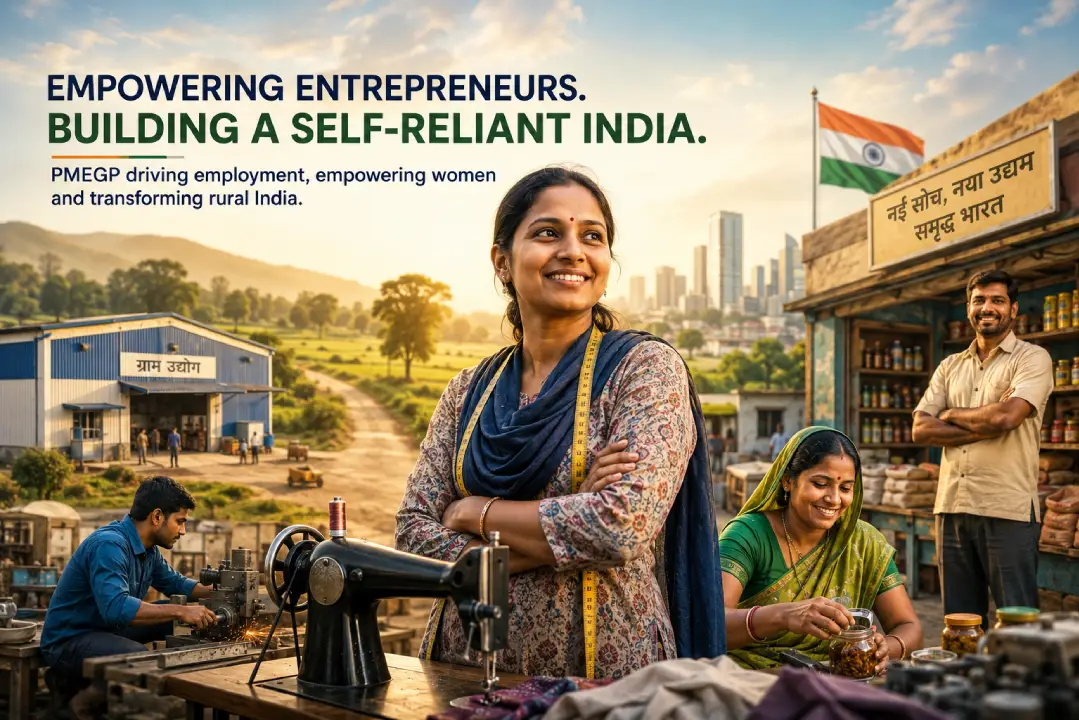
The Prime Minister's Employment Generation Programme (PMEGP), the flagship scheme of the Ministry of Micro, Small and Medium Enterprises (MSME), has recorded exceptional growth during the 15th Finance Commission cycle, reinforcing its status as a cornerstone of India's micro-enterprise development and self-employment ecosystem. Implemented through the Khadi and Village Industries Commission (KVIC), the PMEGP scheme continues to empower first-generation entrepreneurs — particularly in rural areas — by providing Margin Money (MM) subsidy on bank loans to establish new micro-enterprises in the non-farm sector.
During the 15th Finance Commission cycle spanning FY 2021–22 to FY 2025–26, the PMEGP scheme has demonstrated outstanding and measurable performance, cementing its contribution to India's grassroots economic development. Against an approved budgetary outlay of Rs. 13,554.42 crore, the scheme achieved full utilisation of funds — a testament to robust implementation and surging demand for entrepreneurship-led economic initiatives across the country.
A total of 4,03,706 micro-enterprises were successfully established under the PMEGP scheme during this period, narrowly surpassing the set target of 4,02,000 enterprises. This achievement reflects not only effective programme delivery but also the growing appetite among aspiring entrepreneurs in both urban and rural India to build sustainable livelihoods through self-employment. The programme simultaneously generated employment opportunities for approximately 36.33 lakh individuals, making a significant and tangible contribution to livelihood creation and grassroots economic development.
One of the most striking aspects of the PMEGP scheme's success story is its strong focus on inclusive development, ensuring that economic opportunities reach the most marginalised sections of Indian society. The scheme's data for the 15th Finance Commission cycle reveals a commendable performance on multiple inclusion indicators:
• Women beneficiaries account for nearly 40% of the total micro-enterprises assisted under the PMEGP scheme, reflecting a strong push towards women-led entrepreneurship.
• Around 45% of the total Margin Money subsidy disbursed under PMEGP has been directed to women entrepreneurs, providing them meaningful financial access to launch and sustain their businesses.
• Approximately 54% of PMEGP beneficiaries belong to SC/ST/OBC categories, underscoring the scheme's deep commitment to social inclusion and equitable economic participation.
• Nearly 80% of micro-enterprises established under PMEGP are located in rural areas, driving rural industrialisation, balanced regional development, and reducing urban migration pressures.
These numbers collectively reflect a programme that goes beyond mere economic metrics — the PMEGP scheme is actively reshaping the social fabric of rural India by empowering women, Dalits, tribals, and backward communities to participate meaningfully in the national economy.
The PMEGP scheme's emphasis on rural entrepreneurship has proven to be one of its defining strengths. With nearly 80% of all enterprises set up in villages and semi-urban areas, the programme is effectively countering the trend of rural-to-urban migration by bringing economic opportunity directly to the doorstep of rural communities. Through targeted credit-linked subsidies and support for micro-enterprise development in manufacturing and services sectors, PMEGP is enabling a new generation of rural entrepreneurs to build viable, sustainable businesses without relocating to cities. This village-first approach aligns closely with the Government of India's broader goals of balanced regional development and rural economic self-reliance.
The achievements of the PMEGP scheme during the 15th Finance Commission cycle firmly establish it as a key driver of employment generation and micro-enterprise development in India. By facilitating access to credit-linked subsidies and fostering entrepreneurship at the grassroots level, the programme makes a powerful contribution to the vision of a self-reliant India. The scheme supports not just job creation, but the creation of job creators — individuals who go on to generate employment for others within their communities.
Looking ahead, the Ministry of MSME has reaffirmed its commitment to further strengthening the PMEGP scheme in the forthcoming Finance Commission cycle. Plans include an enhanced focus on innovation, scalability, and wider outreach to ensure that the programme reaches more aspiring entrepreneurs across India, particularly in underserved districts and communities. The success of PMEGP stands as proof that well-designed, inclusive government schemes can meaningfully transform lives and drive sustainable, grassroots economic development at scale.