Armed attacks killed three Thadou Baptist church leaders and a Chiru Naga civilian in Manipur in May 2026, triggering hostage crises, border incursions, and district-wide shutdowns across the conflict-torn northeastern state.
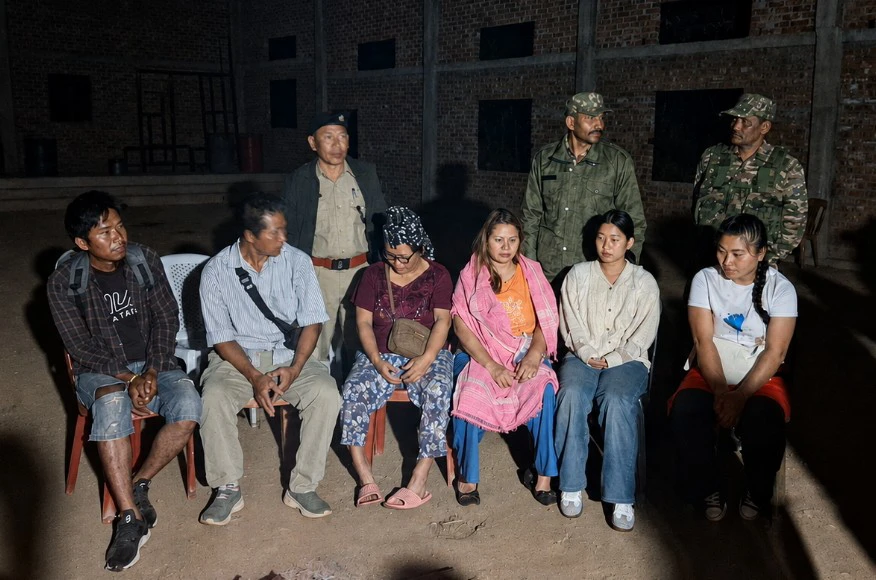
Three prominent church leaders died in an ambush on a remote Manipur highway, dozens of civilians were taken hostage across tribal districts, and armed men crossed the international border from Myanmar in a series of violent episodes that plunged India's northeastern state deeper into crisis during the first half of May 2026.
The incidents represent the most serious deterioration of public order since Chief Minister Yumnam Khemchand Singh took office in February, piling pressure on both the state administration and the federal government as a three-year-old ethnic conflict between the Meitei and Kuki-Zo communities shows no signs of abating.
Ambush Kills Three Church Leaders
Gunmen opened fire on a two-vehicle convoy on Tiger Road in Kangpokpi district on May 13, killing Rev. Dr. V. Sitlhou, Rev. Kaigoulun Lhouvum, and Pastor Paogoulen Sitlhou — all senior figures in the Thadou Baptist Association (TBA) India. Four other passengers sustained serious wounds and were taken to Shija Hospital in Imphal.
The attack occurred between Kotzin and Kotlen villages and drew immediate condemnation from tribal organizations. The Kuki Inpi Manipur (KIM) and the Committee on Tribal Unity (CoTU) alleged that the ambush was a premeditated act of terrorism carried out by the Zeliangrong United Front (ZUF) — specifically its "Kamson" faction — allegedly in coordination with local village-based armed groups. Those allegations have not been proven.
The ZUF denied the accusations, calling them baseless and aimed at inciting inter-tribal hostility. Security officials said the matter remains under investigation and acknowledged that a case of mistaken identity could not be ruled out.
On the same day, a Chiru Naga civilian, Wilson Thanga, was shot and killed near Joujangtek in Noney district while traveling to his farmhouse; his wife was critically wounded in the attack.
Cross-Border Incursion in Kamjong
Six days before the highway ambush, roughly 100 heavily armed men crossed the Indo-Myanmar Border at approximately 3:30 a.m. on May 7, entering Choro village in Kamjong district. The raiders burned 18 houses and fired indiscriminately, using drones, rocket launchers, and lathode guns, according to a police first information report.
The Inspector General of Assam Rifles (South) confirmed that the attackers abducted a Tangkhul Naga woman, Olina Ningshen, during the raid. Security and intelligence agencies secured her release on May 9 near Z. Choro village, Assam Rifles said in an official statement.
Kamjong police filed a suo motu case — FIR No. 05(05)2026/CSD-PS — identifying the suspects as cadres of the Kuki National Army-Burma (KNA-B) and the Village Volunteers Eastern Zone (VVEZ), both Myanmar-based outfits. The FIR described the operation as a coordinated foreign-backed assault.
Home Minister Govindas Konthoujam visited the affected border villages on May 9 and acknowledged the possibility of security lapses. He told reporters he had not yet received official reports framing the incident as foreign aggression — a remark that drew sharp condemnation from the Tangkhul Naga Long (TNL), which pointed to the FIRs already on record as evidence that the characterization was warranted.
Hostage Crisis and Negotiations
The May 13 killings triggered retaliatory abductions that left more than 38 civilians from the Naga and Kuki-Zo communities being held hostage across multiple districts, the state government confirmed.
Deputy Chief Minister Losii Dikho led the government's negotiations with civil society groups and tribal councils. Coordinated efforts produced results over two days: authorities secured the release of 28 hostages late on May 14 and into May 15. The freed individuals included 14 members of the Kuki community — four men and ten women — handed over in Senapati district; 12 Naga women released from Konsakhul village at Makhan village; and two Salesian brothers of Don Bosco.
Urban Bombing Adds to Unrest
Shortly after midnight on May 15, a bomb detonated at Singjamei Bazar in Imphal West, killing one person. Investigators said they suspect the deceased may have been transporting the explosive device on a motorbike at the time of the blast, though the inquiry remains ongoing.
Shutdowns Paralyze Districts
Kuki-Zo and Naga civil bodies imposed 48-hour total shutdowns across Kangpokpi, Churachandpur, and Chandel districts following the May 13 killings. Protesters blocked the Imphal-Dimapur highway — the region's main arterial road — bringing commerce and movement to a halt across a wide swath of the state.
Government Response and Federal Oversight
On May 14, the Ministry of Home Affairs granted a sixth extension to the Commission of Inquiry probing the ethnic violence that began in 2023, pushing the reporting deadline to November 20, 2026. Critics have questioned why the inquiry has required repeated extensions despite the continued human toll.
Chief Minister Khemchand visited foothill villages on May 14 and distributed one-time financial grants of Rs. 10,000 each to 754 internally displaced college students under the Chief Minister's College Students Rehabilitation Scheme.
To combat the spread of inflammatory content, the Kuki National Organisation (KNO) and the Zomi Re-unification Organisation (ZRO) jointly established a monitoring cell on May 11 to track and counter communal misinformation circulating on WhatsApp and Facebook.
Broader Context
Manipur has remained in an extended state of ethnic conflict since May 2023, when clashes between the valley-dominant Meetei community and the hill-dwelling Kuki-Zo tribes left more than 200 people dead and displaced tens of thousands. The widening of hostilities to involve Naga-dominated areas — long considered relatively stable — marks a significant and dangerous shift in the conflict's geography.
The cross-border dimension introduced by the alleged KNA-B incursion adds yet another layer of complexity for security planners, raising questions about the permeability of the India-Myanmar frontier and the extent to which armed groups based in Myanmar are influencing the trajectory of violence inside Indian territory.