The United Naga Council has rejected allegations linking Naga groups to the killing of Thadou church leaders and accused Kuki militant groups of involvement.
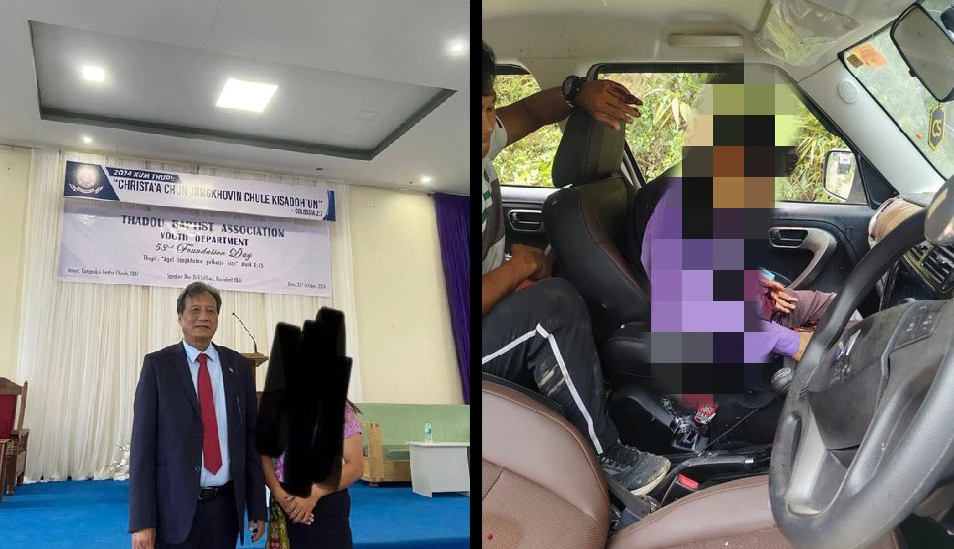
Imphal, May 18: The United Naga Council (UNC) on Sunday strongly rejected allegations linking Naga groups to the killing of three Thadou church leaders in Kangpokpi district and instead accused Kuki militant groups of being behind the attack.
In a detailed press statement issued on May 18, the UNC condemned the May 13 ambush in which Rev. Dr. Vumthang Sitlhou and two other Thadou church leaders were killed, while several others were injured. The organisation described the victims as “noble warriors of peace and understanding” and said their deaths had created a vacuum that would be difficult to fill.
The statement comes amid growing tensions and competing narratives surrounding the killings, which took place at Kotlen Kotzim Inter Village Road under Kangchup Geljang Sub-Division in Kangpokpi district.
The UNC alleged that immediately after the ambush, “Kuki groups” began spreading accusations on social media claiming Naga involvement in the attack. It claimed the allegations followed a familiar pattern seen during the ongoing ethnic conflict in Manipur since May 2023.
One of the central points raised by the UNC was regarding a condemnation statement issued by Kuki Inpi Manipur (KIM) shortly after the attack. According to the UNC, the KIM statement named the ZUF-Kamson group and NSCN-IM as perpetrators within two hours of the ambush. However, the UNC pointed out that the statement carried the date “6/5/2026”, seven days before the actual killings.
The UNC claimed the discrepancy raised serious questions and alleged that the statement appeared to have been prepared in advance. It demanded that KIM produce concrete evidence publicly if it intended to continue accusing Naga groups of involvement.
At the same time, the organisation criticised the response of security forces and the Indian Army following the ambush and subsequent hostage-taking incidents. The UNC said the 57 Mountain Division stationed at Leimakhong was located close to the affected villages and should have launched an immediate pursuit operation against the militants.
The statement also alleged that security arrangements in vulnerable Naga areas remained inadequate and discriminatory.
The UNC further renewed its demand for the disarming and confinement of Kuki Suspension of Operations (SoO) militant groups to their designated camps. It argued that the groups were continuing violent activities despite the SoO agreement and warned that if authorities failed to control them, the agreement should be scrapped altogether.
A major section of the statement referred to points earlier raised by Thadou Inpi Manipur (TIM) in a separate release issued on May 17. The UNC reproduced several arguments from that statement to support its position that the killings were linked to tensions between Thadou identity assertion and Kuki political mobilisation.
The UNC noted that there had been a decades-long dispute surrounding the use of the terms “Kuki” and “Thadou”, and alleged that attempts to impose a broader Kuki identity on the Thadou community had created deep tensions.
According to the statement, Rev. Dr. Vumthang Sitlhou was viewed as a prominent advocate of distinct Thadou identity and had opposed political efforts to subsume Thadou identity under a larger Kuki framework.
The UNC also referred to an earlier warning allegedly issued by KLA (L) cautioning Kuki-Zo people against meeting Chief Minister Yumnam Khemchand Singh during his Churachandpur visit on May 15. It claimed the victims’ travel during that period may have been perceived negatively by radical groups.
The organisation further argued that the ambush site was located in what it described as a “Kuki and militant-dominated area” where infiltration by non-Kuki armed groups would have been difficult.
The statement claimed Rev. Dr. Vumthang Sitlhou’s vehicle was specifically targeted during the attack and alleged that at least 15 bullets were recovered from his body. It linked the attack to his role in promoting Thadou identity, translating the Holy Bible into Thadou language, and publicly distancing himself from a “Kuki Zo Flag” programme organised earlier this month.
The UNC additionally pointed to the presence of a KRA/KNO “tax collection entry gate” located near the ambush site and questioned how such an attack could occur in an area under the influence of SoO militant groups.
The organisation also referred to the killing of Thadou leader Nehkam Jomhao in Assam in August 2025, alleging that Thadou leaders advocating peace and separate identity had increasingly become targets.
In its concluding remarks, the UNC maintained that available facts did not support allegations against Naga armed groups and instead suggested the killings had an “intra-fold character” involving tensions within communities associated with the broader Kuki fold.
The organisation appealed to people not to spread unverified allegations and said more information would emerge in the coming days. It also asserted that “truth will prevail” regarding the killings.
The Manipur government and organisations named in the UNC statement had not issued any immediate response to the allegations at the time of filing this report.