A Manipur Fast Track Special Court convicted a 73-year-old man in a 2013 POCSO case and ordered Rs 5 lakh compensation for the survivor.
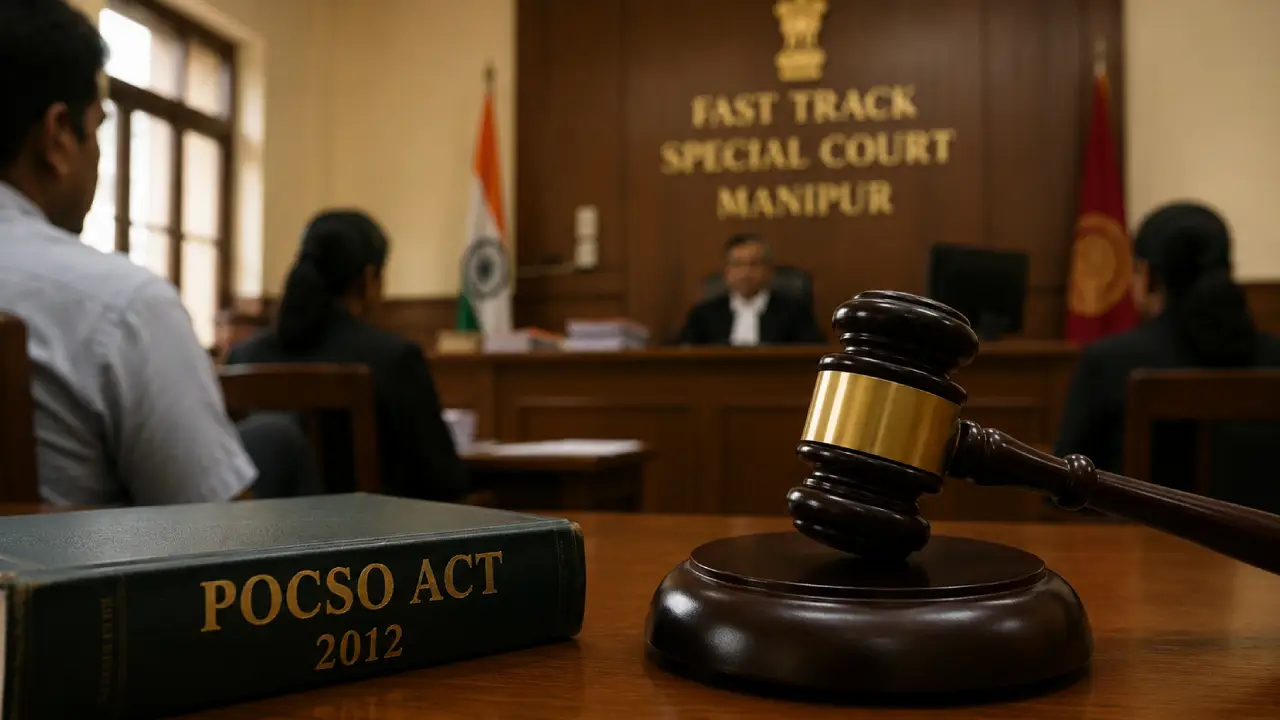
Imphal, June 30: A Fast Track Special Court in Manipur has convicted a 73-year-old man in a 13-year-old case involving the sexual assault of a physically disabled and intellectually challenged minor girl, holding that the prosecution had proved the charges beyond reasonable doubt through the survivor's testimony, medical evidence and forensic findings.
Judge W. Tonen Meitei of Fast Track Special Court No. 2 pronounced the judgment on Tuesday, finding Md. Kora guilty of penetrative sexual assault under Section 3(a) of the Protection of Children from Sexual Offences (POCSO) Act, 2012, punishable under Section 4 of the Act.
The court also directed the Government of Manipur to pay Rs 5 lakh to the survivor from the Victim Compensation Fund to support her education, healthcare and long-term rehabilitation. The matter has been listed for hearing on the quantum of sentence on July 10, while a warrant has been issued to secure the presence of the accused, who was absent from court due to reported health complications.
According to the prosecution, the offence occurred on January 19, 2013, at the victim's residence in Thoubal district. The accused, who was known to the family and had been provided temporary shelter at their home, allegedly took advantage of the absence of the girl's parents, who had gone out for work, and sexually assaulted the 13-year-old girl.
The child's mother learnt about the incident after returning home later that day, when the victim disclosed what had happened. The family subsequently approached local community leaders before lodging a formal complaint with the police. The FIR was registered on January 25, 2013, prompting the defence to argue that the delay undermined the credibility of the prosecution's case. The court, however, accepted the explanation offered by the victim's mother that she had first sought help from local leaders, who failed to intervene.
Referring to Supreme Court rulings on sexual offence cases, Judge Tonen Meitei observed that delays in reporting such crimes are not uncommon because survivors and their families often experience trauma, fear, hesitation and social stigma before approaching law enforcement. The judgment held that the delay had been satisfactorily explained and did not affect the reliability of the prosecution's case.
The court found that the survivor's testimony was substantially supported by medical and forensic evidence. The medical examination conducted at the Regional Institute of Medical Sciences (RIMS) revealed findings consistent with recent sexual assault, including physical injuries.
In addition, forensic analysis detected seminal stains on the victim's clothing and biological samples collected during the medical examination. The court observed that the scientific evidence reinforced the prosecution's version and was consistent with the testimony given by the survivor. During the trial, the defence claimed that the case had been fabricated because of an alleged financial dispute between the families.
According to the defence, the victim's father owed Rs 10,000 to the accused's wife and had falsely implicated the accused to avoid repayment. The court rejected the argument, pointing out significant inconsistencies in the testimonies of the accused and his wife regarding the alleged loan. Judge Tonen Meitei also observed that no reliable evidence had been produced to establish the existence of such a transaction.
The judgment further noted that the defence story appeared improbable in view of the family's financial condition. The court placed considerable reliance on the testimony of the survivor, observing that it remained consistent and credible throughout the trial. Judge Tonen Meitei reiterated the settled legal principle that the testimony of a survivor of sexual assault, if found reliable and trustworthy, can by itself form the basis for conviction without requiring independent corroboration.
In the present case, the court observed that the survivor's evidence was of "sterling quality" and was further strengthened by medical and forensic findings.
While convicting the accused under the POCSO Act, the court acquitted him of the charge under Section 448 of the Indian Penal Code, relating to house trespass. The court held that the accused had entered the victim's residence with the permission of her family, who had allowed him to stay there temporarily. As such, the essential ingredients of criminal trespass were not established.
Recognising the lasting impact of the offence on the survivor, the court directed the State Government to release Rs 5 lakh from the Victim Compensation Fund. The compensation, the court said, should be utilised for the survivor's education, medical treatment and welfare. The judgment observed that child survivors of sexual offences, particularly those with disabilities, often require sustained support for their rehabilitation and reintegration.
The accused did not appear before the court during the pronouncement of judgment due to reported serious health issues. To ensure his appearance during sentencing, the court issued a warrant of arrest. The case has been fixed for July 10, 2026, when the court will hear arguments on the quantum of sentence.