Arunachal Pradesh and Nagaland are among five states and UTs that have signed reform-linked MoUs under Jal Jeevan Mission 2.0, shifting focus from infrastructure creation to sustainable rural water service delivery.
New Delhi, June 3: The Centre has launched the next phase of its rural drinking water programme with a renewed emphasis on sustainability, community ownership and long-term service delivery, signing reform-linked Memoranda of Understanding (MoUs) under Jal Jeevan Mission (JJM) 2.0 with Arunachal Pradesh, Nagaland, Jharkhand, Tamil Nadu and the Union Territory of Puducherry.
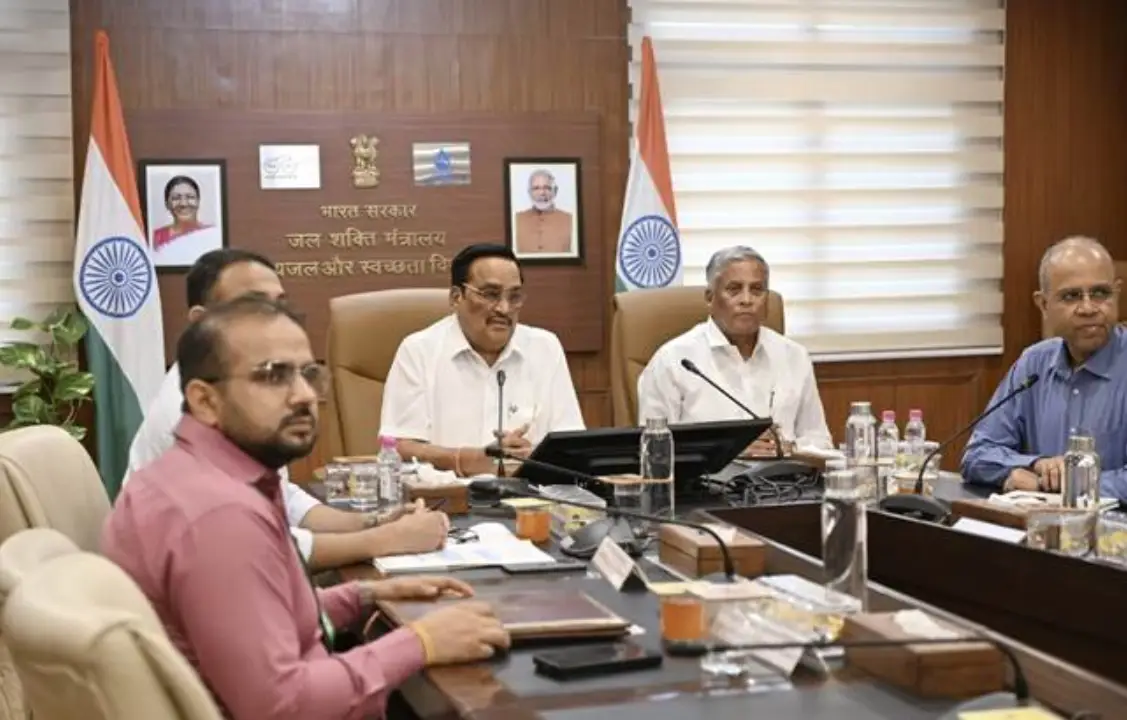
The agreements, signed in the presence of Union Jal Shakti Minister C.R. Patil and the respective Chief Ministers through separate video conferences, mark a shift in focus from expanding water infrastructure to ensuring that rural households continue receiving safe and reliable drinking water in the years ahead.
The move comes after the first phase of Jal Jeevan Mission significantly expanded tap water connectivity across rural India. With JJM 2.0, the emphasis is increasingly on maintaining infrastructure, strengthening local governance mechanisms and ensuring the sustainability of water sources.
According to the Ministry of Jal Shakti, the reform-linked framework seeks to institutionalise a Gram Panchayat-led model of rural water governance. The objective is to move beyond the construction of pipelines and household tap connections and create a system in which local communities become active stakeholders in managing water supply assets.
The MoUs require states to strengthen community participation, improve operation and maintenance systems, enhance water quality monitoring and ensure long-term sustainability of drinking water sources.
The transition reflects a broader challenge faced by rural water schemes across India. While infrastructure creation often receives significant attention and funding, maintaining those assets over time has historically proven more difficult.
Under JJM 2.0, the Centre is attempting to address this issue by linking future implementation to institutional reforms and community participation.
Speaking during the signing ceremonies, Union Minister Patil said the next phase of the mission would focus on functionality of tap connections, water quality, source sustainability, operation and maintenance, community ownership and regular monitoring.
The emphasis on sustainability is particularly important as many rural water schemes depend on groundwater, springs and local surface water sources that are increasingly vulnerable to climate variability, environmental degradation and growing demand.
The Ministry has also placed water conservation, rainwater harvesting, groundwater recharge and greywater management at the centre of the programme's next phase.
Among the participating states, Arunachal Pradesh presents a distinctive case.
Although the state receives abundant rainfall and possesses numerous natural water sources, its mountainous terrain, dispersed settlements and difficult accessibility have historically complicated drinking water supply efforts.
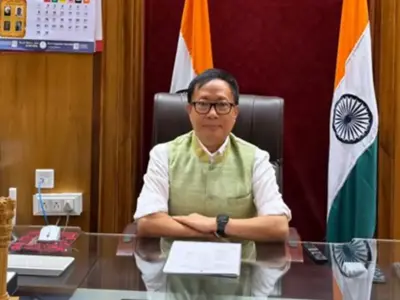
During the virtual event, Chief Minister Pema Khandu said Jal Jeevan Mission had significantly transformed rural water supply in a state characterised by remote locations and scattered habitations.
According to Khandu, the state is progressing towards universal household tap water coverage despite geographical constraints that make infrastructure development both expensive and logistically challenging.
The Chief Minister highlighted the state's efforts to strengthen source sustainability through the "Jal Sankalp" initiative and the Arunachal Pradesh Spring Rejuvenation Programme.
Spring-based water systems are particularly important in hill states, where rural communities often depend on natural springs for drinking water. However, many such sources have experienced declining discharge due to environmental changes, deforestation and shifting rainfall patterns.
Recognising this challenge, Arunachal Pradesh has also enacted legislation aimed at protecting drinking water catchment areas through community participation and institutional support.
Union Minister Patil noted that operation and maintenance policies would be especially important in Arunachal Pradesh given its terrain and climatic conditions. He also stressed the need for regular meetings of District Water and Sanitation Missions and faster accreditation of water testing laboratories.
Nagaland, another hill state facing similar geographical challenges, also joined the reform-linked framework under JJM 2.0.
Addressing the event, Chief Minister Neiphiu Rio described Jal Jeevan Mission as one of the most transformative rural development programmes implemented in recent years.
Rio said the programme had significantly improved living conditions in rural areas where communities traditionally depended on distant springs and other natural water sources.
In many parts of Nagaland, collecting water historically required long walks across difficult terrain, a burden that fell disproportionately on women and children.
The Chief Minister said household tap connections had reduced daily hardships and improved access to safe drinking water.
He welcomed the reform-oriented approach of JJM 2.0 and reiterated the state's commitment to strengthening community ownership and sustainable management systems.
Union Minister Patil expressed confidence that Nagaland would be able to provide tap connections to remaining households within the current year.
A key feature of JJM 2.0 is the increasing role assigned to local institutions.
The Ministry of Jal Shakti has repeatedly emphasised that long-term success depends on empowering Gram Panchayats and Village Water and Sanitation Committees rather than relying solely on higher administrative structures.
Secretary, Department of Drinking Water and Sanitation, Ashok K.K. Meena said the new framework prioritises sustainable service delivery rather than merely creating infrastructure.
According to him, decentralisation and community ownership are central principles of the programme.
Village-level institutions are expected to play a greater role in operating and maintaining water supply systems, preparing village action plans and monitoring service delivery.
The Ministry believes this approach can improve accountability while reducing dependence on state-level interventions for routine operations.
District administrations have also been assigned an important role in monitoring implementation and supporting local bodies where necessary.
The focus on sustainability reflects lessons learned from earlier rural water supply programmes.
Across India, numerous schemes have struggled after initial installation because of inadequate maintenance, declining water sources, poor community participation or insufficient financial support.
In many cases, households received connections but experienced irregular supply due to operational challenges.
JJM 2.0 seeks to prevent such outcomes by making sustainability an integral component of programme design rather than an afterthought.
Water quality monitoring has emerged as another major area of concern.
While access to tap water has expanded rapidly in recent years, ensuring that supplied water meets safety standards remains a continuing challenge.
The Ministry has therefore stressed community-based water quality surveillance alongside improvements in laboratory infrastructure.
For northeastern states, the issue extends beyond infrastructure alone.
The region possesses abundant rainfall compared to much of India, yet difficult terrain, scattered populations and inadequate storage infrastructure often create localised water stress.
Climate variability is also affecting traditional water sources, particularly springs that support many rural communities in hill districts.
Experts increasingly argue that future water security in the Northeast will depend not only on expanding access but also on protecting catchment areas, restoring springs and strengthening local water governance systems.
The inclusion of Arunachal Pradesh and Nagaland in the reform-linked framework therefore carries particular significance.
Both states face unique geographical realities that require locally adapted solutions rather than uniform national approaches.
The emphasis on community ownership, source protection and sustainable operation aligns closely with the region's traditional practices of collective resource management.
The first phase of Jal Jeevan Mission was largely measured by the number of household tap connections provided.
JJM 2.0 signals a broader definition of success.
The focus is shifting towards continuity of supply, quality of water, sustainability of sources and the ability of local institutions to manage systems independently.
For states such as Arunachal Pradesh and Nagaland, where terrain and remoteness pose enduring challenges, these factors may prove just as important as infrastructure expansion itself.
The reform-linked agreements signed this week indicate that the Centre's rural water strategy is entering a new phase, one that seeks to ensure that access achieved through massive infrastructure investment translates into reliable and sustainable services for future generations.
Whether the new approach succeeds will depend largely on how effectively states, district administrations, Gram Panchayats and local communities work together to maintain the systems already created and protect the water sources on which they ultimately depend.