Assam, Nagaland and the Centre sign a pact for joint oil and gas exploration, while Amit Shah says AFSPA may be removed from most of the Northeast next year.
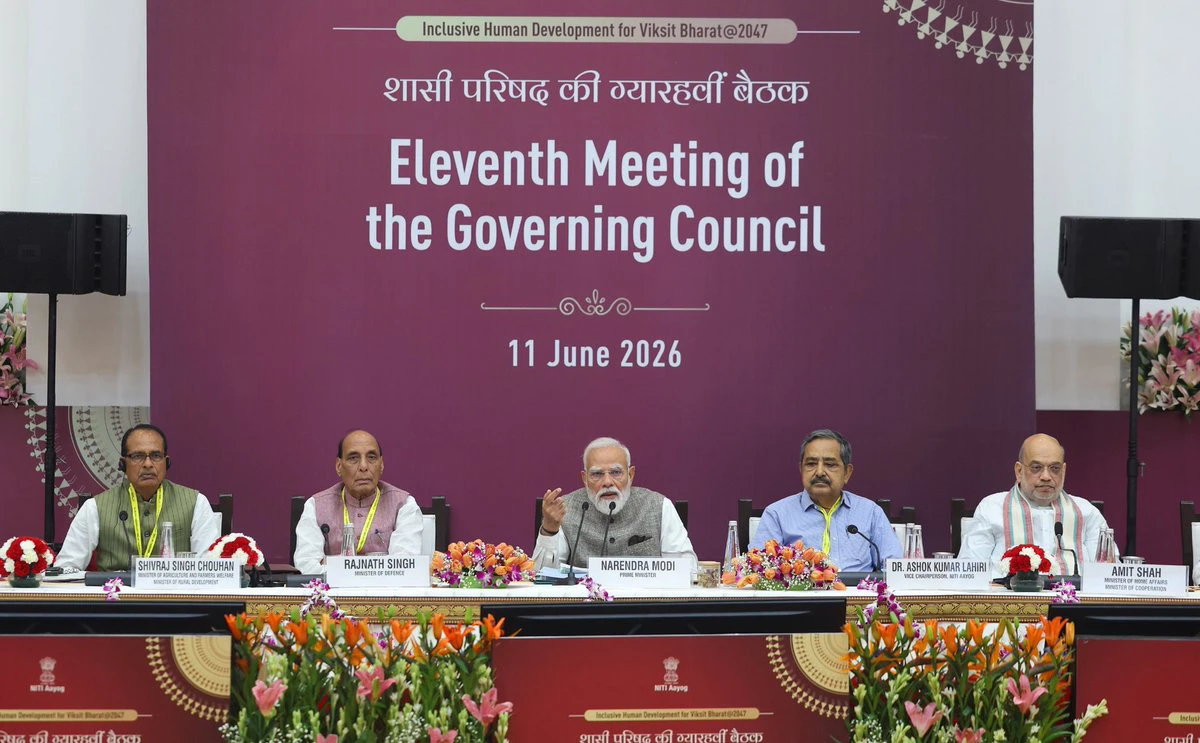
New Delhi, June 12: The Governments of India, Assam and Nagaland on Thursday signed a tripartite Memorandum of Understanding (MoU) to jointly explore and produce crude oil and natural gas in areas along the Assam-Nagaland border, a move that Union Home Minister Amit Shah described as a landmark step towards unlocking the economic potential of the Northeast.
The agreement was announced during the 11th Governing Council meeting of NITI Aayog chaired by Prime Minister Narendra Modi in New Delhi.
Addressing the gathering, Shah said the agreement would be remembered as a historic milestone in advancing the vision of a prosperous and developed Northeast. He noted that the pact removes a major obstacle to oil and natural gas exploration in a region that possesses vast untapped natural resources.
“Today, we are witnessing an occasion that will be recorded in history in many ways in the days to come,” Shah said. He observed that the agreement would expand opportunities for oil and natural gas exploration and could also open possibilities for mineral resource development in the future.
The Home Minister, however, stressed that the significance of the agreement extended beyond economic gains. According to him, the pact reflected a growing spirit of cooperation and national interest among Northeastern states.
Shah said that although Assam and Nagaland may continue to have differences on certain issues, both governments had chosen to place national development above individual concerns by agreeing to a 50:50 sharing arrangement. He described crude oil and natural gas as national assets and said the agreement would ensure that resource exploration is not hindered by disputes.
The Assam-Nagaland border belt has long been known to contain hydrocarbon reserves, but exploration efforts have often faced challenges due to unresolved boundary issues and competing claims over resource-rich areas. The new arrangement is expected to facilitate coordinated exploration and production activities while ensuring equitable sharing of benefits.
The Northeast region is considered one of India's richest repositories of natural resources. Apart from substantial crude oil and natural gas reserves in Assam, Arunachal Pradesh and Nagaland, the region also possesses significant deposits of coal, limestone, granite and other minerals. It is home to vast forest resources, rich biodiversity and enormous hydropower potential generated by major river systems, particularly the Brahmaputra and Barak basins.
Successive governments have argued that responsible utilization of these resources could transform the region into a major driver of economic growth while creating employment opportunities and improving infrastructure. The Centre has increasingly linked resource development with its broader Act East Policy, which seeks to position the Northeast as India's gateway to Southeast Asia.
Shah also used the occasion to highlight improvements in the region's security situation, expressing confidence that the Armed Forces (Special Powers) Act, commonly known as AFSPA, could be removed from almost the entire Northeast by next year.
“I am fully confident that, except for one or two states, we will be able to completely remove AFSPA from the entire Northeast next year,” he said.
The Home Minister noted that more than 80 per cent of the Northeast has already been freed from the provisions of AFSPA, which grants special powers to security forces in areas declared disturbed.
AFSPA has remained one of the most debated laws in the region for decades, particularly in states that experienced insurgency and armed movements. In recent years, the Centre has gradually withdrawn the law from large areas of several Northeastern states following improvements in the security environment and a decline in insurgency-related violence.
Shah's remarks indicate the Centre's confidence that ongoing peace agreements, reduced militant activity and improved law-and-order conditions could pave the way for further relaxation of the law in the coming years.
The twin developments—greater regional cooperation on resource development and the prospect of wider AFSPA withdrawal—were presented by the Home Minister as signs of a Northeast that is increasingly moving from conflict towards stability, economic growth and integration with the national development agenda.