The Centre has constituted a high-level Study Group under Prasoon Joshi and issued Model State Cinema Regulations to strengthen India's film industry and expand cinema infrastructure.
New Delhi, June 29: The Ministry of Information and Broadcasting has announced two major initiatives aimed at strengthening India's film industry and accelerating the expansion of cinema infrastructure across the country.
The decisions were taken during a high-level review meeting chaired by Union Minister for Information and Broadcasting Ashwini Vaishnaw in New Delhi on Sunday. The meeting, attended by senior ministry officials, focused on measures to enhance film production, improve distribution networks and integrate emerging technologies into the Indian cinema ecosystem.
The Ministry said the initiatives are intended to make Indian cinema more globally competitive while encouraging investment in cinema infrastructure, particularly in smaller towns and rural areas.
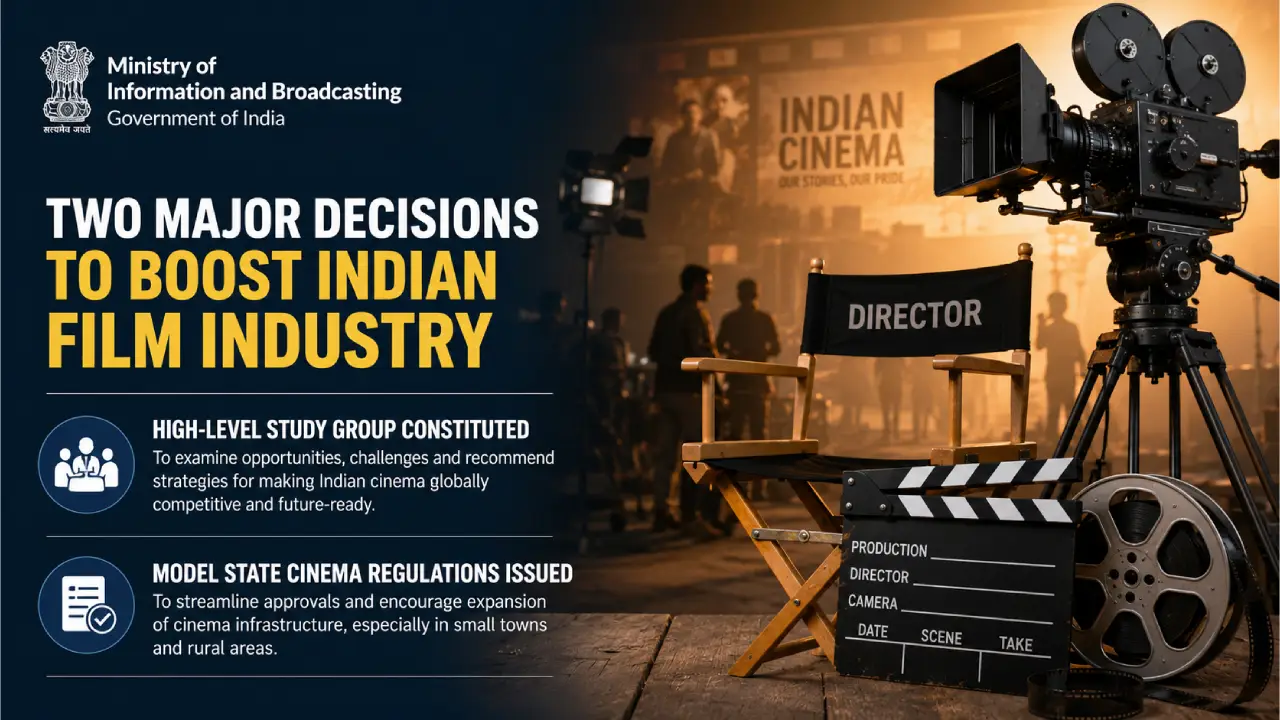
One of the key decisions is the constitution of a high-level Study Group under the chairmanship of noted lyricist and Central Board of Film Certification (CBFC) Chairman Prasoon Joshi.
The group will include industry experts and technology partners and has been tasked with examining the opportunities and challenges facing the Indian film sector. It will submit its recommendations to the Ministry within three months.
According to the Ministry, the Study Group will explore measures to improve the global competitiveness of Indian films and identify strategies to strengthen the industry's long-term growth.
The panel will study the impact of emerging technologies, including Artificial Intelligence (AI) and virtual production, and recommend ways filmmakers can effectively adopt these tools to improve production quality and efficiency.
Another major area of focus will be financing. The group will examine how filmmakers can gain greater access to institutional finance and explore alternative funding mechanisms for film production and distribution. It will also assess the challenges faced by producers in raising capital for projects.
In addition, the Study Group will work with state governments and other stakeholders to identify best practices and develop a comprehensive policy framework for the sustainable growth of Indian cinema.
The Ministry said the panel will hold consultations with stakeholders from across the country before finalising its recommendations.
The second major decision concerns the regulation of cinemas and theatres.
As cinema regulation falls under the State List of the Constitution, different states currently follow different rules and procedures for granting approvals and licences required to establish and operate cinema halls.
According to the Ministry, these varying regulatory frameworks have emerged as one of the major obstacles to the expansion of cinema infrastructure, particularly in semi-urban and rural regions where access to theatres remains limited.
To address this issue, the Ministry has prepared a set of Model State Cinema Regulations after consultations with stakeholders from the film exhibition sector and related industries.
The model regulations have now been circulated to all state governments with a request to adopt them. The Ministry has also offered to assist states in implementing the new regulatory framework.
Officials believe the adoption of uniform and streamlined regulations could simplify approval procedures, encourage private investment and facilitate the opening of more cinema halls across the country.
The move is expected to improve access to theatres in smaller towns, expand exhibition infrastructure and create new opportunities for filmmakers to reach wider audiences.
The Ministry said the two initiatives reflect the government's broader vision of creating a stronger, more modern and globally competitive film industry.
By addressing policy challenges, improving financing options, promoting technological innovation and encouraging infrastructure development, the government aims to position Indian cinema for sustained long-term growth.
Officials said Indian cinema remains one of the country's most influential cultural industries and has significant potential to enhance India's global creative presence while generating employment and investment across the entertainment ecosystem.
The Ministry expressed confidence that the Study Group's recommendations and the adoption of the Model State Cinema Regulations would help create a more supportive environment for filmmakers, exhibitors and investors, enabling Indian cinema to continue serving as a powerful medium of creativity, culture and innovation.