The Government of India has dismissed social media misinformation on E20 fuel, stating India's ethanol blending programme is scientifically validated, safe and closely monitored.
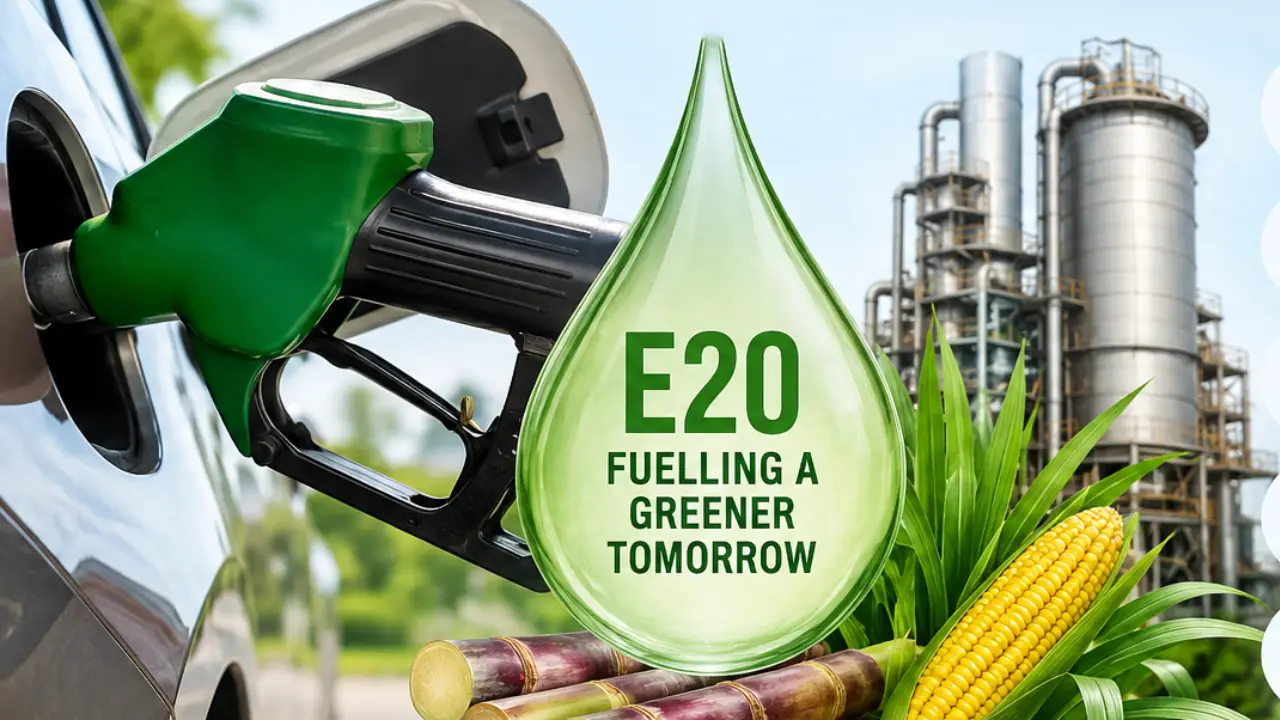
New Delhi, June 23: The Ministry of Petroleum and Natural Gas has rejected what it described as misleading and unsubstantiated claims circulating on social media about ethanol-blended petrol, asserting that India's Ethanol Blending Programme is scientifically validated and subject to continuous government monitoring.
In a statement issued on Tuesday, the ministry said old images, videos and misleading content are being recirculated on social media platforms, apparently to create unnecessary concerns about ethanol-blended fuel and attract public attention through sensational claims.
The ministry reiterated that the Ethanol Blending Programme (EBP), launched in 2003, was designed to reduce India's dependence on imported crude oil, improve energy security and promote environmental sustainability. The programme has been implemented in phases and reached the rollout of 20 per cent ethanol blending (E20) from 2023 onwards.
According to the ministry, the implementation of the programme is regularly reviewed in consultation with oil marketing companies, automobile manufacturers, fuel testing agencies and other stakeholders.
It stated that since the introduction of E20 fuel, there have been no widespread reports of engine failure or vehicle breakdowns attributable to ethanol blending.
Addressing one of the claims being circulated online, the ministry referred to concerns regarding ethanol's hygroscopic nature, or its tendency to absorb moisture. It said water entering a vehicle's fuel tank is undesirable regardless of the type of fuel being used and noted that modern vehicles are equipped with safeguards designed to prevent water contamination.
The ministry also criticised social media content that allegedly depicts sugarcane juice being directly mixed with petrol. It described such videos as false and misleading, clarifying that fuel-grade ethanol is produced through established industrial processes and must meet strict quality standards before being blended with petrol.
Officials explained that while ethanol can be produced from feedstocks such as sugarcane juice, molasses, broken rice and maize, the final fuel product undergoes multiple stages including fermentation and processing, making it fundamentally different from the original raw materials.
The statement further referred to a viral video showing ants near a vehicle fuel tank. The ministry cited a clarification issued by Bharat Petroleum Corporation Limited (BPCL), which stated that fuel-grade ethanol is produced through fermentation and distillation processes that remove residual sugars. BPCL also noted that fuel ethanol contains denaturants that repel insects and that there is no scientific basis linking E20 fuel to ant attraction around fuel caps.
The ministry said similar claims suggesting that E20 fuel could invalidate vehicle insurance coverage had also been examined and found to be incorrect.
Highlighting international practices, the government noted that ethanol blending is widely used across several countries, including the United States, Brazil and Japan. Brazil, in particular, has adopted higher blending levels, with E27 serving as the country's standard petrol blend.
The ministry also pointed to the economic benefits of the programme, stating that ethanol blending has helped India save more than ?1.4 lakh crore in foreign exchange by reducing crude oil imports. It added that the programme has generated sustained demand for agricultural feedstocks used in ethanol production, providing additional income opportunities for farmers and supporting rural economic activity.
According to the ministry, ethanol blending contributes to enhanced energy security, lower carbon emissions and India's broader transition towards cleaner mobility solutions.
Reaffirming its commitment to the programme, the government said the Ethanol Blending Programme would continue to be implemented in a safe, transparent and consumer-focused manner, guided by scientific evidence and ongoing stakeholder consultation.