Hundreds of Kuki-Zo protesters opposed the government's Dolaithabi resettlement plan as authorities prepare to rehabilitate displaced Meitei families.
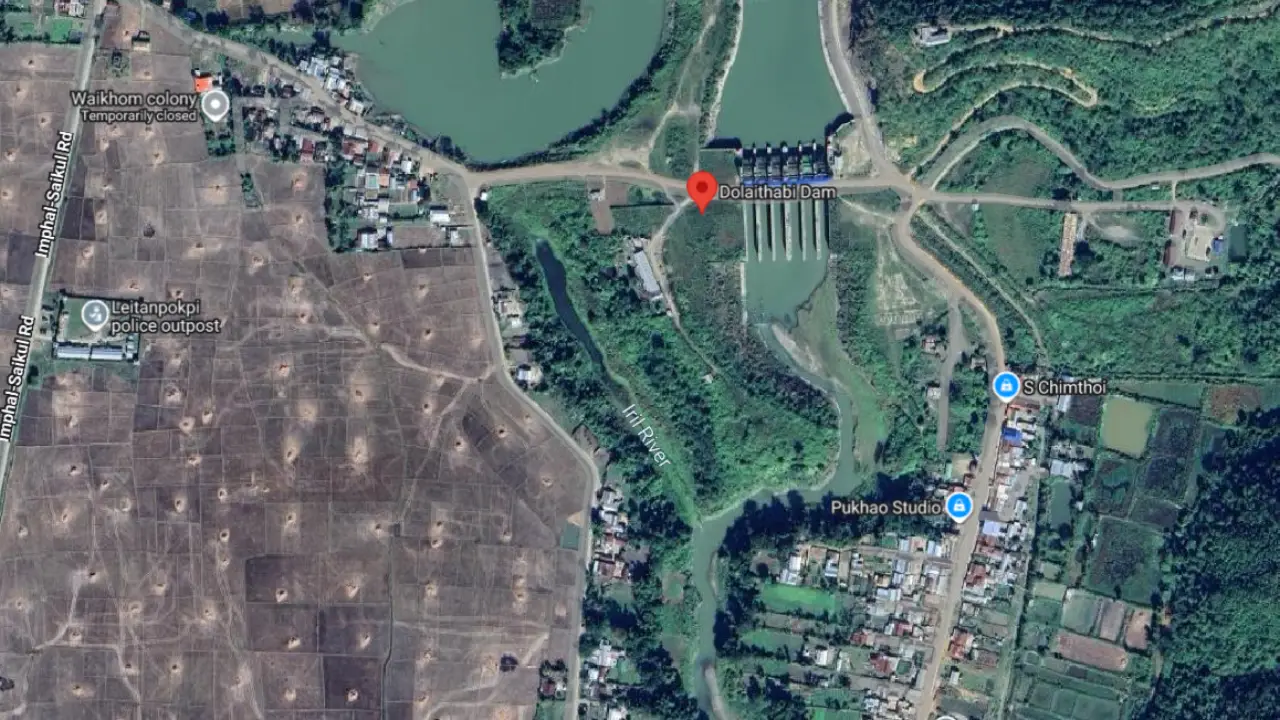
Imphal, June 28: The Manipur government's efforts to resettle internally displaced residents of Dolaithabi village have encountered fresh resistance, with hundreds of Kuki-Zo people staging a protest on Sunday against the proposed return of displaced Meitei families to the conflict-hit village.
The demonstration comes as the government has stepped up preparations to facilitate the return of Dolaithabi residents who have remained in relief camps since ethnic violence broke out on May 3, 2023.
Officials familiar with the rehabilitation exercise said work is progressing on rebuilding homes destroyed during the conflict while security arrangements are being strengthened to ensure the safe return of the displaced families.
An official, requesting anonymity, said preparations for the resettlement are being carried out on a priority basis.
"Preparations for the resettlement are currently being carried out in full swing. Efforts are underway to rebuild the houses that were burned down and destroyed in the village," the official said.
He added that stringent security measures are being planned before the relocation begins.
"After ensuring comprehensive security arrangements, intensive work will be taken up to carry out the resettlement and construct the remaining houses for a complete relocation. Every effort will be made to facilitate the relocation at the earliest," he said.
However, the government's initiative has been strongly opposed by Kuki organisations.
Hundreds of Kuki-Zo men, women and youth, under the banner of Kuki Inpi Saikul, took out a peaceful rally in Saikul Sub-Division of Kangpokpi district on Sunday morning, protesting what they described as the government's "unilateral and forceful" attempt to resettle displaced Meitei families at Dolaithabi without the consent of both communities.
The rally began around 9.30 am and proceeded under tight security, with central armed police forces maintaining strict vigil throughout the demonstration to prevent any untoward incident.
Protesters carried placards reading "No Peace, No Resettlement," "We Want Justice," and "Justice Before Peace," while raising slogans opposing the proposed rehabilitation exercise.
According to the organisers, they were not opposed to the idea of peace or reconciliation but objected to any resettlement process that, in their view, bypassed mutual consultation between the affected communities.
They argued that any return of displaced persons should be preceded by consensus and mutual understanding rather than unilateral government action.
One of the protest leaders said, "Justice cannot be one-sided. Any resettlement plan must be bilateral, not unilateral, and should proceed only through mutual agreement between both communities. We are not against peace, but peace without justice will never be accepted under any circumstance."
The protesters further maintained that enforcing resettlement without addressing the underlying causes of the conflict and ensuring equal justice for all affected communities could aggravate tensions instead of contributing to normalcy.
Despite the opposition, displaced residents of Dolaithabi remain hopeful of returning to their homes.
They said they would abide by the government's decision once the administration formally initiates the rehabilitation process, regardless of protests from any quarter.
The planned resettlement revives an issue that has remained unresolved for nearly three years.
In July 2025, internally displaced residents from Dolaithabi and neighbouring villages had attempted to return to their homes after expressing frustration over delays in rehabilitation.
Groups of displaced residents from Dolaithabi, Yengkhuman, Ekou, Thangal Surung and Leitanpokpi travelled from various relief camps towards their villages but were stopped by security forces at Pukhao Terapur because of security concerns.
Senior police officers, district administration officials and CRPF personnel, including women personnel, were deployed to prevent the group from proceeding further.
Around twenty displaced villagers nevertheless managed to briefly reach Dolaithabi before returning to the relief camps.
Following discussions with the administration, the protest was suspended after the Imphal East Deputy Commissioner reportedly assured the displaced families that arrangements would be made to facilitate their return within two months.
During that visit, displaced residents described extensive destruction in the village. They said most houses had been burned during the conflict, leaving only a handful of structures standing, while agricultural fields belonging to the displaced families had allegedly come under the cultivation of others.
Nearly a year later, the government has resumed efforts to rebuild damaged houses and create the security infrastructure required for the return of the displaced residents.
The rehabilitation of internally displaced persons remains one of the most complex challenges arising from Manipur's ethnic conflict, which has displaced tens of thousands of people from both the valley and hill districts since May 2023.
While the government has repeatedly maintained that restoring displaced families to their original homes is an important step towards normalcy, Sunday's protest highlights the continuing differences between communities over the conditions under which resettlement should take place. As reconstruction work progresses at Dolaithabi, the administration faces the challenge of balancing security, rehabilitation and confidence-building measures amid persistent mistrust on the ground.