IITM Pune and ARIES Nainital have signed a long-term agreement to establish a Bharat Climate Observation Network station at Devasthal to strengthen climate monitoring and research in the Himalayas.
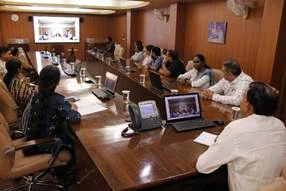
New Delhi, June 19: In a move aimed at strengthening India's climate monitoring and research capabilities, the Indian Institute of Tropical Meteorology (IITM), Pune, and the Aryabhatta Research Institute of Observational Sciences (ARIES), Nainital, have signed a long-term Memorandum of Understanding (MoU) to establish a climate observation station in the Himalayan region under the Bharat Climate Observation Network (BCON).
The agreement was signed online on June 18 by IITM Director Dr A Suryachandra Rao and ARIES Director Dr Manish Kumar Naja. According to the Ministry of Earth Sciences, the collaboration will remain in force for more than 50 years and is expected to support long-term climate and atmospheric research in India.
The proposed Climate Observation Station will be established at Devasthal, a high-altitude site operated by ARIES in Uttarakhand. The location is considered particularly suitable for atmospheric observations because of its relatively pristine environment and strategic position in the Himalayan region.
Officials said the initiative forms part of the Ministry of Earth Sciences' Mission Mausam programme and is intended to expand the country's climate observation infrastructure.
The station will continuously monitor a range of climate and atmospheric parameters, including meteorological conditions, greenhouse gases, short-lived climate forcers, atmospheric chemistry and soil moisture.
Scientists believe such observations are crucial for understanding the impact of climate change on the Himalayan ecosystem, which plays a critical role in regulating water resources, weather systems and ecological balance across large parts of South Asia.
According to the Ministry, Devasthal offers favourable conditions for measuring baseline atmospheric characteristics, tracking greenhouse gases and studying the movement of climate-relevant pollutants across the region.
The data collected from the station is expected to improve understanding of climate processes over the Himalayas and contribute to research on long-term environmental changes.
BCON is a national observational initiative conceptualised and implemented by IITM under the Ministry of Earth Sciences. The network seeks to establish a long-term, high-precision climate monitoring framework across India through a series of strategically located observation stations.
The initiative aims to generate high-quality datasets that can help scientists detect long-term climate trends and improve assessments of changing environmental conditions.
Officials said the network will contribute to building a robust national climate database that supports climate research, policy planning and evidence-based decision-making.
The observations collected through BCON are also expected to strengthen India's capacity to assess climate risks and formulate adaptation strategies in response to changing climatic conditions.
The Ministry noted that one of the major objectives of the network is to provide accurate datasets required for validating and improving Earth System Models (ESMs).
These datasets will be particularly important for the IITM Earth System Model, India's first indigenous Earth System Model, which is used to simulate climate processes and project future climate scenarios.
Researchers said better observational data would help improve the accuracy of climate simulations, leading to more reliable projections of future climate change and its potential impacts on India.
Such improvements are expected to support policymakers, researchers and planners in addressing challenges linked to extreme weather events, changing rainfall patterns and long-term climate variability.
The MoU also seeks to deepen scientific collaboration between IITM and ARIES in the fields of climate science, atmospheric chemistry and environmental monitoring.
Senior scientists from IITM's Centre for Climate Change Research (CCCR), including Dr Suvarna Fadnavis and Dr Yogesh Tiwari, participated in the signing ceremony. ARIES scientists Dr Umesh Kumar Dumka and Dr Priyanka Srivastava were also present during the virtual event.
Officials said the partnership marks an important step towards strengthening India's climate observation capabilities and generating long-term datasets that will support both national and global climate research efforts.