Kuki Inpi Manipur and KOHUR have urged the Election Commission to ensure inclusion of displaced persons in Manipur's Special Intensive Revision of electoral rolls.
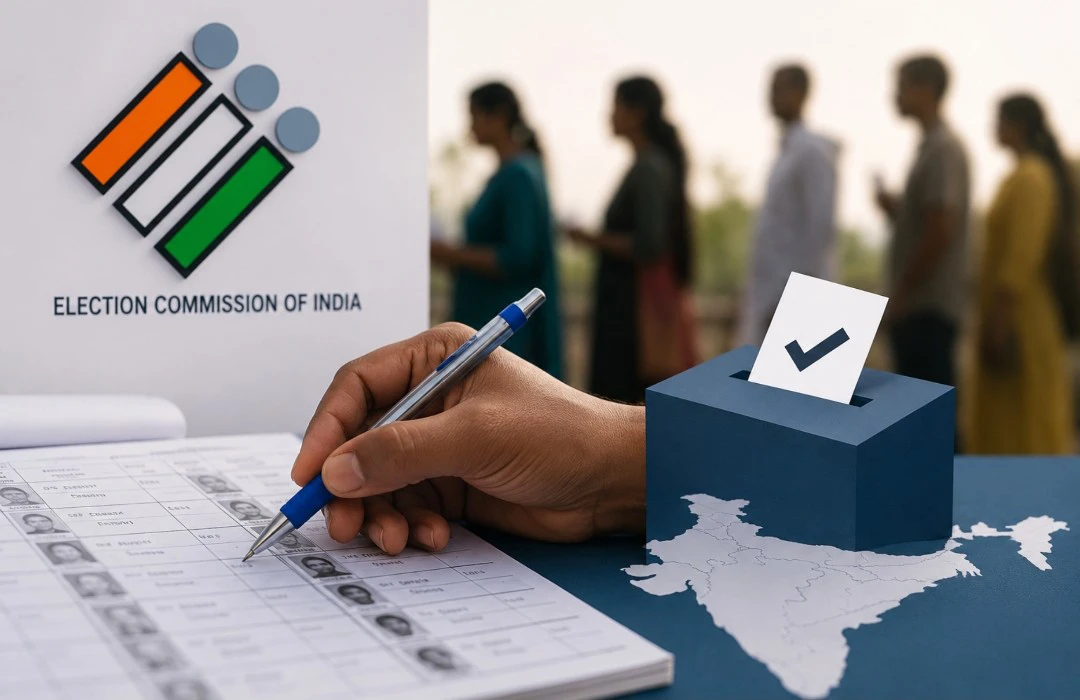
Imphal, June 4: Two Kuki organisations have voiced concerns over the ongoing Special Intensive Revision (SIR) of electoral rolls in Manipur, arguing that the exercise cannot be considered fair or inclusive unless adequate arrangements are made for tens of thousands of internally displaced persons (IDPs) affected by the ethnic conflict.
In separate statements issued this week, Kuki Inpi Manipur (KIM) and the Kuki Organisation for Human Rights Trust (KOHUR) called on the Election Commission of India (ECI) and relevant authorities to adopt special measures to ensure that displaced voters are not excluded from the revision process.
The concerns come as the Election Commission carries out the Enumeration Phase of the SIR exercise in Manipur, alongside Odisha, Mizoram and Sikkim. The revision process began on May 30 and is aimed at updating electoral rolls through house-to-house verification by Booth Level Officers (BLOs).
Kuki Inpi Manipur, the apex body representing various Kuki tribes in the state, said the revision exercise was unacceptable under the prevailing circumstances. According to the organisation, nearly 59,000 Kuki-Zo people remain displaced and continue to live in relief camps or temporary shelters, making it difficult for them to participate in an exercise that relies heavily on physical verification at an elector's place of residence.
In a press statement issued on June 4, KIM said it had expected the government to first establish practical mechanisms for displaced persons before proceeding with such an important electoral exercise. The organisation argued that carrying out the revision without ensuring the participation of a large section of displaced citizens undermines the principles of democratic representation.
The body maintained that any exclusion of internally displaced persons, whether direct or indirect, would make the revision exercise incomplete and unacceptable in its current form. It urged the government and district administrations to take immediate steps to establish accessible systems that would allow all displaced citizens to be enrolled and verified during the revision process.
KIM further warned that continuing the exercise without adequate safeguards could raise questions about the credibility and legitimacy of the electoral roll revision. The organisation stressed that satisfactory arrangements must be made to ensure that no displaced person is left out of the process.
Echoing similar concerns, the Kuki Organisation for Human Rights Trust submitted a detailed memorandum to the Chief Election Commissioner, highlighting what it described as a significant gap in the public guidance issued for the SIR exercise in Manipur.
KOHUR noted that among the four states currently undergoing the revision, Manipur is unique because a large section of its electorate remains displaced due to conflict-related violence. The organisation cited official figures obtained through the Right to Information Act, which recorded 58,821 displaced persons living in 174 relief camps as of March 2026. It also pointed out that many displaced families from Manipur are currently residing in neighbouring states, including Mizoram and Meghalaya.
According to KOHUR, the central challenge lies in the fact that the revision process is based on house-to-house enumeration. For voters whose homes have been destroyed, abandoned or remain inaccessible due to security concerns, the normal verification process may not function as intended.
The organisation expressed concern that the absence of a publicly announced displacement-specific protocol could result in the inadvertent exclusion of displaced voters from draft electoral rolls. It argued that because displacement in Manipur has occurred largely along community lines and geographical divisions between hill and valley districts, any shortcomings in the process could disproportionately affect conflict-affected communities.
KOHUR stated that while the Election Commission has repeatedly emphasised that no eligible citizen should be left out and no ineligible person should be included, there has been no public clarification regarding how internally displaced electors will be enumerated, verified and retained in the rolls.
The organisation also highlighted challenges faced by displaced citizens who may have lost identity documents, residence certificates and other records during the violence. It noted that the revision timeline leaves only a limited period for voters to identify omissions and seek corrections before the publication of final electoral rolls.
While acknowledging the constitutional authority of the Election Commission to conduct electoral roll revisions, KOHUR argued that special safeguards are necessary to ensure that citizens displaced by violence do not lose their voting rights.
In its memorandum, the organisation requested the Commission to publish a displacement-sensitive enumeration protocol for Manipur. It also called for assurances that no elector would be removed from the rolls solely because they were unavailable at their original place of residence.
Among other recommendations, KOHUR sought camp-based enumeration drives, dedicated BLOs for relief camps, acceptance of alternative documents for displaced voters, coordination with electoral authorities in neighbouring states, and the establishment of a public grievance and tracking mechanism for affected electors.
The organisation further urged the Election Commission to issue a public clarification detailing the safeguards available to internally displaced voters during the ongoing revision process.
Both Kuki Inpi Manipur and KOHUR maintained that protecting the voting rights of displaced citizens is essential to ensuring the credibility of the electoral process. They argued that the integrity of electoral rolls and the inclusion of conflict-affected citizens should go hand in hand, particularly in a state that continues to grapple with the consequences of large-scale displacement.