Kuki-Zo Council Chairman Henlianthang Thanglet apologises for the killing of six Naga hostages, while KZC raises concerns over security, justice and humanitarian issues.
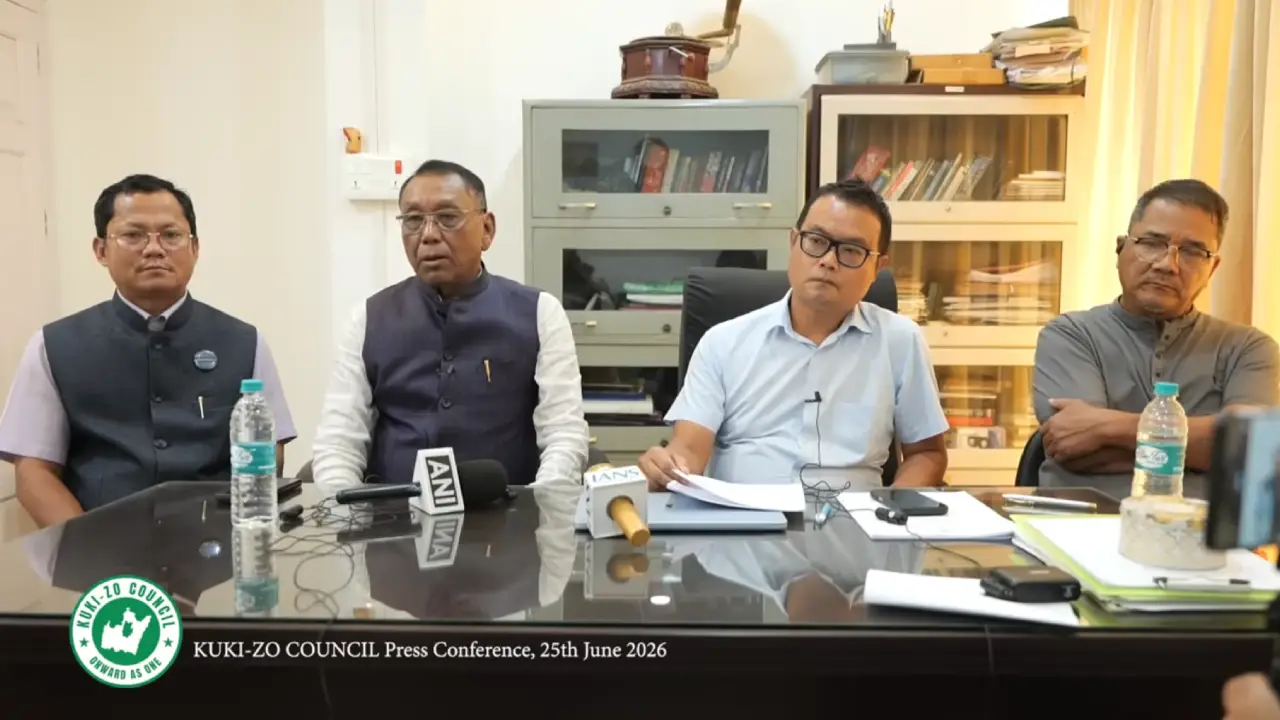
Imphal, June 25: Kuki-Zo Council (KZC) Chairman Henlianthang Thanglet on Thursday publicly acknowledged the killing of six “Kacha Naga" civilians by members of the Kuki-Zo community, describing it as a “grave mistake” committed in anger and emotion, and issued an apology on behalf of his people.
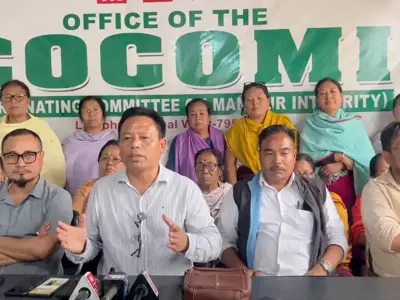
Addressing a press conference at his residence in Churachandpur, Thanglet said the incident was wrong and deserved condemnation. His remarks came amid continuing tensions between Kuki-Zo and Naga groups in parts of Manipur following months of violence, killings and displacement.
“I agree that the Kuki-Zo community made a grave mistake in the killing of the six Kacha Naga civilians. It was an act committed out of emotion, and I strongly criticize it. I am deeply sorry for what happened,” Thanglet said.
The KZC chairman said he wanted to place the incident in the broader context of the ongoing conflict while making it clear that the killing of the six civilians could not be justified.
“Today the entire world and our country have come to view the Kuki-Zo people as a wicked or evil tribe,” he said. “I would like to clarify some points and raise certain questions before the Government of India, the people of India, the people of Manipur and the Naga community.”
According to Thanglet, the present cycle of violence began after an incident involving a Tangkhul youth earlier this year. He said the matter was initially expected to be resolved through customary village procedures but later escalated.
“This conflict initially began when a drunken Tangkhul youth was beaten and, according to customary practice, was taken before the village authority to apologize. However, due to outside interference, that customary process could not take place. I am sorry that matters escalated from there,” he said.
Thanglet also referred to subsequent incidents, including the killing of two Kuki-Zo men and the temporary detention of 21 individuals by a Kuki-Zo group.
“On the other hand, the Kuki-Zo group that had held 21 persons hostage later released them without any conditions,” he said.
He further cited an ambush in which three pastors were killed and four others injured, describing that incident as a turning point that generated strong emotions among Kuki-Zo people.
“That incident triggered strong emotions. As I said earlier, the killing of the six civilians was carried out in anger and emotion. I am very sorry for that and I apologize on behalf of my people,” he stated.
While apologising, Thanglet argued that the wider conflict had claimed more Kuki-Zo lives and caused extensive damage to villages.
“Our villages have been torched, and 14 Kuki-Zo people have been killed by Kacha Nagas and Tangkhuls. In contrast, six Naga civilians were killed by Kuki-Zo individuals acting out of emotion,” he said.
“I ask you to consider: who has caused more deaths? Who has burned more villages up to this point?”
The KZC chairman also raised concerns about the condition of Kuki-Zo communities in parts of Kamjong and Ukhrul districts. He alleged that villagers clustered in Chassad, Phayengkok and Aishi were facing difficulty obtaining essential commodities.
“Tangkhul Nagas have reportedly refused to sell essential goods such as rice, pulses and medicines to Kuki-Zo people,” he claimed.
Thanglet said he had already raised the issue with the Governor of Manipur and appealed for government intervention.
“I request the Government of India and the Government of Manipur to provide adequate supplies of rice, dal, mustard oil, medicines and other essentials to these three locations where people have been concentrated,” he said.
He also pointed to shortages in Kuki-inhabited areas of Leilong and said he had informed the Governor about the difficulties faced by affected communities.
Towards the end of his remarks, Thanglet questioned what he described as the portrayal of the Kuki-Zo community in public discourse.
“Are we truly wicked people? Are we bad people?” he asked.
“The Kuki-Zo community is condemned for the killing of six civilians, yet 14 Kuki-Zo people have already been killed. Are those who killed them considered better than us? Why are we alone labelled as bad or wicked people?”
He concluded by urging the media to communicate what he called the broader realities of the conflict.
“We are not as evil as some portray us to be, nor are we what some have called us. We reject such characterizations,” he said.
KZC Seeks Equal Justice, Alleges Bias in Security Response
Following the chairman’s remarks, KZC spokesperson Ginza Vualzong outlined a series of concerns which he said had weakened the community’s confidence in the administration and government.
“Today, the Kuki-Zo Council is organizing this press conference to express and draw the attention of the Government of India, the Government of Manipur, and the general public to a series of developments that have caused deep concern for the Kuki-Zo people and have eroded our confidence in the administration and the government,” Vualzong said.
Addressing the issue of accountability, he reiterated the council’s condemnation of the killing of the six Naga hostages.
“As our Chairman said, we condemn the killing of the six Naga hostages. The incident was unacceptable, and it was neither authorized nor approved by any Kuki-Zo organization or leadership,” he said.
“Those responsible for killing the six Naga hostages must be identified and brought to justice through a transparent and fair investigation.”
At the same time, Vualzong alleged that 14 Kuki-Zo civilians, including three pastors, had been killed by suspected NSCN and ZUFK militants since March 11 this year.
“These 14 Kuki-Zo victims have not received the kind of attention that the six Naga hostages received, and there has been no similar urgency in investigating the people responsible for these killings,” he said.
He further alleged that more than 45 houses in eight Kuki-Zo villages had been burned and called for equal treatment of all victims irrespective of ethnicity.
“Justice must be applied equally to all communities,” he said. “The culprits must be investigated and brought to justice.”
Vualzong also thanked the United Naga Council for facilitating the release of 14 Kuki-Zo hostages while recalling that 21 Naga hostages held by Kuki groups had earlier been released after government intervention.
“Both the Kuki-Zo side and the Naga side demonstrated goodwill and restraint during these critical moments,” he said.
On security operations, the KZC spokesperson alleged that villagers had faced harassment during recent operations conducted by security forces.
“Security forces, including the CRPF, COBRA, and other paramilitary units, have conducted operations in sensitive areas such as the Ebenezer Camp, Souam, and Leilon villages without proper coordination with the concerned leaders of the SoO groups or with the village authorities,” he claimed.
According to him, extensive operations were conducted in Kuki-Zo areas after the killing of the six Naga hostages, while there had been insufficient action against groups suspected in attacks on Kuki civilians.
“There should not be selective security operations. Operations must be conducted on all sides,” he said.
Vualzong also questioned the effectiveness of district-level administration in protecting vulnerable villages, particularly in Kangpokpi district.
“KZC is very concerned over the continued attacks on Kuki villages,” he said.
Referring to reports concerning the district police administration, he said authorities must ensure accountability and protection of civilians.
“The district administration must be accountable, take responsibility, and ensure the protection of the people within its jurisdiction.”
The spokesperson also raised concerns over access to healthcare, citing the case of three injured Kuki youths who were brought to RIMS Hospital following an attack on Leilon village on June 15.
“Healthcare should be accessible to everyone, regardless of their community,” he said.
“However, in this case, Kuki-Zo people could not access medical facilities in a public institution during a time of crisis.”
Vualzong further alleged that Kuki-Zo communities in Kamjong, Ukhrul and Kangpokpi districts continued to face severe shortages of food and essential commodities due to disruptions in transportation and blocked routes.
“Denying people access to essential commodities and food is a grave violation of fundamental rights,” he said.
He claimed that road blockades in Senapati and Nungba had affected the movement of food, medicines, fuel and other necessities, and questioned why authorities had not intervened to restore free movement.
Concluding the press conference, Vualzong reiterated the KZC’s demand for impartial investigations into all incidents of violence, action against militant groups accused of targeting civilians, fair security operations, restoration of access to essential services, and protection of vulnerable villages.
He also renewed the Kuki-Zo demand for a separate administration in the form of a Union Territory with a legislature.
“Therefore, the demand for a separate administration in the form of a Union Territory with a legislature is not merely a political aspiration. It has become a necessity born out of our experience and continued suffering,” he said.
“We request the Government of India to recognize the gravity of the situation and address not only the immediate security concerns but also the underlying political issues that have emerged through this prolonged conflict.”