An underwater survey by PFA Manipur has revealed heavy siltation and organic deposits affecting oxygen-producing aquatic vegetation in Loktak Lake, raising concerns over the long-term health of the Ramsar wetland.
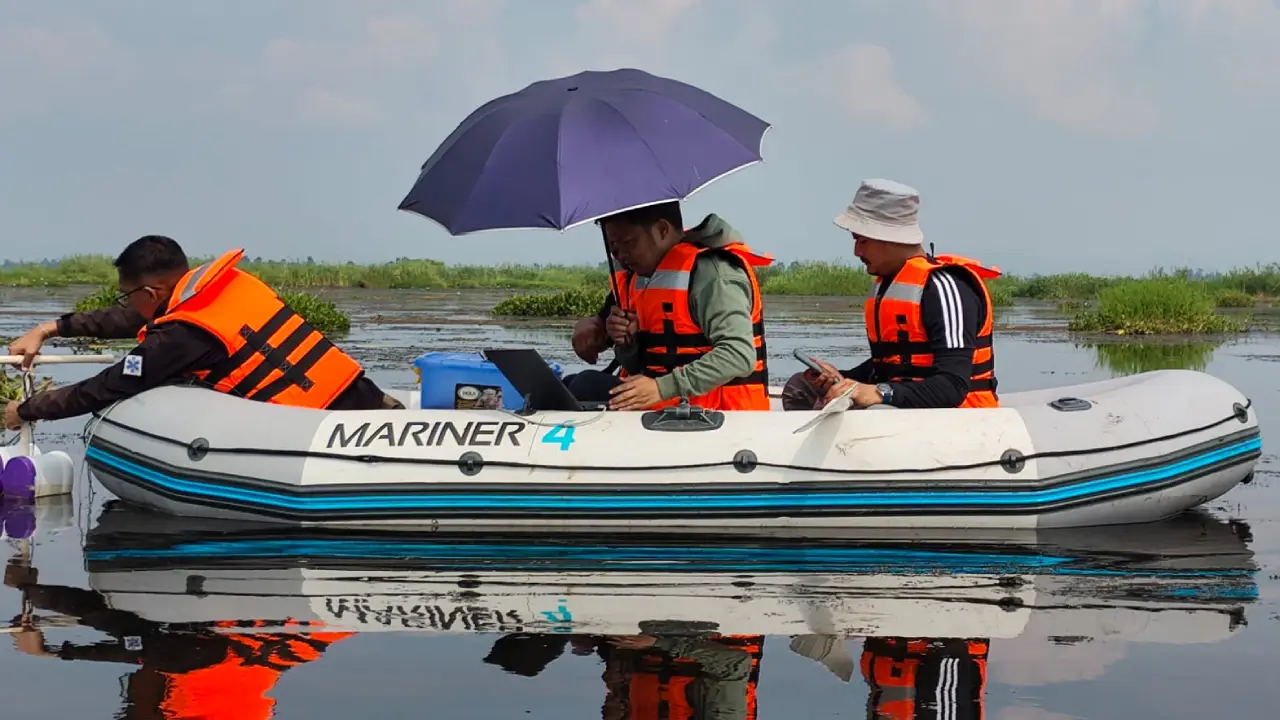
Imphal, June 6: A recent underwater exploration of Loktak Lake by People for Animals (PFA) Manipur has revealed a side of Manipur's largest freshwater lake that is rarely seen by the public but is critical to its survival.
Conducted on World Environment Day, the survey used underwater cameras to document conditions beneath the lake's surface, focusing on aquatic vegetation, sediment accumulation and the interaction between submerged ecosystems and Loktak's iconic floating phumdis. While the footage showed signs of ecological resilience, it also highlighted growing concerns about siltation and pollution that could threaten the long-term health of the internationally recognised wetland.
The exploration offers a rare glimpse into what environmentalists describe as the lake's "hidden life-support system"—the submerged vegetation that continuously produces oxygen, filters water and sustains aquatic biodiversity.
Looking Beyond the Surface
For most visitors, Loktak Lake is defined by its vast expanse of water and the floating phumdis that have become synonymous with Manipur's natural heritage. The lake is also home to the Keibul Lamjao National Park, the world's only floating national park, and supports thousands of fisherfolk and local residents.
Yet much of the ecological activity that determines the lake's health takes place beneath the water surface.
Environmental experts often note that surface conditions can sometimes mask deeper ecological problems. Water may appear calm and healthy while critical biological processes below are under stress.
The underwater survey by PFA Manipur sought to examine these less visible processes through direct observation rather than relying solely on surface assessments.
Using live-feed underwater cameras, the team documented the state of submerged vegetation and the overall condition of the lakebed environment.
Their findings paint a complex picture of a wetland ecosystem that continues to function but faces mounting pressures.
The Role of Charang: Loktak's Underwater Oxygen Factory
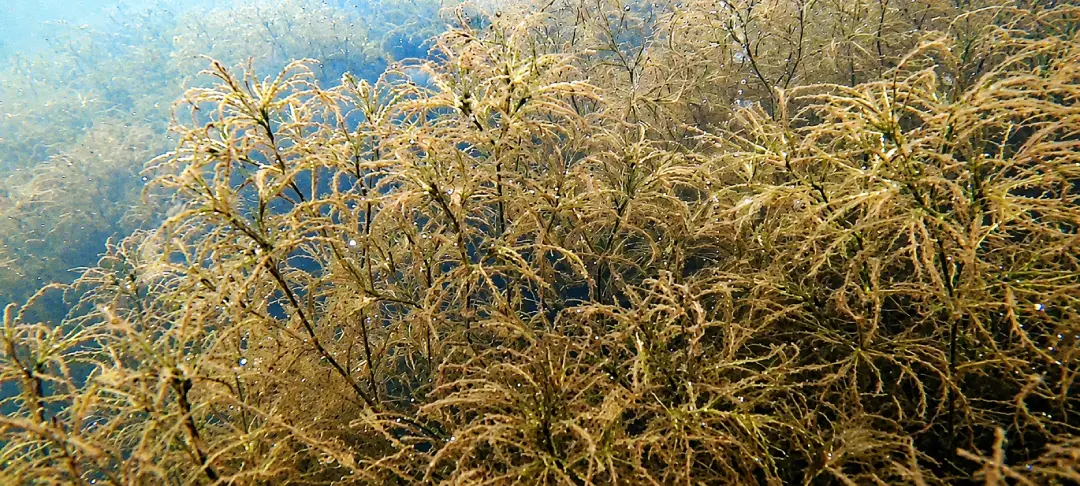
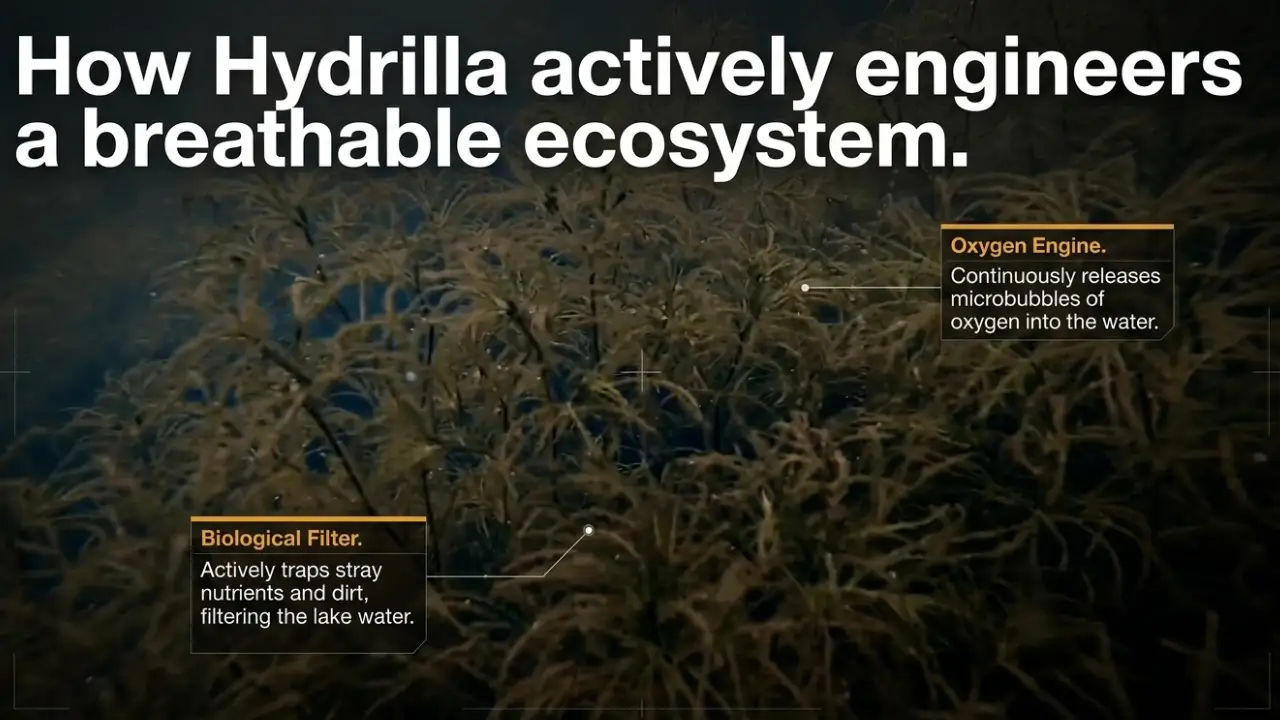
One of the most significant observations from the survey was the extensive presence of Hydrilla verticillata, locally known as Charang.
Though often overlooked, Hydrilla plays an essential role in maintaining the ecological balance of freshwater ecosystems.
Underwater footage captured dense clusters of the plant releasing streams of tiny oxygen bubbles into the surrounding water. These bubbles are produced during photosynthesis and represent one of the primary sources of dissolved oxygen available to fish and other aquatic organisms.
The visual evidence was striking.
Thousands of tiny bubbles could be seen rising from submerged vegetation, creating what observers described as a constant flow of oxygen into the lake.
This process is crucial because dissolved oxygen supports virtually all aquatic life. Fish, aquatic insects, crustaceans and countless microscopic organisms depend on adequate oxygen levels for survival. Without healthy populations of submerged vegetation, aquatic ecosystems can rapidly deteriorate.
According to environmental observers involved in the survey, Charang functions as much more than a simple aquatic plant. It acts as a natural life-support system for the lake.
Nature's Own Water Filter
The importance of Hydrilla extends beyond oxygen production. Its dense branching structure serves as a natural filtration mechanism that helps improve water quality.
As water moves through aquatic vegetation, suspended particles become trapped among the stems and leaves. Excess nutrients are absorbed by the plants, helping prevent excessive nutrient accumulation in the water. This process contributes to maintaining ecological balance and reducing turbidity.
Healthy submerged vegetation can also help stabilise sediments on the lakebed, preventing them from being easily resuspended into the water column.
In addition, these underwater plant beds provide habitat and shelter for numerous aquatic organisms.
Young fish often use submerged vegetation as nursery grounds. Many invertebrates depend on such habitats for feeding and reproduction. The underwater meadows created by Hydrilla therefore support a wide range of ecological functions.
The survey footage demonstrated that these biological systems remain active across significant portions of the lake. However, it also revealed growing challenges that may be undermining their effectiveness.
A Lake Struggling to Breathe
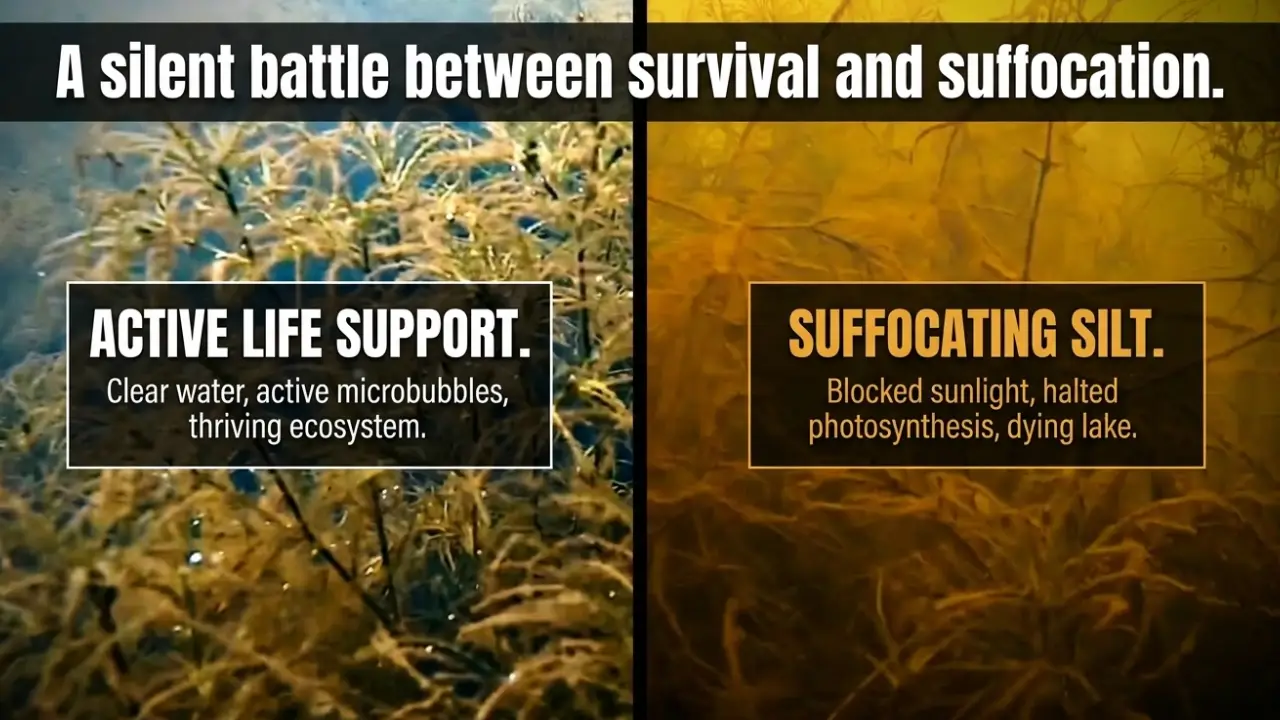
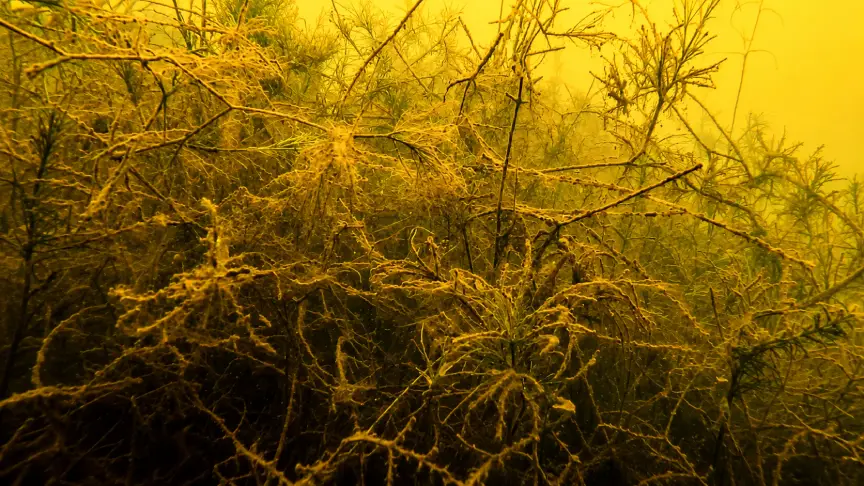
The most concerning observation documented during the exploration was the extent of sediment accumulation on underwater vegetation. In several locations, submerged plants appeared covered by layers of silt and organic matter.
The contrast between healthier and more affected areas was clearly visible in the footage. Some sections displayed relatively clear water and well-defined plant structures. Others appeared murky, with vegetation heavily coated in sediment. In these locations, visibility declined significantly and underwater conditions appeared increasingly degraded.
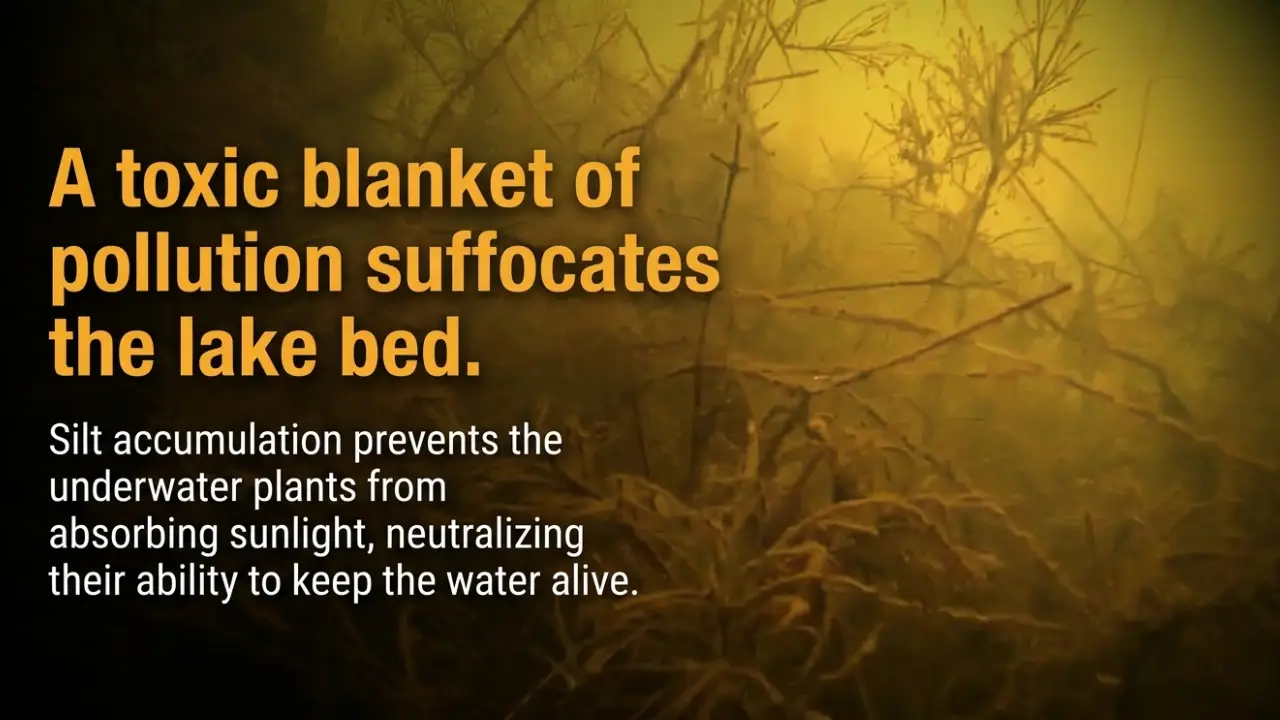
According to PFA Manipur, the accumulation of silt and organic deposits poses a direct threat to aquatic vegetation. The problem is not simply cosmetic.
When sediment settles on plant surfaces, it reduces the amount of sunlight reaching the leaves. Since photosynthesis depends on sunlight, excessive sediment accumulation can interfere with the plant's ability to produce oxygen.
The consequences can extend throughout the ecosystem. Reduced photosynthesis means reduced oxygen production.
At the same time, the organic matter accumulating on submerged vegetation eventually decomposes. During decomposition, microorganisms consume oxygen from the surrounding water.
This creates a double challenge. Oxygen production decreases while oxygen demand increases. For aquatic ecosystems, this imbalance can be particularly harmful.
Understanding the Siltation Challenge
Siltation has long been recognised as one of the major environmental challenges facing Loktak Lake. Sediments enter lakes through a variety of pathways, including soil erosion, land-use changes and runoff from surrounding catchment areas. Once inside a lake, sediments can alter habitats, reduce water depth and affect aquatic vegetation.
The underwater survey provides visual evidence of how these processes are affecting Loktak's submerged ecosystem. The heavy coating of silt observed on aquatic vegetation suggests that sediment loads may be overwhelming the lake's natural filtering capacity in some areas.
Environmental scientists often describe submerged plants as the first line of defence against declining water quality. When these plants become stressed, the broader ecosystem becomes increasingly vulnerable.
The findings therefore raise important questions about the long-term implications of continued sediment accumulation. If oxygen-producing vegetation declines significantly, fish populations and other aquatic organisms may also be affected.
The Hidden Cost of Organic Pollution
Alongside siltation, the survey highlighted the accumulation of organic deposits within parts of the lake. Organic matter naturally exists in freshwater ecosystems, but excessive accumulation can create problems. As organic materials break down, bacteria consume oxygen.
In heavily affected areas, this process can reduce oxygen concentrations to levels that place stress on aquatic organisms.
Environmental observers note that this issue becomes especially serious when combined with declining photosynthesis. If submerged vegetation produces less oxygen while decomposition consumes more, water quality can deteriorate rapidly.
The underwater footage suggests that some sections of Loktak may already be experiencing these pressures. Although the survey did not include detailed chemical measurements, the visual evidence indicates conditions that warrant closer monitoring.
Phumdis and the Lakebed Connection
The exploration also provided valuable observations on the behaviour of phumdis. These floating masses of vegetation, soil and organic matter are among Loktak's most distinctive features. Underwater cameras showed roots from some phumdis extending downward and attaching to the lakebed.
According to observations recorded during the survey, this attachment occurs during periods of lower water levels.
As monsoon rains arrive and water levels rise, the roots are expected to detach, allowing the phumdis to float freely once again. This seasonal cycle forms an important part of Loktak's ecological dynamics. The attachment and detachment of phumdis influence habitat availability, nutrient exchange and ecological productivity.
Environmental observers note that changes to lakebed conditions may affect these processes. If sediment accumulation continues to alter the structure of the lakebed, it could potentially influence how phumdis interact with the underwater environment.
Although further study would be needed to assess such impacts, the survey highlights the interconnected nature of Loktak's ecological systems.
A Wetland of Global Importance
The significance of these findings extends beyond local conservation concerns. Loktak Lake is recognised internationally as a Ramsar site, reflecting its importance as a wetland ecosystem.
The lake supports rich biodiversity and provides livelihoods for thousands of people. Its ecological health directly affects fisheries, agriculture, tourism and local communities.
For decades, environmental groups, researchers and government agencies have expressed concern over various pressures facing the lake. These include habitat changes, pollution, sedimentation and broader environmental degradation.
The latest underwater exploration adds an important perspective to those discussions. Rather than examining the lake only from above, it documents conditions where many of the ecosystem's most important biological processes occur.
Signs of Resilience Remain
Despite the concerns raised by the survey, the findings were not entirely negative. The underwater footage also revealed evidence of resilience. Hydrilla remains widespread across many parts of the lake.
Photosynthesis is clearly continuing, as demonstrated by the steady release of oxygen bubbles observed during the exploration.
The existence of extensive submerged vegetation suggests that the lake retains considerable ecological capacity. This resilience provides an opportunity for conservation efforts to make a meaningful difference.
Environmental systems often possess remarkable abilities to recover when pressures are reduced. Protecting underwater vegetation could therefore play a critical role in maintaining the health of the broader ecosystem.
The Need for Continued Monitoring
One of the most important outcomes of the survey may be the baseline information it provides. Underwater monitoring remains relatively uncommon compared to surface observations and water sampling.
Yet direct visual documentation offers valuable insights into ecological conditions that might otherwise remain hidden. Repeated surveys could help track changes in vegetation health, sediment accumulation and habitat quality over time.
Such information would strengthen understanding of ecological trends and help guide conservation strategies.
Environmental management increasingly relies on long-term monitoring to identify emerging threats before they become irreversible. The underwater footage captured by PFA Manipur demonstrates the value of incorporating visual observation into broader conservation efforts.
A Reminder From Beneath the Water
PFA Manipur Managing Trustee L Biswajeet Meitei said the resilience of submerged vegetation should encourage greater public efforts to protect the lake. He urged people to prevent further pollution and environmental degradation, emphasising that conservation requires collective action. The message emerging from the survey is both simple and significant.
The future of Loktak Lake depends not only on the floating phumdis visible from the surface but also on the submerged vegetation hidden beneath the water. These underwater plants quietly perform the work of oxygenating the lake, filtering pollutants and sustaining aquatic life.
The footage recorded on World Environment Day shows that they continue to carry out those functions despite increasing environmental pressure.
Whether they can continue doing so in the years ahead may depend on how effectively pollution, sedimentation and other ecological threats are addressed.
For now, the underwater world of Loktak tells a story of both resilience and vulnerability—a reminder that the health of one of Northeast India's most important wetlands ultimately depends on protecting the life-support systems operating out of sight beneath its waters.