Manipur and Bihar have signed reform-linked MoUs under Jal Jeevan Mission 2.0, with the Centre focusing on sustainable, community-led rural drinking water delivery.
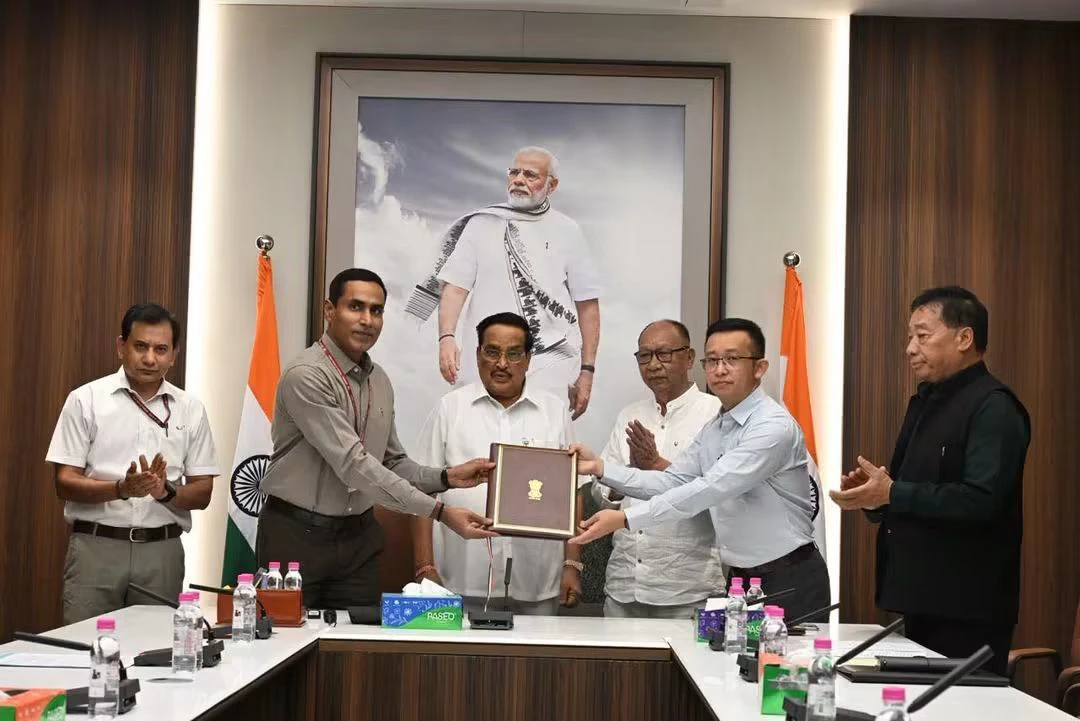
Imphal, June 10: The Government of Manipur on Wednesday signed a reform-linked Memorandum of Understanding (MoU) with the Ministry of Jal Shakti under the Jal Jeevan Mission (JJM) 2.0 framework, marking a new phase in the implementation of rural drinking water programmes with greater emphasis on sustainability, community participation and long-term service delivery.
The agreement was signed during a programme attended by Union Minister for Jal Shakti C.R. Patil and Manipur Chief Minister Yumnam Khemchand Singh. Bihar also signed a similar reform-linked MoU with the Centre on the same day.
According to the Ministry of Jal Shakti, the agreements represent a shift towards a service-based and community-centred model of rural water governance aimed at ensuring that every rural household receives an adequate and regular supply of safe drinking water.
The reform-linked MoUs form part of Jal Jeevan Mission 2.0, the next phase of the flagship rural drinking water programme launched by the Government of India. Unlike the initial phase, which primarily focused on creating infrastructure and extending tap water connections, JJM 2.0 places greater emphasis on maintaining systems, ensuring functionality, strengthening local institutions and promoting community ownership of water supply schemes.
The Ministry said the initiative seeks to establish a Gram Panchayat-led governance model for rural drinking water management while strengthening public participation and accountability. The approach is intended to improve the sustainability of water supply systems and contribute to long-term water security in rural areas.
For Manipur, the MoU was exchanged between D. Senthil Pandiyan, Joint Secretary of the National Jal Jeevan Mission (NJJM), and Dr. Neilinthang Teilien, Secretary to the Chief Minister of Manipur. The exchange took place in the presence of Union Minister C.R. Patil, Chief Minister Yumnam Khemchand Singh and Deputy Chief Minister and Public Health Engineering Department (PHED) Minister Losii Dikho.
Senior officials from the Department of Drinking Water and Sanitation (DDWS), including Secretary Ashok K.K. Meena and Additional Secretary and Mission Director of NJJM Kamal Kishore Soan, were also present.
In a statement shared by the Chief Minister's Office, CM Khemchand Singh described the signing of the MoU as a matter of pride and said the new phase of Jal Jeevan Mission represents a strategic restructuring of the national rural drinking water programme.
He stated that the focus has shifted from rapid infrastructure creation to ensuring long-term and sustainable delivery of drinking water services.
The Chief Minister highlighted several key components of Jal Jeevan Mission 2.0, including assured service delivery, the Sujalam Bharat digital framework, clear operation and maintenance policies, source sustainability measures, reform-linked funding mechanisms and community ownership.
According to him, these reforms are intended to transform the mission from a government scheme into a people-centred movement capable of contributing to the national vision of Viksit Bharat @2047.
Khemchand Singh also praised the Ministry of Jal Shakti for developing the guidelines of JJM 2.0 and reiterated the Manipur government's commitment to implementing the mission effectively.
"Manipur will work to achieve the objectives of the mission in both letter and spirit," he said, while assuring full support for the reform agenda and its implementation across the state.
Speaking on the occasion, Union Minister C.R. Patil said Jal Jeevan Mission has significantly transformed rural drinking water access across the country since its launch under the leadership of Prime Minister Narendra Modi.
He noted that the programme has helped reduce the burden of fetching water, particularly for women and girls in rural areas.
Patil said the next phase of the mission would focus on sustaining the infrastructure created under JJM, ensuring the functionality of household tap connections, improving water quality, promoting source sustainability and strengthening operation and maintenance systems.
He also stressed the importance of water conservation measures such as rainwater harvesting, groundwater recharge and protection of catchment areas. The Union Minister called for active participation by Gram Panchayats, District Water and Sanitation Missions, State Water and Sanitation Missions and local communities in ensuring reliable drinking water services.
Addressing Manipur specifically, Patil expressed confidence that the state would soon complete its remaining household tap water connections and join the group of states and Union Territories that have achieved universal rural tap water coverage.
He also acknowledged the challenges faced by Manipur in recent years and appreciated what he described as the state's resilience in continuing implementation of the mission despite difficult circumstances.
According to the Ministry, the Union Minister said Manipur's progress could serve as an example of commitment towards ensuring safe drinking water access for every rural household.
Additional Secretary and Mission Director of NJJM Kamal Kishore Soan highlighted the strategic importance of Manipur in the development of the Northeast and acknowledged improvements made by the state in the rural drinking water sector over the past two years.
He said the objective of Jal Jeevan Mission extends beyond providing tap connections and aims to guarantee reliable access to safe drinking water over the next 25 to 30 years.
Soan noted that achieving this objective would require addressing gaps in water supply systems, strengthening infrastructure and ensuring that investments made under the programme remain sustainable.
He further said the reforms proposed under JJM 2.0 are intended to strengthen long-term service delivery and water security, adding that the Government of India would continue providing technical assistance, capacity-building support and institutional handholding to the state.
DDWS Secretary Ashok K.K. Meena emphasised that the MoUs focus not only on infrastructure creation but also on the delivery of sustainable services managed at the grassroots level.
He said Village Water and Sanitation Committees (VWSCs) and Gram Panchayats would play a central role in managing and operating village-level water supply systems. Meena also stressed the importance of regular District Water and Sanitation Mission meetings to facilitate village action plans and strengthen local institutions responsible for water governance.
The Secretary stated that district administrations would play a key role in monitoring implementation and extending support to local bodies whenever necessary.
The Ministry described the reform-linked agreements as part of a broader effort to align rural water governance with Prime Minister Narendra Modi's vision of "Har Ghar Nirantar Nal Se Jal" and the national goal of Viksit Bharat @2047.
Officials said the framework seeks to ensure accountable and community-driven water governance while improving service quality and long-term sustainability.
The MoU signed with Manipur is among a series of agreements being executed across the country under Jal Jeevan Mission 2.0. According to the Ministry of Jal Shakti, 33 out of 34 participating States and Union Territories have now signed reform-linked MoUs with the Department of Drinking Water and Sanitation.
For Manipur, the agreement signals the beginning of a new phase in rural drinking water management, with the state expected to focus not only on expanding access but also on ensuring that water supply systems remain functional, sustainable and community-owned in the years ahead.