Thousands joined a Kuki Inpi-led rally in Kangpokpi, submitting a seven-point memorandum to Prime Minister Narendra Modi seeking justice, security and a political settlement.
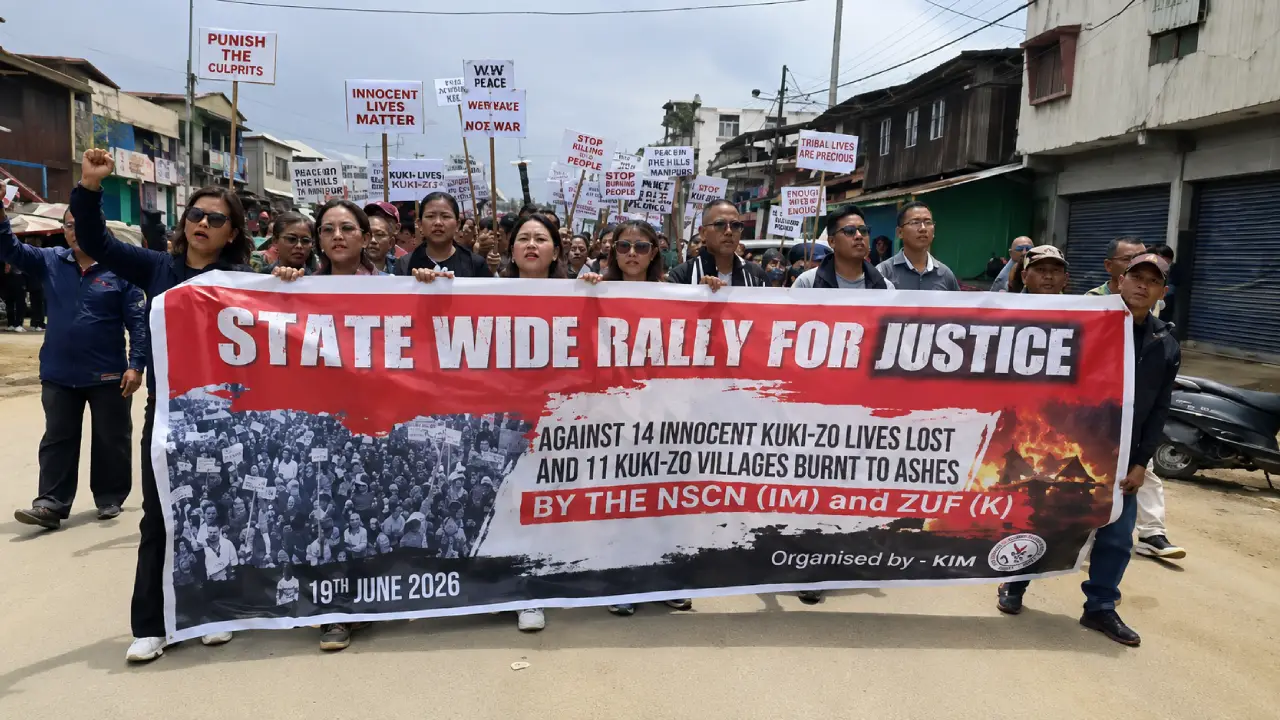
Kangpokpi, June 19: Thousands of people participated in a statewide protest rally organised by Kuki Inpi Manipur (KIM) on Friday, with demonstrators gathering at Kangpokpi district headquarters to press for what they described as justice, security and urgent intervention from the Government of India. Similar rallies were also organised in Churachandpur district under the aegis of Kuki Inpi, Churachandpur.
The mobilisation, held under the banner of a "Rally for Justice," witnessed participants marching from Nute Kailhang through National Highway-2 before converging at the Deputy Commissioner's Office in Kangpokpi. A memorandum addressed to Prime Minister Narendra Modi was later submitted through the Deputy Commissioner.
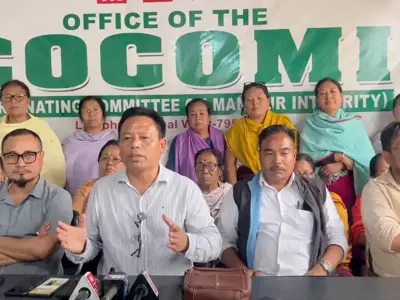
The rally formed part of a wider programme reportedly conducted across Kuki-Zo inhabited areas of Manipur. In Kangpokpi, the event was coordinated by the Committee on Tribal Unity (CoTU), Sadar Hills, along with other community organisations.
In the memorandum, Kuki Inpi Manipur expressed concern over what it termed a deteriorating security environment and worsening relations between Kuki-Zo and Naga communities. The organisation alleged that a series of attacks in recent months had resulted in the deaths of 14 Kuki-Zo civilians and the destruction of 11 villages.
According to the memorandum, these incidents have contributed to growing insecurity among members of the Kuki-Zo community. The organisation urged the Centre to take what it described as immediate and impartial measures to address the situation and ensure accountability.
KIM also cautioned against political or administrative decisions that, in its view, overlook the concerns of Kuki-Zo communities. The memorandum stated that any arrangement that fails to address the grievances of affected families could deepen feelings of alienation within the community.
The organisation referred to several incidents that it said had heightened tensions during the past few months. These included the reported burning of Litan Sareikhong village in February, the killing of two villagers from Thawai Kuki village in March, and an attack in May in which three pastors were killed and five others injured.
As part of its appeal, Kuki Inpi Manipur submitted a seven-point charter of demands to the Prime Minister.
Among its key demands was a judicial inquiry into the death of a villager identified as Lenminsang during a security operation at Songkong village in Henglep subdivision on June 16. The organisation sought an independent investigation into the circumstances surrounding the incident and requested legal action if wrongdoing is established.
The memorandum also called for a review of the ceasefire arrangement involving the NSCN-IM. KIM alleged that armed groups operating under or linked to the arrangement had been involved in activities affecting Kuki-Zo villages and civilians. It urged the Government of India to reassess the agreement in light of recent developments.
Another major demand focused on investigations into the deaths of 14 Kuki-Zo civilians. KIM sought what it described as a comprehensive and time-bound probe, identification of those responsible and prosecution in accordance with law. It also requested compensation and support for affected families.
The organisation further demanded an inquiry into the destruction of 11 villages allegedly affected by violence. It called for assessment of losses, rehabilitation measures, reconstruction assistance and legal action against those found responsible.
KIM also sought enhanced security arrangements in vulnerable areas. The memorandum urged authorities to deploy adequate central security forces in locations considered at risk, particularly to safeguard civilians, including women, children and displaced families.
Transparency in investigations was another issue highlighted by the organisation. It requested periodic public updates on the status of inquiries, arrests and preventive measures related to incidents of violence.
The final demand centred on a long-term political settlement for the Kuki-Zo people. According to the memorandum, a constitutional and political solution is necessary to address recurring concerns relating to security, governance and displacement.
Addressing the media after the rally, Kuki civil society organisations' spokesperson Janghaolun Haokip said the protest was intended to draw national attention to what organisers described as attacks on Kuki-Zo villages and civilians.
He alleged that the difficulties faced by the community reflected both the actions of armed groups and shortcomings in governmental response mechanisms.
Haokip said prolonged disruptions had affected transportation, education and access to essential commodities in several areas. He also raised concerns regarding the welfare and safety of people living in affected regions.
Making an appeal to the Centre, he urged authorities to take prompt measures to address the concerns raised by the community and ensure protection of citizens.
The rally concluded peacefully after submission of the memorandum. Organisers said the mobilisation was intended to highlight demands for justice, accountability, security and a long-term resolution to issues affecting Kuki-Zo communities.