Maruti Suzuki has launched India's first flex-fuel passenger car. Here's how flex-fuel technology works, what benefits it offers consumers, and why it matters for India's energy future.
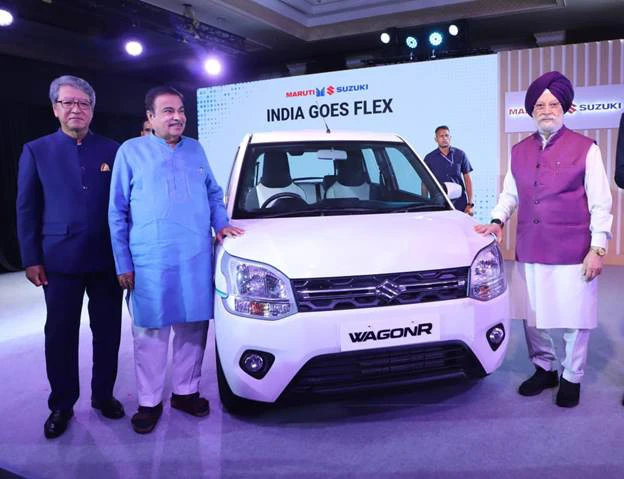
New Delhi, June 4: India's push towards cleaner and more self-reliant transportation entered a new phase on Thursday with the launch of the country's first flex-fuel passenger vehicle by Maruti Suzuki.
The vehicle was unveiled in New Delhi by Union Petroleum and Natural Gas Minister Hardeep Singh Puri in the presence of Union Road Transport and Highways Minister Nitin Gadkari. The launch marks the entry of flex-fuel technology into India's passenger car market, expanding the government's efforts to reduce dependence on imported fossil fuels through greater use of domestically produced ethanol.
Speaking at the event, Puri said the introduction of flex-fuel technology was not just a vehicle launch but the beginning of a new chapter in India's energy transition. He noted that the country's passenger vehicle segment, comprising nearly 3.7 million vehicles, represents a significant opportunity for expanding ethanol-based mobility.
The launch comes amid rapid growth in India's ethanol blending programme. According to the government, ethanol blending in petrol has increased from less than 1.5 per cent in 2013-14 to 20 per cent in 2025-26, achieving the target five years ahead of schedule.
Ethanol procurement has also risen sharply from around 38 crore litres in 2013-14 to more than 1,040 crore litres today. Production capacity has expanded nearly five-fold during the same period, reaching about 2,000 crore litres annually.
The government says the programme has helped reduce crude oil imports, save foreign exchange, lower emissions and generate additional income for farmers.
How does a flex-fuel vehicle work?
A flex-fuel vehicle (FFV) is designed to operate on different blends of petrol and ethanol. Unlike conventional petrol vehicles, which are built for a specific fuel blend, FFVs use sensors and engine management systems that automatically detect the ethanol content in the fuel and adjust engine performance accordingly.
The newly launched Maruti Suzuki model can run on ethanol-petrol blends ranging from E20, which contains 20 per cent ethanol, to E100, which is pure ethanol.
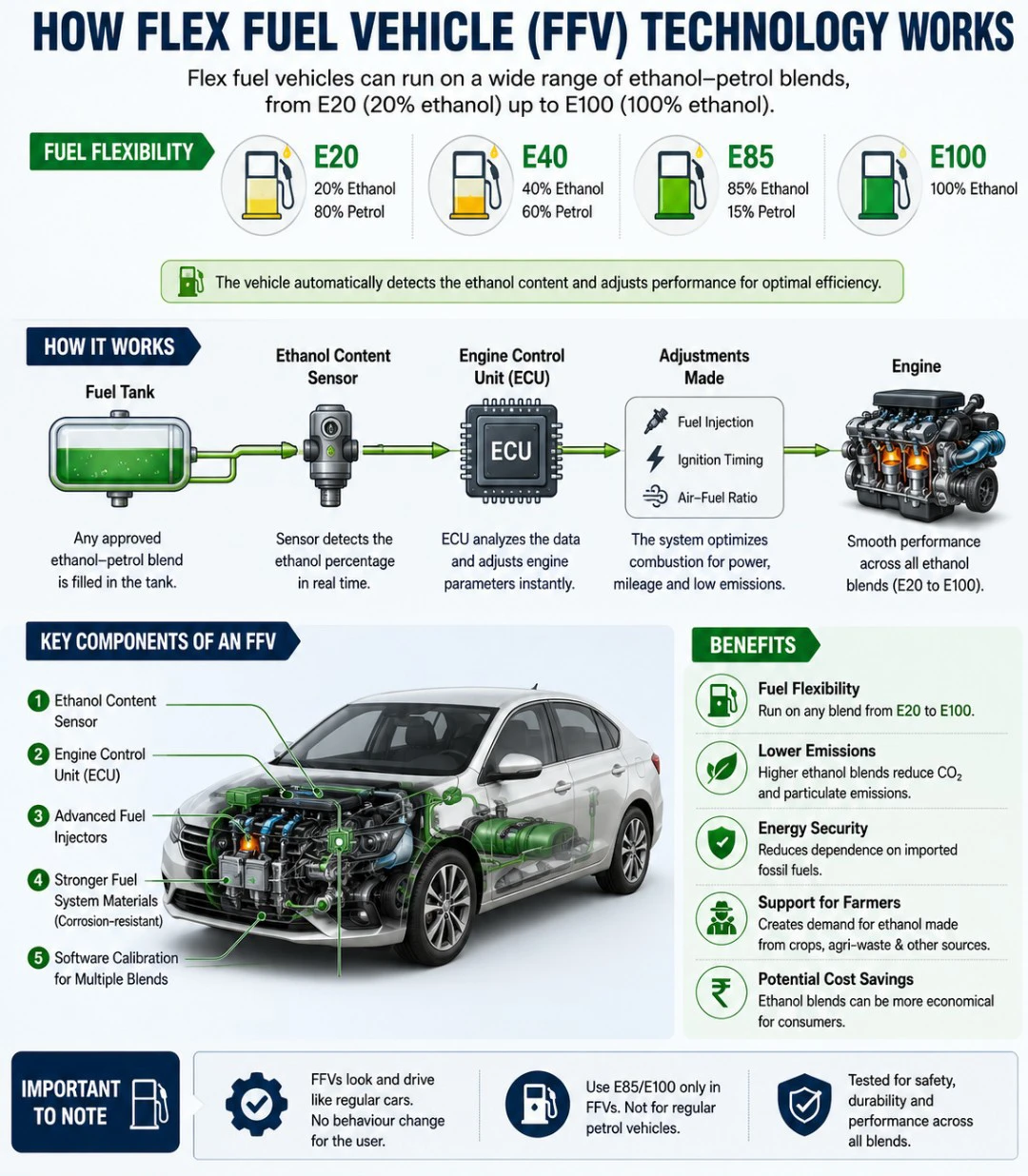
This means vehicle owners can use different approved fuel blends depending on availability without requiring modifications to the engine.
The technology has already been adopted in countries such as Brazil and the United States, where ethanol has become an important alternative transportation fuel.
Why does it matter?
The government's interest in flex-fuel technology goes beyond the automobile sector.
India remains one of the world's largest importers of crude oil. By increasing the use of ethanol produced from domestic agricultural resources, policymakers hope to reduce the country's dependence on imported energy while strengthening energy security.
Puri said India's ethanol ecosystem now includes feedstock sources such as sugarcane, broken grains, agricultural waste, bamboo and seaweed, creating new economic opportunities for farmers and rural industries.
According to government estimates, if half of all new two-wheelers and four-wheelers sold in the future become flex-fuel compliant, it could generate demand for an additional 311.8 crore litres of ethanol annually. This could provide farmers with around Rs. 12,403 crore in additional income while reducing carbon dioxide emissions by 66.4 lakh metric tonnes.
The minister said the ethanol programme has been built through coordination among farmers, ethanol producers, oil marketing companies, vehicle manufacturers, scientists and financial institutions.
What benefits could consumers see?
One of the biggest potential advantages for consumers is fuel flexibility. FFV owners can use different ethanol-petrol blends depending on availability and pricing.
If ethanol-based fuels remain competitively priced, motorists could also benefit from lower running costs compared to conventional petrol.
The vehicles are expected to contribute to lower emissions as well. The government noted that E85 fuel, which contains 85 per cent ethanol, produces near-zero particulate matter emissions. NITI Aayog has classified ethanol-based flex-fuel vehicles, including those operating on E85, as zero-emission vehicles.
Supporters of the technology also argue that wider ethanol use can help stabilise fuel supplies by reducing exposure to global oil market disruptions.
Building a nationwide ecosystem
The government has outlined plans to create infrastructure needed for large-scale adoption of flex-fuel vehicles.
Under the proposed roadmap, E85 has been identified as the standard fuel for flex-fuel vehicles under Bureau of Indian Standards specifications. Authorities plan to establish between 50 and 100 flex-fuel-ready retail outlets initially across the Delhi-NCR and Mumbai-Pune-Nagpur corridors.
The network is expected to expand to around 500 outlets by December 2026 and approximately 5,000 outlets across major cities by the end of 2027.
Additional measures under consideration include pricing support, road tax concessions, consumer awareness campaigns, development of storage and dispensing infrastructure, and special identifiers for both flex-fuel vehicles and fuel stations.
The launch follows the recent introduction of flex-fuel motorcycles by Hero MotoCorp and signals the beginning of a broader transition towards ethanol-based mobility in India.
Puri urged automobile manufacturers to accelerate the rollout of flex-fuel models across vehicle categories and called on oil marketing companies to expand E85 fuel availability across the country.
"India's energy transition will be built in India, powered by Indian innovation, supported by Indian farmers and driven by Indian consumers," he said.