A study in Manipur found that poor school sanitation facilities and menstrual taboos continue to affect girls' education despite high sanitary pad usage.
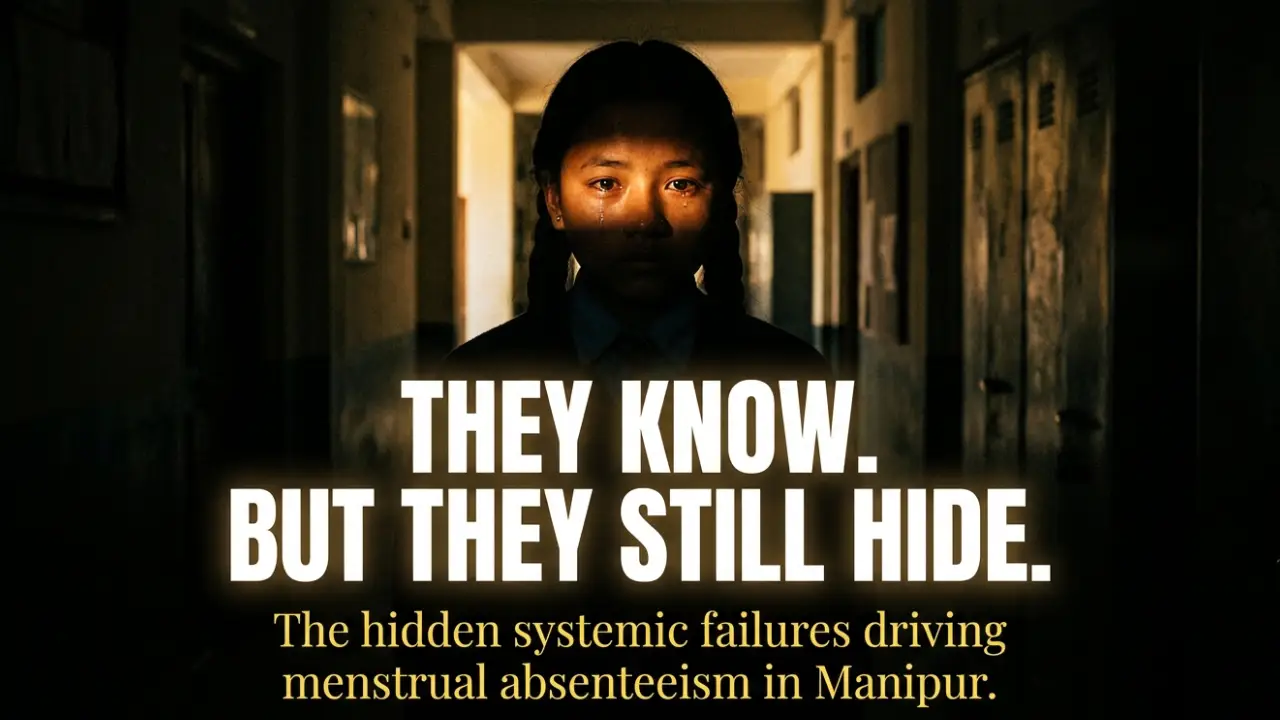
Imphal, June 12: A recent study conducted among adolescent schoolgirls in Manipur has found that while the use of sanitary pads is widespread and awareness about menstruation is improving, inadequate school sanitation facilities and deeply rooted cultural taboos continue to affect the health, dignity and education of young girls.
The study, titled "Menstrual Hygiene Practices and Associated Factors Among School Going Adolescent Girls in a Rural Peri-Urban Setting of Manipur, India: A Cross Sectional Study," was published on May 6, 2026, in Volume 25, Issue 4 (2026) of Genetics and Molecular Research. The research was authored by Dr. Takhellambam Ranjita Devi, Kshetrimayum Vedmani, Devi Thokchom Diana Devi, Sumati Rajkumari, Nazia Hussain, Robita Riamei and Chakpram Suchitra Devi. The study examined menstrual hygiene practices, awareness levels, school sanitation facilities and socio-cultural factors affecting adolescent girls in Manipur, highlighting persistent challenges related to menstrual health management despite increasing use of sanitary pads and growing awareness about menstruation.
The community-based cross-sectional study, carried out in Kshetrigao Kendra in Imphal East district, surveyed 100 school-going girls aged between 12 and 15 years. Researchers found that 94 per cent of the respondents use sanitary pads and 89 per cent consider menstruation a normal biological process. However, these gains have not translated into a supportive environment for menstrual hygiene management.
The findings point to significant challenges in school infrastructure, access to accurate information, and social attitudes surrounding menstruation. Researchers argue that awareness campaigns and access to sanitary products alone are insufficient unless they are accompanied by improvements in sanitation facilities and efforts to address long-standing social stigma.
The study found that sanitary pads have become the dominant menstrual hygiene product among adolescent girls in the surveyed area, with 94 per cent reporting their use. Access to menstrual products was also relatively high, with 96 per cent saying they could obtain sanitary products easily and 86 per cent purchasing them from local shops.
However, knowledge regarding menstruation remains uneven. While 60 per cent of the respondents knew about menstruation before experiencing their first period, 40 per cent had no prior information.
Researchers found that mothers remain the primary source of menstrual information for 47 per cent of the girls, while sisters and friends accounted for only a small proportion. Significantly, teachers were not identified as a major source of information, suggesting that menstrual health education remains largely absent from formal school discussions.
Scientific understanding of menstruation was also found to be limited. Only 47 per cent of participants correctly identified the uterus as the organ responsible for menstruation, while 41 per cent were unable to identify the organ involved.
Misconceptions regarding fertility were also common. Only 10 per cent correctly understood the possibility of pregnancy during menstruation, while nearly half believed it was possible and a large proportion remained unsure.
Researchers noted that such findings indicate that awareness campaigns have increased familiarity with menstruation but have not necessarily improved comprehensive understanding of reproductive health.
The most striking findings relate to the condition of school sanitation facilities. Only 17 per cent of the girls reported having access to clean and private toilets suitable for changing sanitary pads in school. A large majority, 83 per cent, said they felt uncomfortable changing pads on school premises.
Water availability was another major concern. While 62 per cent reported that water was available in school washrooms, 38 per cent said their schools lacked adequate water facilities during menstruation.
The absence of disposal facilities was even more pronounced. According to the study, 77 per cent of schools lacked dedicated sanitary disposal bins, leaving students with limited options for safely disposing of used menstrual products.
Researchers said these deficiencies directly undermine menstrual hygiene management and contribute to stress, embarrassment and discomfort among students during school hours.
The findings reveal a significant gap between increased access to sanitary products and the infrastructure necessary to use them safely and comfortably.
The study found that menstruation continues to disrupt education for many adolescent girls. More than half of the respondents—53 per cent—reported missing school during their menstrual periods. Researchers attributed absenteeism to a combination of physical discomfort, inadequate sanitation facilities and fear of embarrassment.
Among those who missed school, many cited concerns about staining clothes, the absence of private spaces to change pads and difficulties in disposing of used sanitary products.
Researchers noted that menstruation-related absenteeism remains an overlooked educational issue despite ongoing efforts to improve girls' access to schooling.
The findings suggest that educational outcomes are being affected not only by economic or academic factors but also by the inability of schools to provide gender-sensitive sanitation facilities.
Commenting on the findings, Dr. Kshetrimayum Vedmani Devi, one of the authors of the study, said the research highlights how menstrual health extends beyond a healthcare issue and directly affects education and dignity.
In a post on LinkedIn, Dr. Vedmani Devi said the study demonstrates "how menstrual health, hygiene, and related social factors shape the well-being and school participation of adolescent girls in a rural peri-urban setting of Manipur."
She noted that the findings identify practical gaps that can guide school-based health education, sanitation support and adolescent-focused interventions. According to her, the study is significant because menstrual hygiene is "not only a health issue but also an education and dignity issue for school-going girls."
The author further stated that the research helps reveal preventable barriers that continue to affect school attendance, comfort and overall adolescent development in the community.
One of the most notable findings of the study was the persistence of menstrual taboos despite relatively high awareness levels. Although 89 per cent of participants described menstruation as a normal biological process, 95 per cent reported following various restrictions during their menstrual periods.
Researchers linked these practices to the influence of "mangba," a traditional Meitei concept associated with ritual impurity. Restrictions commonly reported by participants included limitations on entering kitchens, attending religious ceremonies and visiting places of worship.
The study found that such practices cut across educational backgrounds and persisted even among girls who understood the biological basis of menstruation.
Researchers observed that social attitudes surrounding menstruation remain deeply embedded within communities and continue to shape behaviour regardless of access to information.
The findings indicate that menstrual stigma remains one of the most significant barriers to achieving menstrual health and dignity.
While many girls reported following good hygiene practices, several concerning trends were identified. Nearly all participants reported washing their hands before and after changing menstrual products, while most cleaned their genital area regularly during menstruation.
However, disposal practices varied considerably. Although 70 per cent used dustbins for disposal, other methods included burning sanitary pads, flushing them down toilets, burying them or disposing of them in open areas.
Researchers warned that such practices can create environmental and health concerns, particularly in areas where proper disposal systems are unavailable.
The study also found that 31 per cent of girls rarely bathed during menstruation. Researchers linked this behaviour to a combination of cultural restrictions, privacy concerns and inadequate sanitation facilities.
More than half of the respondents were unaware of potential health complications associated with poor menstrual hygiene, including reproductive tract and urinary tract infections.
A key conclusion of the study was that awareness does not automatically translate into better hygiene practices. Researchers identified only a very weak positive relationship between menstrual knowledge and actual hygiene behaviour, suggesting that information alone cannot overcome infrastructural and social barriers.
The finding challenges the assumption that educational campaigns by themselves can solve menstrual health problems.
According to the study, girls may understand the importance of maintaining hygiene but remain unable to follow recommended practices because of inadequate facilities, social restrictions or fear of stigma.
For example, a student may know that sanitary products should be changed regularly, yet avoid doing so because there is no private toilet or disposal facility available at school.
Similarly, cultural taboos may discourage girls from bathing or drying reusable materials in hygienic conditions even when they understand the health implications.
Researchers said the findings highlight the need for urgent implementation of the National Menstrual Hygiene Policy for School-Going Girls, introduced in 2024.
The study recommends upgrading school sanitation infrastructure by ensuring access to private toilets, reliable water supply, sanitary disposal bins and incinerators.
It also calls for structured menstrual health education within school curricula and greater involvement of teachers in providing accurate information.
Beyond schools, researchers stress the importance of engaging parents, community leaders and male members of society in conversations about menstrual health.
Addressing stigma, they argue, is just as important as providing sanitary products.
The study concludes that menstrual dignity requires more than access to pads. Unless schools provide safe sanitation facilities and communities move beyond notions of impurity and shame, many girls will continue to face barriers to health, education and participation in daily life.
The findings reinforce growing concerns among health and education experts that menstrual hygiene management must be viewed as a cross-sector issue involving public health, education, sanitation and gender equity. As Dr. Vedmani Devi noted, addressing menstrual health is not merely about distributing sanitary products but about removing barriers that continue to affect the dignity, attendance and development of adolescent girls.