Nagaland University research reveals how indigenous knowledge, ecology and cultural traditions continue to sustain Angami Naga terrace farming.
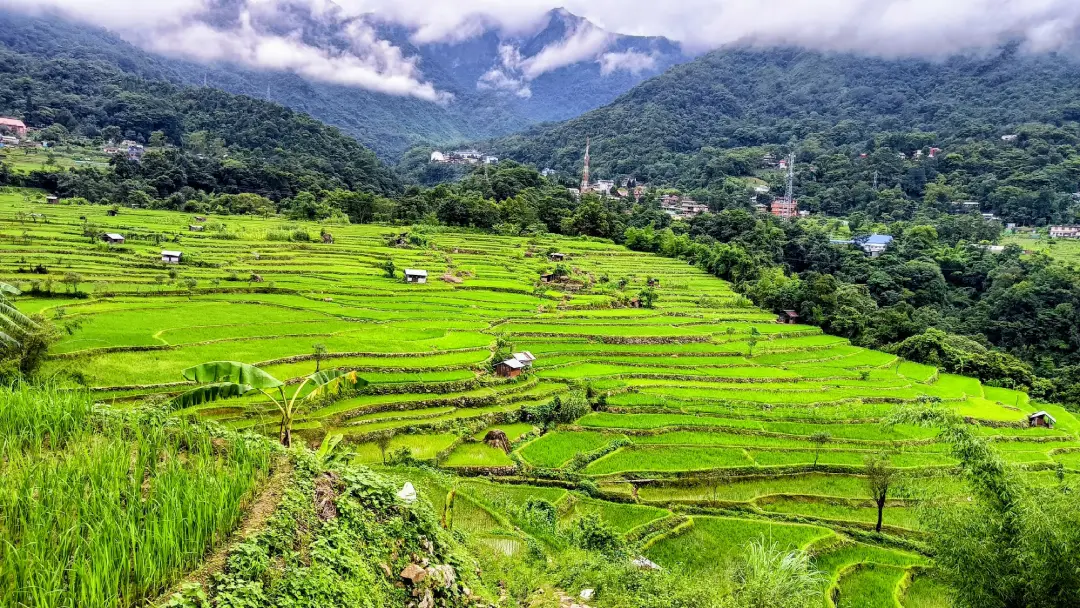
Imphal, June 15: A study conducted by Nagaland University has highlighted how indigenous knowledge continues to support terrace farming among the Angami Naga community, offering valuable lessons for sustainable agriculture, food security and environmental conservation.
The research examines the social, cultural and ecological knowledge systems that underpin terrace cultivation, an age-old agricultural practice of the Angami Nagas. According to the university, the findings could contribute to national efforts aimed at strengthening food security and promoting sustainable farming while helping policymakers design development initiatives that respect indigenous agricultural traditions.
Nagaland's agricultural landscape is shaped by diverse agro-climatic conditions and deeply rooted indigenous practices. While shifting cultivation remains the predominant farming method in much of the state due to its hilly terrain, terrace cultivation has long been a defining feature of Angami agriculture.
Unlike earlier studies that focused largely on the technical aspects of terrace farming, the present research explores the broader social, cultural and ecological foundations that sustain the practice. It investigates how traditional knowledge, environmental understanding and community cooperation continue to influence agricultural activities.
The findings have been published in a Scopus and Web of Science-indexed journal published by SAGE Publishing. The study is based on the doctoral research of Mr. Ketekhoto Neihu, conducted under the supervision of Dr. Srikanth Yamsani, Assistant Professor at the Tribal Research Centre, Department of Sociology, Nagaland University.
Nagaland University Vice-Chancellor Prof. Jagadish Kumar Patnaik said the research demonstrates how traditional wisdom continues to support agricultural productivity, ecological balance and community resilience in the hill regions of Nagaland.
He said the sustainability of Angami terrace cultivation rests on the integration of ecological practices, social cooperation and cultural traditions. At a time when climate-resilient and sustainable agricultural systems are receiving increasing global attention, the findings underscore the importance of documenting and learning from indigenous knowledge systems.
Prof. Patnaik also noted that the study provides insights into the sophisticated methods of soil and water management developed by the Angami community over generations. It highlights the use of ecological indicators in agricultural planning and the strong cultural values embedded within farming practices.
According to the study, indigenous knowledge remains central to soil conservation, water management and organic farming. Terrace fields are constructed using traditional methods that help reduce soil erosion and improve water utilisation. The continued use of organic inputs instead of chemical fertilisers also reflects efforts to safeguard both environmental and human health.
Highlighting the significance of the research, Dr. Srikanth Yamsani said Angami farmers continue to align agricultural activities with natural cycles and environmental cues. Farmers use indicators such as flowering patterns of plants, bird behaviour and insect activity to determine appropriate timings for planting, transplanting and harvesting.
At the same time, the study points to emerging challenges, including changing rainfall patterns and climate variability. Dr. Yamsani emphasised the importance of recognising the adaptive capacity of indigenous knowledge systems in responding to such challenges.
The research concludes that agriculture remains deeply embedded in the social and cultural life of the Angami community. It suggests that combining scientific approaches with traditional knowledge could create opportunities for sustainable agricultural development in Nagaland and other regions facing similar environmental and food security challenges.