NPCM adopted 12 resolutions at its first convention in Makhan village, demanding SoO abrogation, NRC update and constitutional safeguards in Manipur.
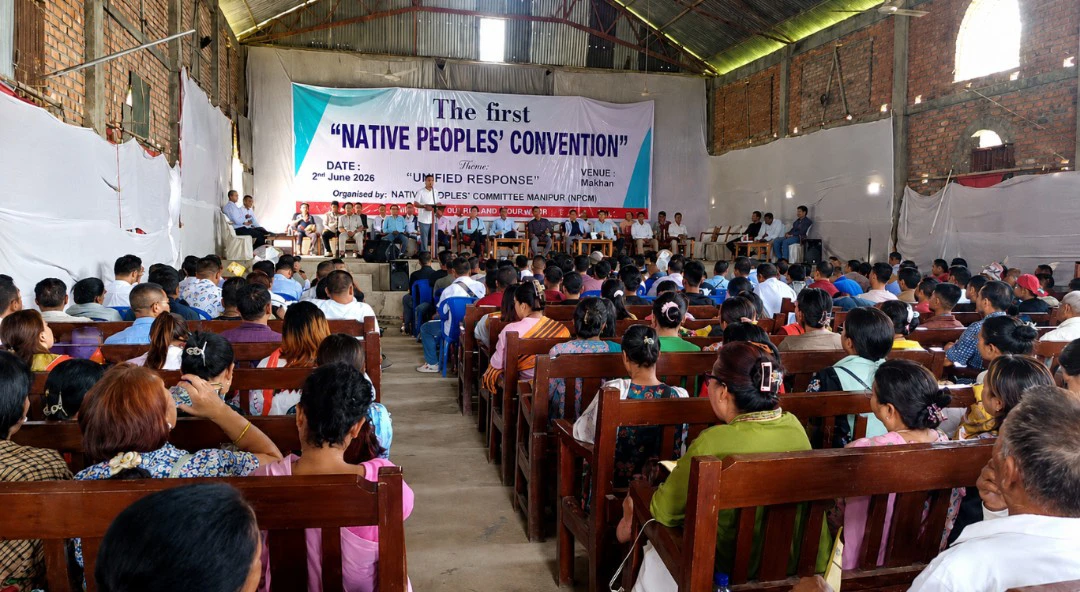
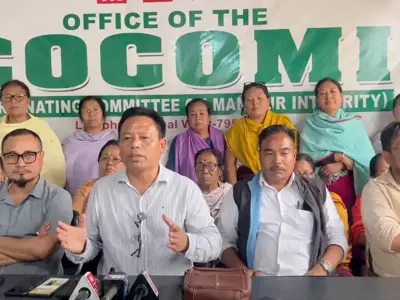
Imphal, June 3: The first “Native Peoples Convention” organised by the Native Peoples’ Committee Manipur (NPCM) was held at Makhan village on Tuesday, bringing together representatives of several Meetei and Naga civil society organisations amid continuing tensions in Manipur.
Held under the theme “Unified Response”, the convention adopted 12 resolutions focused on security, demographic concerns, constitutional safeguards and inter-community coordination. The gathering also featured presentations by academics, legal experts and retired officials on issues linked to the ongoing crisis in the state.
One of the key resolutions adopted during the convention demanded immediate review and abrogation of the Suspension of Operations (SoO) agreement signed between the Centre and Kuki armed groups. NPCM resolved to submit a memorandum to the Ministry of Home Affairs and the Governor of Manipur detailing what it described as violations of SoO ground rules.
The convention also demanded phased withdrawal of the Assam Rifles from both valley and hill areas of the state and their replacement with security forces “enjoying full confidence of all communities”. NPCM announced that it would constitute a legal committee to examine the matter and submit appropriate representations before competent authorities.
Another major resolution called for a fresh and time-bound updating of the National Register of Citizens (NRC) before the Census operation in Manipur. According to the organisers, NPCM would coordinate with legal experts to prepare a model NRC framework for the state.
The convention further resolved to facilitate a joint consultative meeting of Naga and Meetei legislators to institutionalise dialogue and prevent conflicts of interest detrimental to the state. NPCM convenors are expected to initiate communication with MLAs and legislators regarding the proposal.
Other resolutions adopted during the gathering included collective legal defence of NPCM members against alleged false or politically motivated cases; district-level outreach programmes across all 16 districts; a united campaign against narco-terrorism; national-level advocacy on the constitutional rights and security of Manipur’s indigenous communities; and observance of June 2 as “Native Peoples’ Convention Day”.
The convention also resolved to join efforts concerning the alleged abduction of six Naga individuals from Leilon Vaiphei village on May 13. According to the organisers, the six persons remain untraced.
Speaking at the convention, NPCM convenor Ashang Kasar alleged that the present conflict in Manipur would not have escalated in its current form if the SoO agreement had not existed.
“SoO has caused conflicts in the state,” Kasar said, adding that the convention was organised with the objective of uniting indigenous communities against what he described as external aggression and threats to the land and people of Manipur.
Kasar said NPCM would launch awareness campaigns at district and local levels and would raise issues relating to Census, NRC and constitutional safeguards before the Prime Minister and Union Home Minister.
Demanding withdrawal of Assam Rifles from the state, he alleged that the paramilitary force had failed to maintain neutrality during the ongoing conflict. According to him, such measures were necessary to restore public confidence and ensure peace and normalcy.
He also expressed concern over what he described as demographic imbalance resulting from alleged illegal immigration into the state.
The convention included presentations and discussions on topics such as demographic change, influx and migration, NRC updation, the role of security forces and the ongoing crisis in Manipur. Resource persons included Manipur University Department of Law head Dr Y Premananda, demographer Dr RK Narendra and IGNTU assistant professor Homen Thangjam.
Retired principal chief commissioner of Income Tax K Timothy Zimik, who spoke during the event, claimed that large-scale illegal immigration into Manipur began during the 1950s and 1960s amid civil conflict in Myanmar.
Referring to Census records and government documents, Zimik alleged that there had been a sharp increase in the Kuki population and the number of villages in Kuki-dominated districts over several decades. According to him, comparison between Census data from 1961 and 2011 showed what he described as abnormal demographic changes in several hill districts.
He claimed that indigenous communities had become minorities in areas such as Senapati-Kangpokpi, Chandel and Tengnoupal due to the influx of illegal immigrants.
Zimik cited official records, including documents from the Gazette of India, the Ministry of Panchayati Raj and the Government of Manipur, to claim that more than 1,700 new villages had been established in hill districts between 1969 and 2023, mainly in areas he described as Naga ancestral land.
According to figures presented by him, Kangpokpi district recorded an increase in villages from 179 to 721 during the period, while Churachandpur reportedly saw an increase from 282 to 842 villages. He contrasted this with comparatively smaller increases in districts such as Kamjong and reductions in some areas of Ukhrul district.
Zimik further claimed that 994 new villages were established between 2006 and 2024 and alleged that additional unauthorised settlements had emerged along highways during 2025 and 2026. He attributed these developments to unchecked immigration, encroachment and forceful occupation.
He also alleged that demographic changes had strengthened demands for a separate Union Territory and enabled strategic control over important transport routes and buffer zones in the state.
The claims and statistical assertions made during the convention could not be independently verified.
The convention was moderated by jurist Abonmai and Ashem Prince, while Dr Chabunbam Birendra and Mibaa Hungyo served as rapporteurs.