A drug awareness programme marking the International Day Against Drug Abuse and Illicit Trafficking was held at 2nd Manipur Rifles, Imphal, with experts highlighting prevention, treatment and community action.
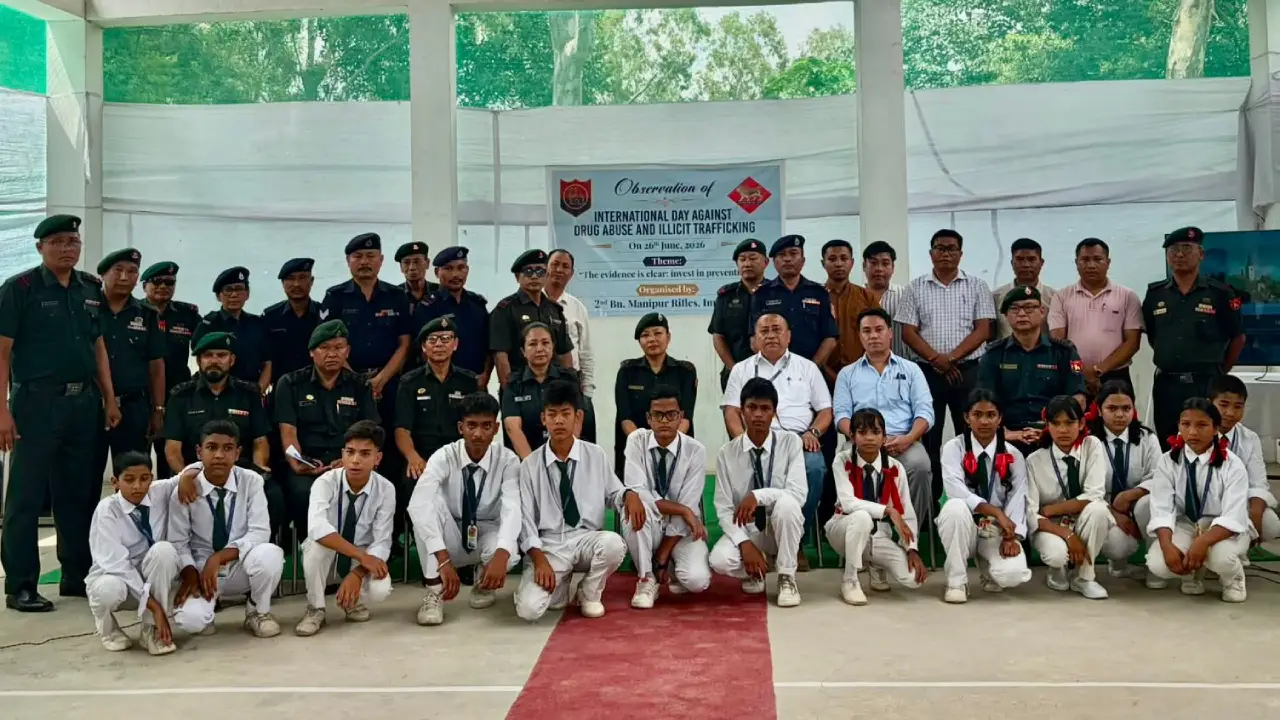
Imphal, June 25: More than 200 personnel, students and teachers participated in a drug awareness programme organised at the 2nd Battalion Manipur Rifles (MR) in Imphal on Thursday to mark the International Day Against Drug Abuse and Illicit Trafficking.
The one-day programme was held at the Battalion Hall of the 2nd MR and brought together officers and jawans of the battalion, personnel of the National Disaster Response Force (NDRF), and students and staff of the 2nd MR School.
The function was presided over by Commandant of the 2nd Battalion Manipur Rifles, Sarangthem Asana, IPS. Deputy Commandant (Adjutant) H. Basurlal Singh, MPS, Deputy Commandant (Administration) Jenee Thoidingjam, MPS, and Assistant Commandant Sheikh Muhammed Hussain Ahmed, MPS, were also part of the presidium.
The programme featured social activist Montu Ahanthem, Secretary of Wide Angle and former member of the Manipur Commission for Protection of Child Rights, and Dr. Wakambam Joyson, Deputy Director of the Manipur AIDS Control Society (MACS), as resource persons.
Delivering the keynote address, Montu Ahanthem spoke on the global and regional drug situation, with a particular focus on the challenges confronting Manipur. He highlighted the growing vulnerability of young people to substance abuse and discussed commonly abused substances in the state, including heroin, cannabis, hallucinogenic drugs such as WY tablets and the misuse of pharmaceutical drugs.
He noted that earlier approaches centred on punitive measures such as arrests, compulsory testing and coercive enforcement had not produced sustainable results. According to him, relapse rates among drug users remained high despite such measures, while overdose deaths and the spread of infectious diseases continued to pose serious concerns.
Emphasising the need for evidence-based interventions, Ahanthem said harm reduction programmes have shown positive outcomes by improving health conditions and creating pathways for treatment, rehabilitation and social reintegration of individuals affected by substance dependence.
Dr. Wakambam Joyson addressed the health risks associated with drug use, particularly among people who inject drugs. He highlighted the link between unsafe injecting practices and the transmission of HIV and stressed the importance of prevention, early intervention and access to treatment services.
He also called for greater community participation in addressing substance abuse and reducing the spread of HIV and other drug-related health problems.
Assistant Commandant Sheikh Muhammed Hussain Ahmed delivered a presentation on the Narcotic Drugs and Psychotropic Substances (NDPS) Act, outlining its key provisions and explaining its role in tackling drug trafficking and illicit drug use in the country.
Participants were also briefed on the legal consequences associated with narcotics-related offences and the importance of public cooperation in combating the drug menace.
The programme concluded with a collective pledge by all participants to strengthen efforts against drug abuse through awareness generation, education, prevention, treatment and community-based support initiatives.
Organisers said the observance reaffirmed the commitment of security personnel, educational institutions and civil society stakeholders to work together towards building a healthier and drug-free society.