TRAI's latest drive tests in Meghalaya and Assam reveal coverage gaps, call drops and uneven data performance, with 5G operators leading speeds.
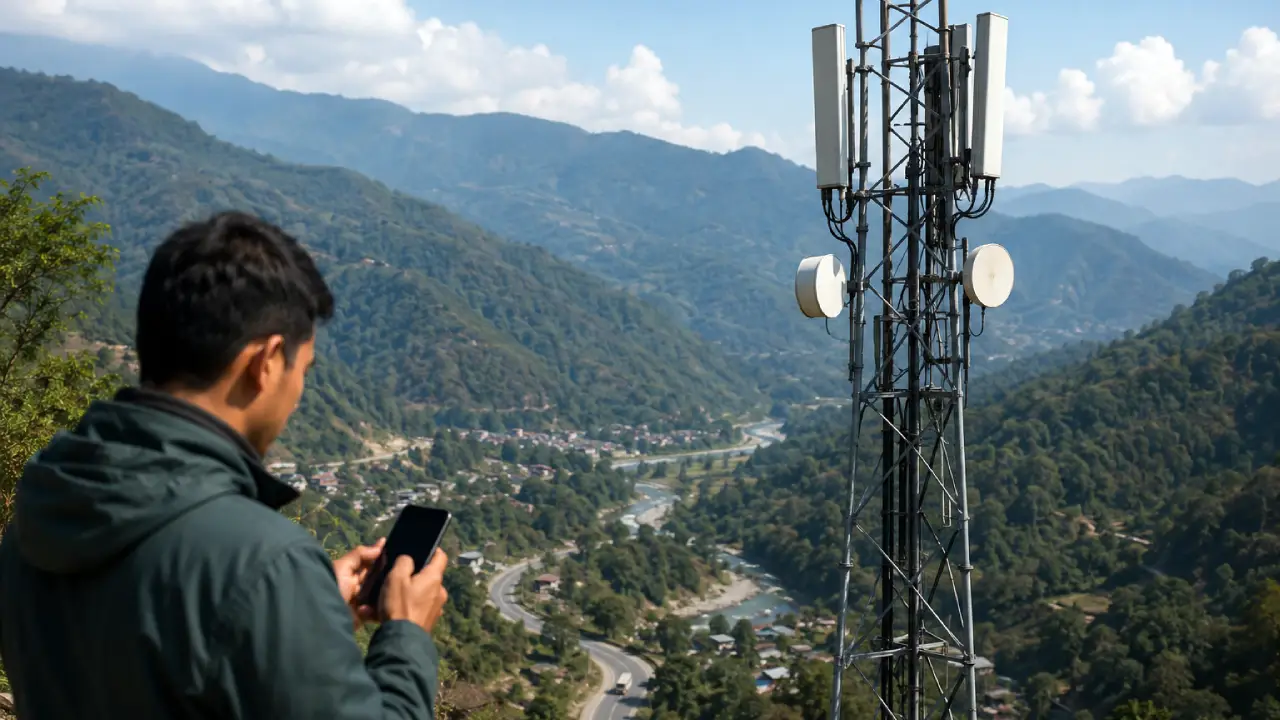
Imphal, June 9: Mobile users travelling through parts of Meghalaya and Assam continue to face uneven network quality despite the expansion of 4G and 5G services, according to two independent drive test reports released by the Telecom Regulatory Authority of India (TRAI).
The assessments, conducted in March 2026, examined the performance of major telecom service providers across East Jaintia Hills and West Jaintia Hills districts in Meghalaya and along the Lanka-Narainpur Railway Bridge corridor on National Highways 27 and 627 in Assam. The studies measured network coverage, call quality, dropped calls and mobile data performance under real-world conditions.
The findings indicate that while high-speed mobile broadband has become widely available, significant coverage deficiencies and call quality issues remain in several stretches of the Northeast, particularly along highways and in remote terrain.
TRAI's Meghalaya assessment covered more than 213 km of city routes, nearly 99 km of highway stretches, 10 hotspot locations and walk tests in public areas. The exercise was carried out between March 11 and March 16 under the supervision of the regulator's Kolkata regional office.
Among the operators tested, Reliance Jio recorded the lowest number of poor-signal samples on city routes, while Vodafone Idea registered the highest. Similar trends were observed on the highway section connecting Ratha Cherre Khasia Punjee and Jowai along NH-6. Airtel and Jio generally demonstrated stronger signal availability compared to BSNL and Vodafone Idea.
The report also found substantial differences in call reliability. During city-route testing, Jio recorded only two dropped calls out of 249 successfully established calls, while BSNL and Vodafone Idea experienced significantly higher call drops. On the highway segment, Vodafone Idea reported the highest number of dropped calls among the operators tested.
Data performance showed a clear advantage for 5G-enabled networks. Jio achieved average download speeds of nearly 98 Mbps in city areas and more than 122 Mbps on highway stretches. Airtel also delivered strong results with average download speeds exceeding 72 Mbps in cities and 88 Mbps on highways. BSNL's average download performance remained below 10 Mbps in most tested areas.
The second TRAI study focused on the highway route between Lanka and Narainpur Railway Bridge in Assam. The drive test covered nearly 190 km of national highways and seven hotspot locations between March 10 and March 18.
The results revealed substantial coverage gaps across all operators. Vodafone Idea recorded the largest number of poor-signal samples, while Jio reported the lowest. BSNL also showed a high proportion of weak-signal areas along the route.
Call drop performance remained a concern. Vodafone Idea recorded 21 dropped calls out of 95 successful call attempts, the highest among the operators assessed. Jio registered 14 dropped calls, Airtel nine and BSNL twelve. These figures suggest that maintaining voice connectivity remains challenging across several sections of the corridor.
In terms of data services, Jio again led download performance with an average speed of 88.21 Mbps, followed by Airtel at 66.50 Mbps. Vodafone Idea recorded 16.84 Mbps, while BSNL averaged 4.86 Mbps. Upload speeds followed a similar pattern, with Airtel recording the highest average upload throughput among the tested networks.
The routes selected by TRAI are strategically important for the Northeast. The Meghalaya corridors connect commercial centres, mining regions and district headquarters, while the Assam highway route serves as a critical transport link through hill districts and connects several communities dependent on mobile connectivity for business, education and emergency communication.
Over the past few years, telecom operators have invested heavily in 4G and 5G rollout across the region. However, the latest findings suggest that network expansion alone does not guarantee consistent service quality. Terrain, sparse population density, power supply constraints and fibre backhaul limitations continue to affect performance in many locations.
The reports also highlight a widening gap between operators. While 5G-capable networks are delivering speeds far above their declared benchmarks, some providers continue to struggle with coverage quality and voice service reliability. In practical terms, users may experience excellent internet speeds in one location and poor connectivity only a few kilometres away.
Reliable telecommunications infrastructure has become increasingly important for the Northeast's economic integration and digital development. Government services, online education, digital payments, telemedicine and e-commerce all depend on stable mobile connectivity.
The latest TRAI assessments indicate that significant progress has been made in broadband performance, particularly on networks that have deployed 5G. At the same time, persistent coverage gaps and call drops point to the need for continued investment in tower infrastructure, fibre connectivity and network optimisation across difficult terrain.
For consumers, the reports provide an independent snapshot of actual network performance rather than advertised service levels. For telecom operators, they serve as a regulatory benchmark and a reminder that service quality remains under scrutiny, especially in regions where connectivity is increasingly viewed as an essential service rather than a convenience.
TRAI said the findings have been shared with the concerned telecom service providers for necessary action and improvements. Detailed reports have been made available on the regulator's website for public reference.