The United Naga Council urged PM Narendra Modi to ensure justice for six murdered Naga civilians, protect Naga areas and guarantee that no separate administration will touch Naga ancestral lands.
New Delhi, June 27: The United Naga Council (UNC), the apex civil body representing the 21 Naga tribes of Manipur, on Saturday urged Prime Minister Narendra Modi and the Union Government to intervene immediately in the state's deteriorating security situation, demanding justice for six murdered Naga civilians, stronger security for Naga-inhabited areas, and an unequivocal guarantee that no proposal for separate administration, autonomy or territorial council would extend to Naga ancestral lands.
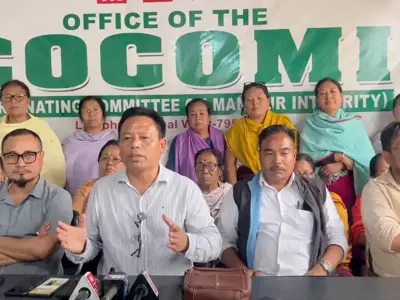
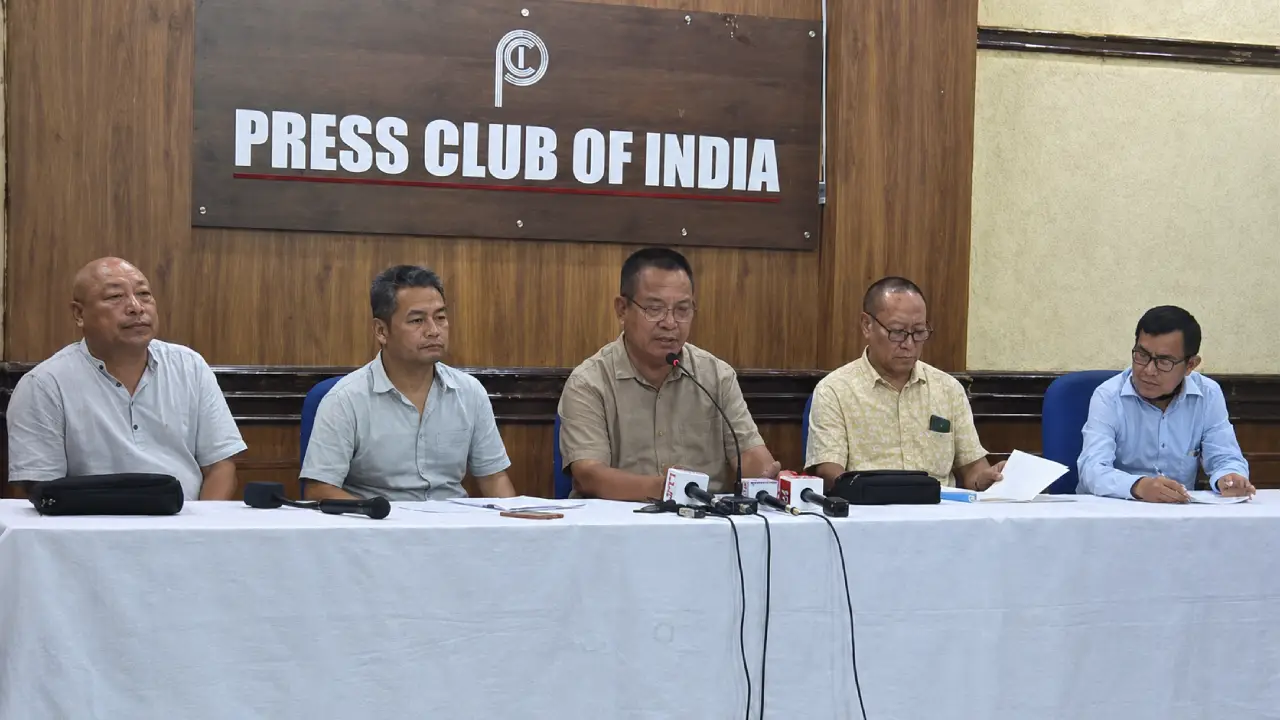
Addressing a press conference at the Press Club of India in New Delhi, senior leaders of the Council alleged that recent attacks on Naga villages, the abduction and killing of six Naga civilians, and continuing militant activities in Naga areas have raised serious concerns over public safety and the credibility of the ongoing Indo-Naga peace process.
The media briefing was facilitated by the Delhi Solidarity Group and featured senior Naga leaders Ng Lorho, Vareiyo Shatsang, Samson Remei, AC Thotso, KS Paul Leo and L Adani. The delegation informed journalists that it has been meeting political leaders, civil society organisations, women's groups, peace activists and concerned citizens in the national capital to present what it described as the Naga perspective on the ongoing crisis in Manipur.
The Council said it was the first occasion that Naga elders from Manipur had collectively addressed the national media in Delhi since the recent escalation of violence affecting Naga areas.
The UNC said it had recently submitted a joint memorandum to the Prime Minister along with the Naga Women's Union and the All Naga Students' Association, Manipur.
According to the Council, the memorandum urges the Union Government to treat the developments in Manipur not merely as a law-and-order issue but as a matter involving national security, constitutional responsibility and the implementation of the Indo-Naga Framework Agreement signed on August 3, 2015.
The memorandum alleges that armed groups operating under the Suspension of Operations (SoO) arrangement, along with cadres of the Myanmar-based KNA(B), have carried out attacks against Naga areas. The Council claimed these developments amount to a violation of the Framework Agreement and pose a threat to India's eastern frontier.
"Our appeal to the Prime Minister is direct. Honour the Framework Agreement, secure the Naga areas and stop treating armed aggression against Naga civilians as a local disturbance," the Council stated during the briefing.
It further argued that the issue concerns "the credibility of India's peace process and the security of its eastern frontier."
A major focus of the press conference was the killing of six Naga civilians who had been abducted during the violence that erupted on May 13 this year.
According to the UNC, three Thadou church leaders were killed earlier that day. Following those incidents, the Council alleged that armed Kuki militant groups abducted 20 Naga civilians from Leilon Vaiphei village and Sapermaina Kuki village.
Fourteen of the hostages were subsequently released on May 15. However, six remained missing despite what the Council described as repeated appeals and extensions granted to the Government of Manipur to secure their safe release.
The UNC recalled that on June 9, Naga village guards released 14 Kuki detainees in an exercise facilitated by the Council together with the Naga People Organisation, Senapati.
The Council described the release as a humanitarian gesture undertaken despite widespread public anger within Naga communities. It said the expectation was that the goodwill would be reciprocated.
Instead, according to the UNC, the bodies of the six missing Naga civilians were recovered the following day in a mutilated and dismembered condition.
The Council said the killings had caused immense trauma to the victims' families and deeply shaken public confidence in the ability of the government to protect innocent civilians.
"The Naga people have shown restraint. We released detainees honourably when emotions were running high. But restraint cannot mean abandonment," the Council said.
The UNC called for a time-bound, independent and court-monitored investigation into the abduction and killing of the six civilians.
It also demanded immediate security guarantees for Naga-inhabited areas, particularly villages that have allegedly experienced intimidation, armed incursions and hostage-taking during recent months.
The Council maintained that large parts of present-day Kangpokpi district are historically Zeliangrong Naga ancestral lands and argued that violence, militarised activities or demographic pressure in those areas should be treated as matters affecting Naga territorial security.
Referring to incidents on May 7, the Council alleged that attacks on Naga villages in Ukhrul and Kamjong districts, including Namlee-Wanglee, Choro and Kaka, involved heavily armed militants using military-grade weapons, drones and rocket launchers.
The UNC claimed that the assaults involved cross-border armed movement and therefore fell within the scope of Article 355 of the Constitution, under which the Union Government has a duty to protect states against external aggression and internal disturbance.
The Council urged the Centre to recognise the developments as more than a communal conflict and to respond accordingly.
The UNC reiterated several demands that it said had already been placed before the Prime Minister.
Among them were the immediate arrest and prosecution of personnel belonging to the Kuki National Front-President (KNF-P) group whom the Council alleges were involved in the abduction and killing of the six civilians.
It also sought the arrest of those allegedly responsible for the killing of Wilson Thanga Chiru at Joujangtek on the same day.
The Council further demanded legal action against the Chief of Leilon Vaiphei village and others whom it accused of participating in the abduction and killings.
In addition, it called for action against serving Manipur Police personnel named by the Council for their alleged involvement in the incident.
The UNC also demanded that the KNF-P be declared a terrorist organisation.
Another major demand was the termination of the Suspension of Operations agreement with Kuki militant groups. The Council alleged that several SoO groups continue to operate outside their designated camps and engage in violent activities, thereby undermining the agreement's administrative and moral legitimacy.
The Council also demanded the removal of Manipur Deputy Chief Minister Nemcha Kipgen from office.
The UNC alleged that her family connection with the leadership of the KNF-P creates a conflict of interest in matters relating to internal security. The Council did not provide evidence during the press conference, but said the issue had been raised in its memorandum to the Prime Minister.
Beyond the immediate security concerns, the UNC reiterated its long-standing political demands.
The Council urged the Government of India to uphold the Framework Agreement signed in 2015 and to prevent what it described as appeasement of armed groups violating agreed ground rules.
It also demanded the eviction of illegal armed cadres from Liangmai and Inpui Naga areas, as well as from Ukhrul, Kamjong, Kangpokpi and other Naga-inhabited regions.
The memorandum further sought an unequivocal assurance that no proposal for separate administration, autonomy or territorial council would affect Naga ancestral lands.
Among its other demands were the restoration and sanitisation of national highways, a time-bound judicial inquiry into the attacks that began on May 7 and continued thereafter, and an early conclusion of an honourable and inclusive Indo-Naga political settlement.
The Council argued that resolving the Naga political issue remains essential for long-term peace and stability along India's eastern frontier.
The UNC emphasised that the 21 Naga tribes of Manipur continue to function through a unified civil and traditional platform under the Council's leadership.
It said this unity provides coherence and discipline at a time when violence and competing territorial claims have intensified across parts of the state.
While reiterating its commitment to peace, coexistence and constitutional methods of redress, the Council maintained that it would not accept what it described as the abandonment of Naga civilians by either the State or Union Government.
Concluding the press conference, the Council appealed to civil society organisations, women's groups, church bodies, traditional institutions and democratic forces across the country to support what it called a just peace based on truth, accountability, protection of civilians and the security of Naga ancestral territories.