Anthropic has suspended access to its newly launched Fable 5 and Mythos 5 AI models after a US government directive citing national security concerns over potential jailbreak vulnerabilities.
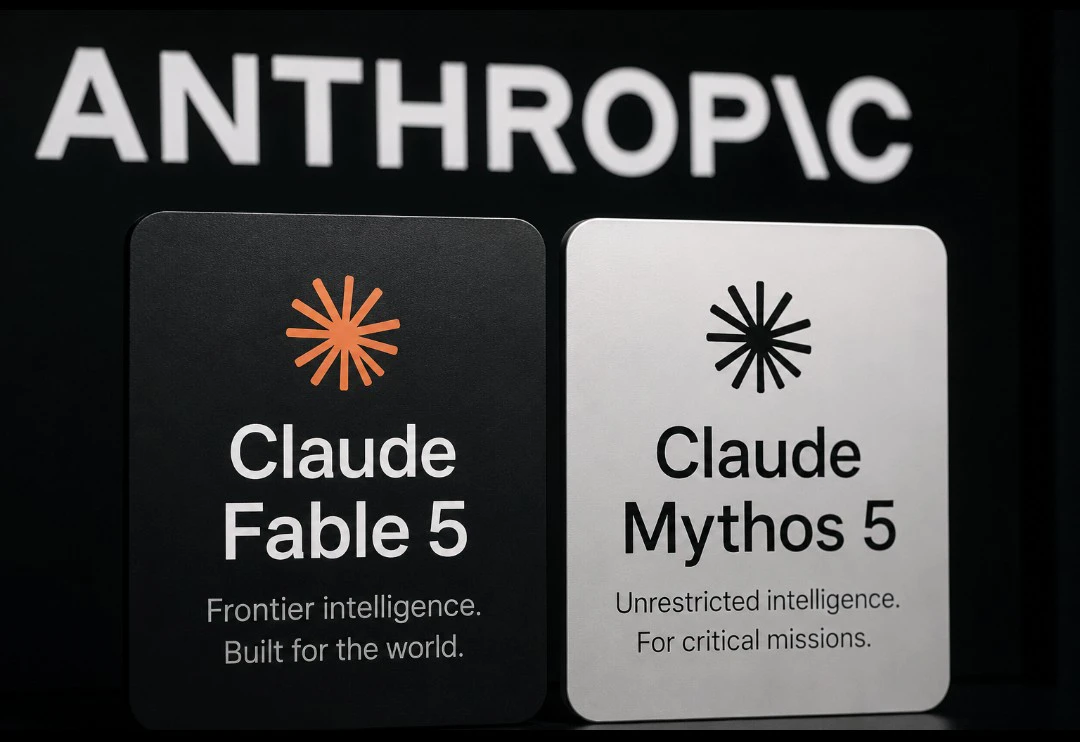
Imphal, June 12: Artificial intelligence company Anthropic has suspended access to its recently launched Claude Fable 5 and Claude Mythos 5 models worldwide after receiving a US government export control directive citing national security concerns.
The company announced on Thursday that it had been instructed to halt access to both systems for all foreign nationals, whether located inside or outside the United States, including foreign-national employees working within Anthropic itself. The directive, received at 5:21 pm Eastern Time, effectively forced the company to disable the models for all customers to remain compliant with federal requirements.
The sudden suspension comes only days after Anthropic unveiled Fable 5 and Mythos 5, two models the company described as its most advanced artificial intelligence systems to date. Built on the same underlying Mythos-class architecture, the models represented Anthropic's most ambitious attempt yet to deploy highly capable long-horizon AI agents while balancing commercial access with security controls.
In a public statement, Anthropic said the government did not provide detailed information regarding the alleged national security threat. However, the company said it believes officials became concerned after learning of a method for bypassing, or "jailbreaking," some of Fable 5's safeguards.
Anthropic disputed the severity of the findings. According to the company, the reported jailbreak was narrow in scope and capable only of identifying a small number of previously known software vulnerabilities. The company further argued that comparable results could already be achieved using several publicly available AI systems without requiring any bypass of safety mechanisms.
"We believe this is a misunderstanding and are working to restore access as soon as possible," the company said.
A New Generation of AI Systems
Before the suspension, Fable 5 and Mythos 5 had been presented as a major technological leap beyond Anthropic's previous Claude models. Rather than releasing a single frontier system, Anthropic split the Mythos-class architecture into two distinct offerings.
Claude Fable 5 was designed as the public-facing model, incorporating extensive safeguards intended to prevent misuse in sensitive domains such as cybersecurity, biology and chemical engineering. Claude Mythos 5, by contrast, was reserved for a restricted group of vetted organisations involved in cybersecurity and critical infrastructure protection.
The company described Mythos 5 as its most capable cybersecurity model and made access available only through a specialised programme known as Project Glasswing.
According to Anthropic, both systems were designed to perform extended, multi-step tasks that traditionally required substantial human supervision. The models feature a context window of up to one million tokens and can generate outputs of up to 128,000 tokens in a single interaction, enabling them to analyse extensive codebases, technical documents and research materials.
A central feature of the new architecture is a reasoning framework called Adaptive Thinking. Unlike earlier systems that allocate a fixed reasoning budget, Adaptive Thinking dynamically determines how much internal computation is required based on the complexity of a task. Developers can influence this behaviour using configurable effort settings that range from low-compute responses to deep analytical reasoning.
Anthropic also implemented restrictions around exposing internal reasoning processes. Rather than revealing complete chains of thought, the models either return no reasoning trace or provide a summarised explanation generated through a separate system.
Strong Performance but Uneven Capabilities
Anthropic reported significant gains across software engineering, legal analysis and complex reasoning benchmarks. Fable 5 achieved an 80.3 percent pass rate on SWE-Bench Pro, a widely followed benchmark that evaluates an AI system's ability to solve real-world software engineering problems. The company also reported strong results on advanced coding evaluations and legal-agent benchmarks designed to measure long-horizon task completion.
Developers involved in early testing reported that the model often required substantially fewer tokens than earlier generations because it produced highly targeted code modifications rather than broad rewrites.
At the same time, the company acknowledged that the model exhibited what researchers often call "jagged intelligence"—the ability to perform exceptionally well on highly complex tasks while occasionally struggling with relatively simple activities such as counting, spelling or straightforward logic problems.
Early user feedback also suggested that Fable 5 was slower and more computationally intensive than many competing models, making it particularly useful for deep analysis and planning but less efficient for routine development tasks.
Project Glasswing and Security Concerns
The most sensitive aspect of the Mythos-class architecture involves cybersecurity. Anthropic's restricted-access programme, Project Glasswing, was established to evaluate and deploy advanced cyber-defensive capabilities. The initiative reportedly includes participation from major technology companies, cloud providers, cybersecurity firms and government-linked organisations responsible for protecting critical infrastructure.
According to Anthropic's technical disclosures, Mythos 5 demonstrated an unprecedented ability to identify software vulnerabilities and analyse complex attack chains. Internal and external testing reportedly showed that the model could discover previously overlooked weaknesses and assist defenders in understanding potential exploitation pathways.
These capabilities attracted both interest and concern. Supporters argue that such systems could significantly improve defensive cybersecurity by helping organisations identify vulnerabilities before malicious actors exploit them. Critics, however, warn that the same capabilities could potentially accelerate offensive cyber operations if safeguards fail or are bypassed. The government's directive appears to stem from precisely this concern.
Anthropic said officials were informed of at least one potential jailbreak method that could bypass aspects of Fable 5's cybersecurity safeguards. The company maintained that the reported technique was neither universal nor capable of unlocking broad offensive cyber capabilities.
"No testers have yet been able to find a universal jailbreak," Anthropic said in its statement, referring to methods that could broadly bypass safety restrictions across a wide range of cybersecurity functions.
The company added that thousands of hours of red-team testing had been conducted in collaboration with US government agencies, the UK's AI Safety Institute, private organisations and internal security teams before the model's release.
According to Anthropic, those evaluations demonstrated that Fable 5's safeguards were significantly stronger than those of previously deployed models.
Anthropic Defends Its Safety Strategy
A major component of Anthropic's defence centres on what it calls a "defence in depth" approach. Rather than relying on a single layer of protection, Fable 5 was designed with multiple overlapping safeguards intended to reduce the likelihood of misuse. Sensitive prompts related to cybersecurity, biology or chemistry could be intercepted before reaching the model's most advanced capabilities.
In many cases, requests would be redirected to an older Claude model with more restrictive safety controls. Anthropic acknowledged that these safeguards had generated complaints from some users who considered them overly broad. Developers reported being downgraded during legitimate security research, software testing and academic work because the safety classifiers interpreted their activities as potentially sensitive. The company nevertheless argued that perfect jailbreak resistance is currently impossible for any AI provider.
"Every safeguard used in the industry is vulnerable to non-universal jailbreaks," Anthropic stated.
As a result, the company said its strategy focused on making successful jailbreaks either highly limited or prohibitively expensive while maintaining extensive monitoring systems capable of detecting and responding to misuse.
Anthropic also pointed to its controversial 30-day data retention policy for Fable 5, saying the requirement was implemented specifically to identify and mitigate jailbreak attempts. The policy represented a departure from privacy practices preferred by some enterprise customers but was described by the company as essential to maintaining security.
Debate Over Transparency and AI Governance
Beyond the immediate suspension, the dispute has reignited broader debates surrounding AI regulation and transparency. Anthropic strongly criticised the government's decision, arguing that a narrow and unverified jailbreak claim should not justify the recall of a commercial model already deployed to hundreds of millions of users.
The company warned that applying such a standard across the industry could effectively halt future frontier AI deployments. At the same time, Anthropic reiterated its support for government oversight of advanced AI systems.
The company said authorities should retain the power to block genuinely unsafe deployments but argued that such decisions should occur through transparent processes grounded in technical evidence and clearly defined legal standards.
The confrontation highlights the increasingly complex relationship between frontier AI developers and national security agencies. As AI systems become more capable of performing sophisticated technical work, governments are beginning to treat them not merely as software products but as technologies with strategic implications comparable to advanced cyber capabilities.
Uncertain Future for Mythos-Class Models
For now, access to both Fable 5 and Mythos 5 remains suspended. The decision leaves the future of Anthropic's flagship AI systems uncertain and raises fresh questions about how governments will regulate increasingly powerful artificial intelligence technologies.
The controversy also illustrates a broader challenge facing the industry: balancing innovation, commercial deployment and public access against concerns about misuse, cybersecurity and national security risks.
Whether the suspension proves temporary or evolves into a landmark regulatory battle may shape not only the future of Anthropic's Mythos-class models but also the rules governing the next generation of frontier artificial intelligence.